


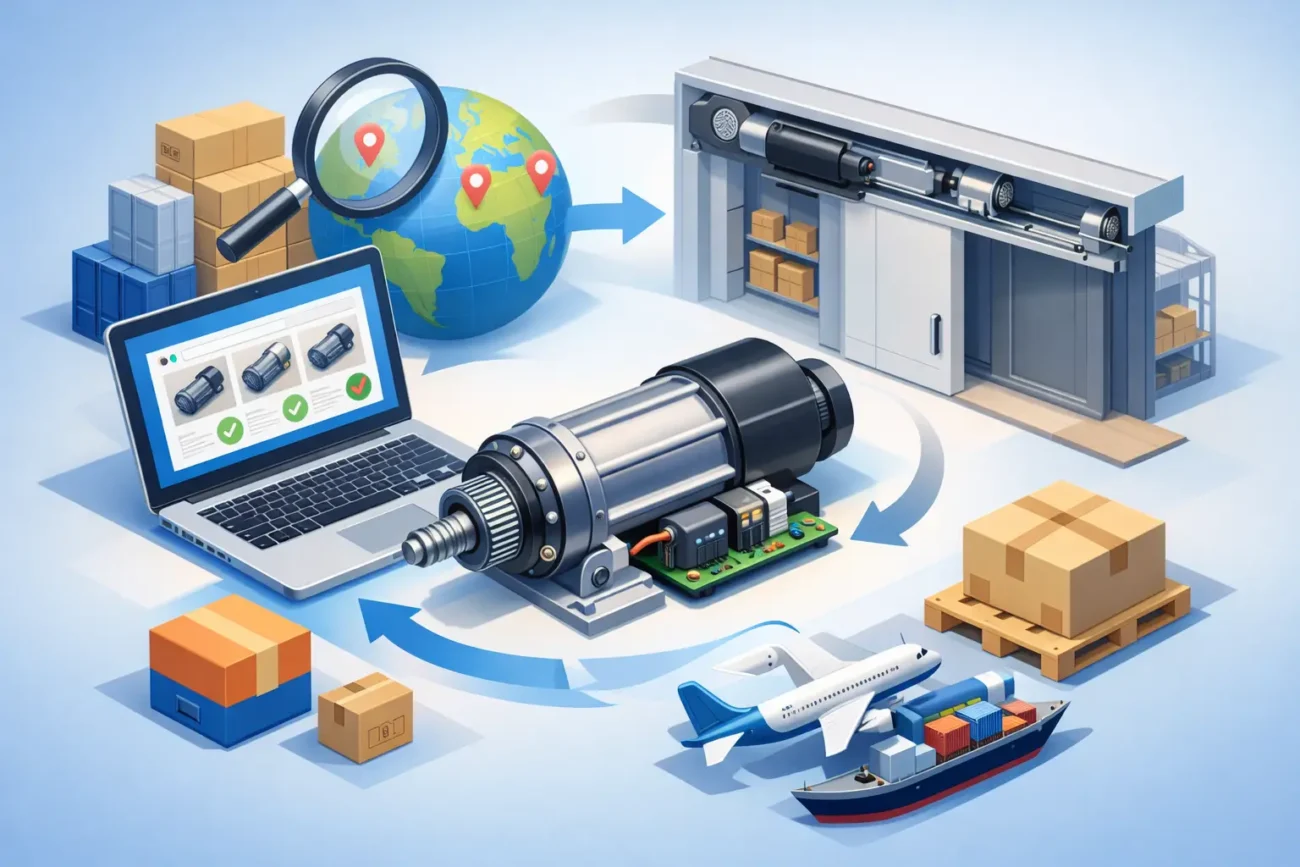
A failed motor on a busy automatic door rarely arrives at a convenient time. It usually shows up in the middle of deliveries, during a tenant complaint, or just before a site audit. That is exactly why a sourcing rare door motors case study matters. When the part is uncommon, discontinued, poorly labelled or fitted to an older system, the real job is not simply ordering a replacement. It is identifying the right motor fast enough to keep disruption under control.
Why rare door motors are difficult to source
Most engineers know the obvious problem first – the motor is not on the shelf. The less obvious problem is that many older or specialist door systems were supplied with brand-specific variants, revised over time without much warning, and occasionally relabelled through distributors or OEM agreements. Two motors can look nearly identical while having different brake arrangements, encoder outputs, shaft sizes or mounting points.
That matters because door automation is not forgiving. A near match can create fresh faults, cause poor travel limits, overload the controller or compromise safe operation. On an industrial shutter, high-speed door or commercial entrance system, guessing is expensive. If the first order is wrong, downtime stretches out, labour is wasted and the customer loses confidence.
In practice, rare motor sourcing is usually a mix of technical detective work and supply chain experience. You need to know what questions to ask, what details to verify and when an equivalent is genuinely safe to fit.
A sourcing rare door motors case study from the field
Consider a typical example. A maintenance contractor is called to a warehouse where an older automated door has failed. The site cannot leave the entrance out of action for long because vehicle movement and security both depend on it. The original motor appears to be from a legacy setup, with a worn label and little usable information beyond a partial part code.
At first glance, this looks straightforward. Remove the motor, read the data plate and order a replacement. In reality, the data plate is scratched, the manufacturer has updated product lines, and the controller has been altered during a previous repair. The engineer can confirm voltage and general application, but not enough to order with confidence.
This is where many sourcing jobs go wrong. The pressure to get something moving again pushes people towards assumptions. If the body size is similar and the output looks close, it is tempting to call it good enough. On an automated door system, that can lead to repeat callouts within days.
The better route starts with evidence. In this case, the useful details came from several sources rather than one perfect identifier. Photos of the motor body, gearbox interface, mounting arrangement, wiring connections and attached encoder helped build the picture. Dimensions were checked manually because catalogue images often hide small but critical differences. The controller model was also noted, along with how the door behaved before total failure.
That last point is often overlooked. The fault history can narrow the options. If the door had been hunting on limits, hesitating at start-up or logging intermittent encoder errors, the issue may not be the motor alone. A supplier with technical knowledge can sometimes spot that the listed motor variant needs to match a specific feedback setup or brake configuration.
Identification was the real job
In this case, the original motor family was identifiable, but the exact version was not. The manufacturer had changed references over time, and the current catalogue did not show a one-to-one match under the visible code. Cross-referencing older data, installation patterns and compatible assemblies became the key step.
That is where specialist support earns its keep. General electrical wholesalers are useful for standard components, but rare door motors often need sector-specific knowledge. You are not just buying a motor. You are buying a motor that must work with a given door weight, duty cycle, controller logic and safety chain.
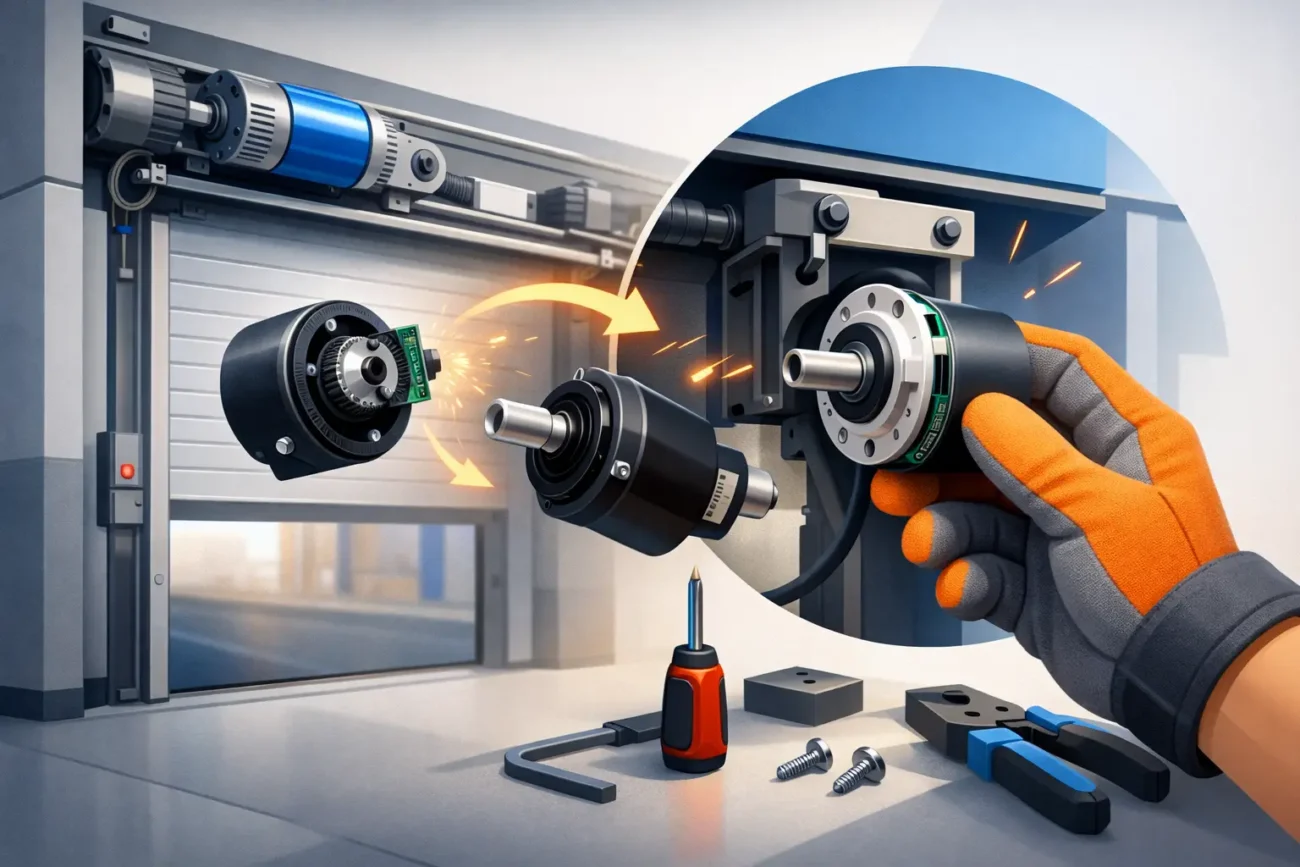
Once the likely options were narrowed down, the remaining checks focused on the details that usually cause trouble: shaft configuration, rotation, brake release arrangement, connector type and encoder compatibility. If one of those is wrong, the replacement can still be physically close but operationally useless.
What made the sourcing successful
The successful outcome came down to three things: accurate information gathering, realistic assessment of equivalents and speed in communication. None of that sounds glamorous, but it is exactly what keeps jobs moving.
First, clear photos and measurements cut out guesswork. A blurry image of a label is rarely enough on its own. Good sourcing requests usually include overall dimensions, fixing centres, cable entry position and any markings on the encoder or brake. If the original part number is incomplete, those physical details matter even more.
Second, not every substitute is acceptable. There are cases where a superseded part is a straightforward replacement, and cases where an alternative motor needs additional checks or related parts. A trustworthy supplier should say when a direct replacement is available and when adaptation is likely to create complications. That honesty saves time.
Third, quick back-and-forth matters because the engineer on site is often working against an operational deadline. A delayed reply can mean another lost day, another temporary closure or another return visit. Fast fulfilment is only useful after the identification work is right.
The trade-off between speed and certainty
There is always a balance to strike. If the site is under severe pressure, everyone wants the part dispatched immediately. But if the identification is incomplete, rushing the order can cost more than waiting a few extra hours for confirmation. That is especially true on older industrial and commercial systems where previous repairs may have mixed components from different generations.
The best sourcing process is not slow. It is disciplined. It prioritises the checks that prevent the most expensive mistakes.
Lessons for engineers and facilities teams
If you are dealing with a suspected rare motor failure, the biggest time saver is preparing the enquiry properly. A good supplier can move much faster when the request includes useful evidence from the start.
Take photos from several angles, not just the label. Record any numbers from the motor, gearbox, encoder and controller. Measure the mounting pattern and shaft dimensions if safe to do so. Note the door type, brand if known, and the symptoms before failure. Was there noise, loss of torque, intermittent movement or a brake issue? Those details are often the difference between a first-time fix and a drawn-out parts chase.
It is also worth being honest about what you do not know. Plenty of customers have only a few photos and a description such as “older warehouse door motor, no visible model”. That is still workable if the supplier understands door systems and knows how to narrow it down.
When replacement is not the only answer
A case study like this also shows that sourcing a rare motor does not always end with a direct purchase. Sometimes the better answer is a compatible assembly, a motor and encoder set, or a broader upgrade if the original platform is no longer supportable. That depends on cost, lead time and the wider condition of the door.
For a heavily used site entrance, fitting the last available old-stock motor may restore operation quickly but leave the customer exposed to the same problem again in six months. In other cases, where budget is tight or the system is otherwise sound, that exact old-stock part is the right call. It depends on the site, the urgency and how long the customer needs the existing setup to keep going.
This is where practical advice matters more than a hard sell. A supplier should be able to explain the options plainly – direct replacement, equivalent, repair path or upgrade route – and the likely implications of each.
Why specialist sourcing support changes the outcome
Rare parts sourcing is not magic. It is process, product knowledge and responsiveness applied properly. For automated doors, that combination can be the difference between one successful visit and a week of avoidable delays.
For trade professionals, it reduces the risk of ordering blind. For facilities teams, it shortens downtime and improves confidence that the fix will last. For end users, it removes the frustration of trying to describe a part they were never meant to identify on their own.
That is why specialist suppliers still matter in this corner of the industry. When the motor is obscure, the label is worn and the site needs an answer quickly, experience does more than save time – it prevents the wrong part from becoming the next problem.
If you are faced with an older or hard-to-identify motor, start with the evidence you have and get it checked properly. A careful first step is usually the fastest route back to a working door.




Leave a comment