


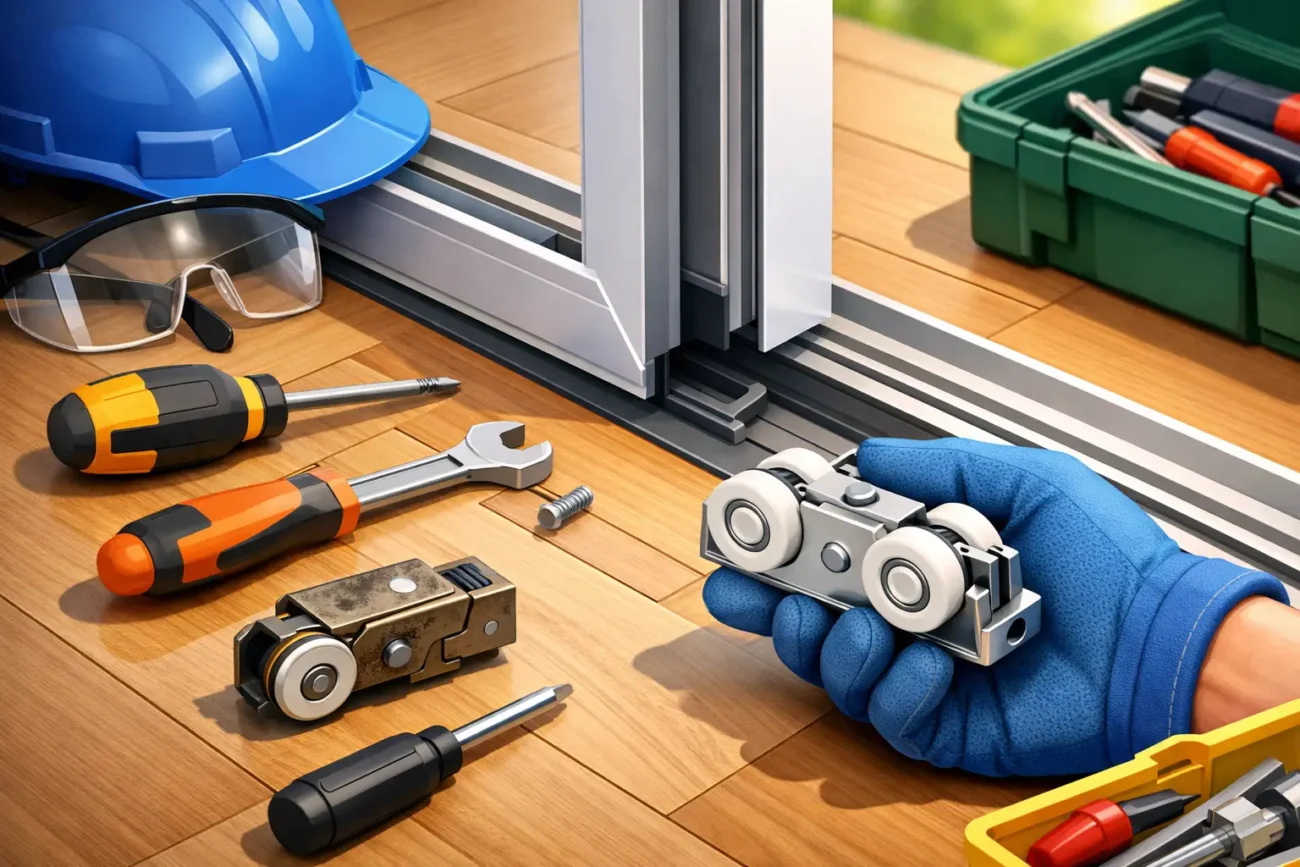
A door that grinds, rattles, sticks in its track or needs a hard push is often signalling worn rollers. Knowing how to replace door rollers can restore smooth movement and reduce strain on the operator, track and hinges, but the job must start with identifying the door type. A roller for a sliding pedestrian door is not interchangeable with a sectional overhead door roller, and neither should be treated like a roller shutter component.
For manual sliding doors, internal doors and some light commercial doors, replacement can be a straightforward maintenance task. For sectional garage and industrial doors, particularly those fitted with torsion springs, cables or powered operators, there is a clear safety boundary: never remove the bottom roller bracket or disturb spring and cable hardware unless you are trained and equipped to do so. These parts are under significant tension.
Identify the Roller Before You Remove It
Ordering by appearance alone is one of the most common causes of delays. A roller may look broadly correct while having the wrong stem length, wheel diameter, bearing type or shaft size. The result can be poor tracking, a noisy door, damage to the guide, or a roller that simply will not fit.
Start by checking where the roller sits and how it works. Sectional doors normally use nylon or steel rollers on a stem that passes through a hinge or roller carrier. Sliding doors may use top-hung trolley wheels, bottom guide rollers, or wheeled carriages hidden in the head track. Industrial sliding and folding doors can have larger steel rollers, mounting plates and specified load ratings.
Before dismantling anything, take clear photographs of the roller in place, the hinge or carrier, the track profile and any markings. Measure the wheel diameter, wheel width, stem diameter and stem length. If the roller has a bearing, note whether it is sealed and whether there is a visible part number. Also record the door manufacturer and model where known. These details matter more than a general description such as “garage door wheel”.
When a Roller Really Is the Problem
A worn roller is not always the root cause. A bent vertical track, loose hinge, damaged sliding-door hanger, incorrect spring balance or failing operator can all produce similar symptoms. Replacing rollers without correcting the underlying issue may give a short-lived improvement at best.
Look for a cracked nylon wheel, flat spots, seized bearing, excessive side-to-side play, rust on a steel wheel, or a stem that has worn loose in its hinge. On sliding doors, inspect the track for dirt, hardened debris, dents and worn running surfaces. On sectional doors, check that each track is secure, aligned and free from obstructions. If the door has suddenly become heavy, drops when released, or the lifting cables look uneven, stop work and arrange a competent door engineer. That is a balance or cable issue, not a simple roller change.
Tools and Preparation
The exact method depends on the door design, but a careful replacement normally calls for basic hand tools and safe access equipment. Have these ready before starting:
- Correct replacement rollers, matched by size, stem and load rating
- Socket set, spanners and screwdrivers suited to the fixings
- Locking pliers or clamps where the manufacturer’s procedure requires them
- A stable step ladder, gloves and eye protection
- Vacuum, brush or clean cloth for clearing the track
- Silicone-based dry lubricant if it is suitable for the door system
Do not use a loose box, pallet or improvised platform to reach overhead hardware. For powered doors, isolate the electrical supply at the local isolator before working near the operator, control gear or moving mechanism. Make sure nobody can activate the door while you are working. On a commercial site, this should form part of the normal safe isolation procedure.
Replacing Rollers on a Sectional Door
With a sectional door, replace one roller at a time. This keeps the door supported and avoids losing the correct relationship between the door section, hinge and track. Start with the door fully closed unless the manufacturer specifies another position. A closed door is generally more stable, but do not assume this makes every component safe to remove.
Begin at an upper or middle hinge, not the bottom bracket. Remove or loosen only the fasteners needed to release the roller stem from its hinge or carrier. Some designs allow the roller to be eased out by flexing the track slightly; others require the hinge to be loosened. Avoid forcing the track outward. If it is difficult to release, check whether the stem is retained by a bolt, clip or dedicated roller carrier.
Fit the new roller with the wheel correctly seated in the track and the stem fully located in the hinge. Re-tighten the fasteners securely, then turn the wheel by hand to confirm it runs freely. Repeat on the next safe roller position. Keep old and new parts separate until the job is finished, as slight differences in stem length can be easy to miss.
The bottom roller is different. Its bracket often connects directly to the lifting cable and is part of the spring-loaded lifting system. Do not undo its fixings as a DIY repair. A trained engineer can replace this roller using the proper method while controlling the cable and spring tension.
Replacing Rollers on Sliding Doors
For top-hung sliding doors, support the door before releasing any hanger or trolley. Depending on its weight and construction, this may require two people, lifting equipment or a temporary support. Do not rely on a floor guide to hold a door once its top rollers have been disconnected.
Remove end stops only if the system is designed for roller removal through the end of the rail. Otherwise, follow the manufacturer’s arrangement for lowering the door or releasing the hanger. Once the worn wheel or trolley is out, clean the track thoroughly. A new roller running through metal swarf, grit or a dented rail will soon become noisy again.
Refit the door, set the hanger adjustment so the leaf is level and confirm that the bottom guide engages correctly. The door should travel without rubbing the floor, frame or seal. On automatic sliding doors, do not alter sensors, belt tension, drive settings or safety parameters unless you are competent to recommission the system. Functional safety checks are essential after any work on an automated entrance.
Check Alignment Before Putting the Door Back Into Service
Rollers should run in the centre of their track, not scrape one edge. On a sectional door, operate it slowly by hand after the replacement, watching each roller through the vertical and curved track sections. A roller that climbs, binds or repeatedly comes out of line points to a track, hinge or door-panel problem.
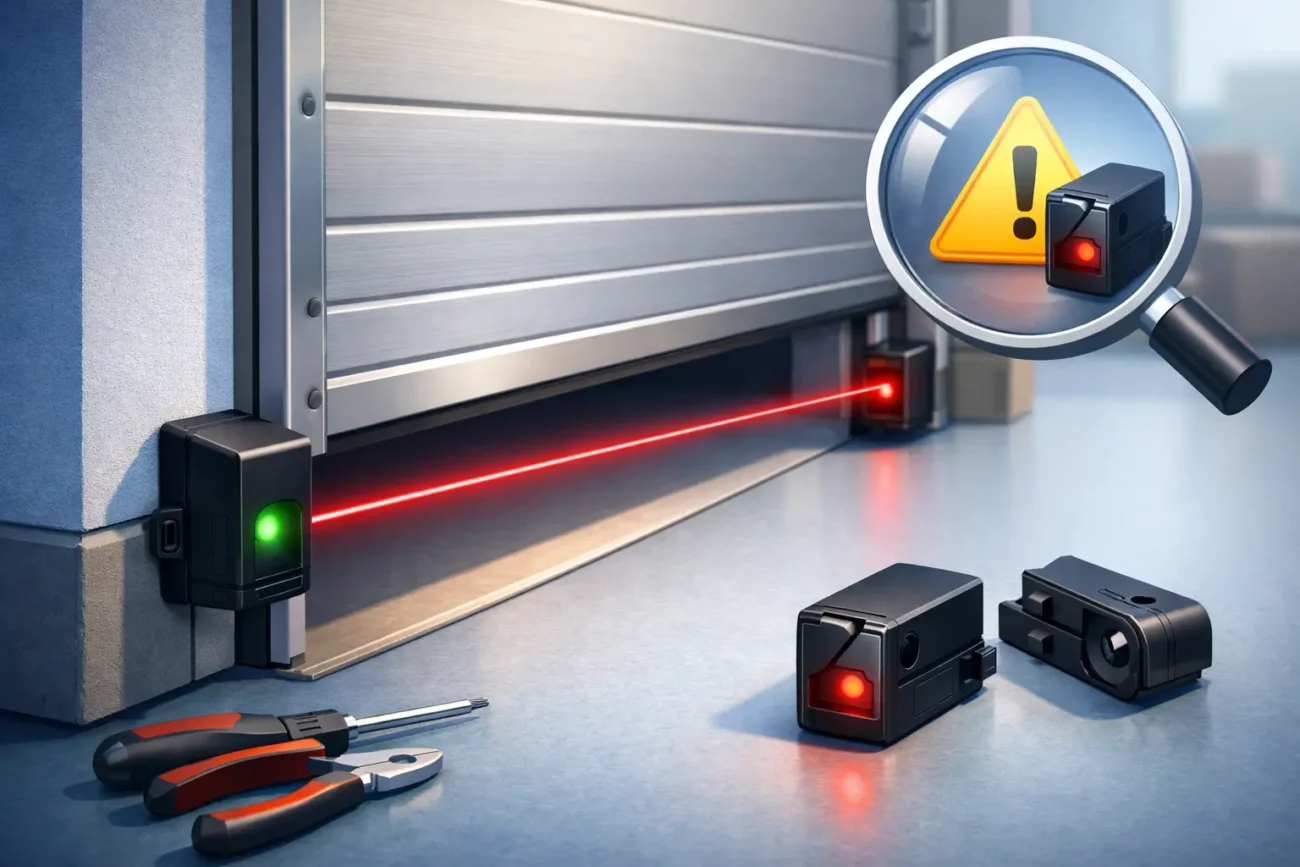
On a sliding door, check the full opening and closing travel. Pay attention to the last few inches at each end, where damaged stops, misadjusted guides and uneven floors often show up. If the door is powered, reconnect only after the mechanical movement is smooth. Then test the controls and all applicable safety devices, including photocells, safety edges and presence sensors.
Avoid coating tracks with heavy grease. It attracts dust and grit, especially in warehouses, workshops and loading areas. Use only the lubricant recommended for the system, and remember that many nylon rollers and sealed bearings need little or no lubrication. Cleaning and correct alignment often make more difference than adding lubricant.
Choose Replacement Rollers for Working Conditions
The cheapest roller is rarely the best value on a busy commercial door. Consider door weight, daily cycles, temperature, moisture and the track material. Nylon rollers are often quiet and suitable for many sectional doors, while steel rollers may be specified for heavier-duty applications. Sealed bearings can improve running life in high-cycle or dusty environments, but only where the roller design and door manufacturer allow them.
If several rollers show similar wear, replacing the full set is usually sensible. Mixing heavily worn rollers with one new roller can leave the door running unevenly and makes it harder to assess the real condition of the system. Conversely, a single damaged roller caused by an impact may justify a one-for-one replacement once the track and hinge have been checked.
For older, discontinued or unfamiliar systems, accurate identification saves time. Door Spares UK can help source hard-to-match rollers when you can provide measurements, photographs and any available door details through Ask Dora.
A correctly fitted roller should be almost unremarkable: the door moves freely, stays aligned and does not demand attention every time it opens. If it still drags, shakes or triggers faults after replacement, pause before changing more parts. The next repair may be in the track, hinges, balance system or automation, and solving that cause is what keeps the door safe and dependable.




Leave a comment