



A site callout rarely starts with a neat product code. More often, the door is down, the label is worn off, the customer wants it fixed yesterday, and all you have is a photo of a failed component and a rough idea of what the system does. That is exactly where an ask dora parts sourcing example is useful, because it shows what good sourcing looks like when the part is unclear but the job still needs doing.
For engineers, facilities teams and property owners, the real issue is not just finding a part. It is finding the correct part quickly enough to avoid repeat visits, unsafe workarounds and unnecessary downtime. In automated doors, shutters, barriers and access systems, guessing costs money.
What an ask dora parts sourcing example actually shows
The value in an Ask Dora enquiry is not that someone types in a part number and gets a box sent out. When that happens, sourcing is easy. The useful example is the awkward middle ground – when the part is obsolete, the manufacturer data is missing, or the person on site is not sure whether the fault sits with the motor, encoder, control board or safety device.
A proper sourcing example shows a step-by-step process. First, identify the equipment as accurately as possible. Then narrow down the failed component. Then confirm compatibility before supply. That sounds obvious, but in practice it is where many orders go wrong.
If a sectional door operator has intermittent travel faults, for instance, one customer may ask for a new motor because the door is stopping mid-cycle. Another may ask for a limit assembly because the travel is inconsistent. But once the site photos, control panel markings and symptom details are reviewed together, the actual issue may turn out to be an encoder fault or a damaged cable. The sourcing job is not just product picking. It is fault-led identification.
Ask Dora parts sourcing example: a typical real-world scenario
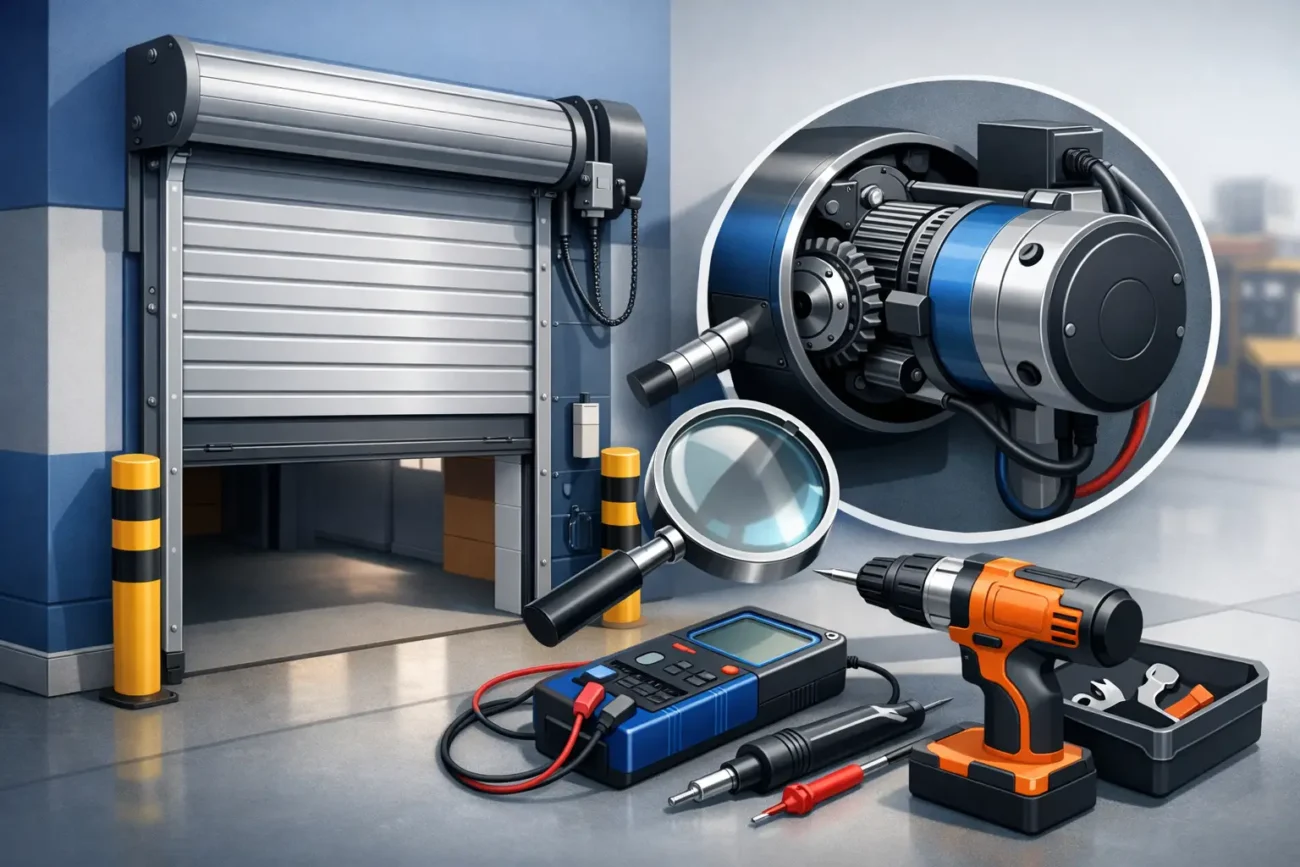
Imagine a maintenance engineer is called to an industrial unit with a high-speed door that will open but not close reliably. The safety edge appears intact, the sensor LED is inconsistent, and the sticker on the controller is half missing. The site has no O and M file worth reading, and the original installer is long gone.
The engineer sends over three things: a wide photo of the full door, a close-up of the suspect sensor, and an image of the control board enclosure. They also include a brief note saying the door hesitates on close, then reverses, and that the issue is worse in damp weather.
At that point, a decent parts sourcing process starts filtering the useful clues. The door make may be identified from the curtain profile, side guides or operator layout. The sensor body shape and cable entry may point to a specific generation of photocell. The board image may confirm the control platform, even if the exact label is unreadable. Damp-related faults may suggest water ingress, degraded seals or a sensor failure rather than a board issue.
Instead of sending a random safety sensor that looks similar, the enquiry is narrowed properly. Is the existing device monitored or non-monitored? What voltage does it run at? Is it paired to a receiver with matching coding? Does the controller require a particular output configuration? These details matter. Two parts can look nearly identical and still not work together.
The result is not magic. It is experience applied in the right order.
Why photos and symptoms matter more than most buyers think
Many customers assume the fastest route is to ask for the one part they think has failed. Sometimes that is fine, especially if the part number is clear. But when identification is uncertain, the better route is often to provide context first.
A photo of the complete door system can tell you more than a tight close-up of a broken component. A wide image may reveal the manufacturer family, retrofit automation, safety layout or previous modifications. A symptom description can be just as important. “Door judders on opening after power reset” gives far more to work with than “need new board”.
This is where less technical buyers often do better than expected. They may not know the product name, but if they can send clear images and explain what the door is or is not doing, that can be enough to identify the right line of enquiry. Trade professionals usually understand this already, but even experienced engineers can save time by sending a little more detail upfront.
The trade-off between speed and certainty
Every urgent job has pressure behind it. A warehouse wants the shutter operational. A retailer needs the automatic entrance safe and usable. A property manager wants access control restored before complaints build up. In those cases, everyone wants the quickest answer possible.
Still, there is a trade-off. Shipping the first part that looks about right may feel fast, but it is slower if it creates a second visit and another failure. On the other hand, over-analysing a straightforward request wastes time too. Good sourcing sits in the middle. Move quickly, but only after the key compatibility points are checked.
That balance is especially important with control boards, motor assemblies, transmitters, receivers, encoders and safety devices. These are not generic consumables. Version changes, firmware differences, mounting variations and connector types all affect whether a replacement is correct.
Where sourcing usually becomes difficult
Most hard-to-find enquiries fall into a few familiar categories. The first is obsolete or superseded parts, where the original item is no longer available and an equivalent must be confirmed. The second is incomplete identification, where labels are missing or site records are poor. The third is mixed systems, where a door has had components changed over time and the current setup no longer matches the original specification.
There is also the simple problem of naming. One engineer may call a component a loop detector, another may describe it as a vehicle sensor card, and the end user may just say the barrier no longer opens for cars. None of those descriptions are wrong, but they require interpretation.
An experienced sourcing team knows the difference between a failed part, a likely failed part and a part being blamed because it is easiest to see. That distinction prevents expensive mistakes.
What makes a good Ask Dora enquiry
The best enquiries are not always the most technical. They are the clearest. If you are trying to identify an unknown part, send the overall door or operator, the failed component, any labels or markings, and a short note on the fault. If something has already been tested, say so. If the site is urgent, say that too.
Useful details include whether the issue is intermittent or permanent, whether there has been recent impact damage, power loss or water ingress, and whether the component has already been replaced before. If the door is part of a larger access setup, that matters as well. A barrier linked to intercoms, loops and safety photocells has more than one possible failure point.
This is one reason Door Spares UK has built Ask Dora around real sourcing support rather than just catalogue browsing. In this sector, the customer often needs help getting from “this thing is broken” to a verified replacement.
When an exact replacement is not the only answer
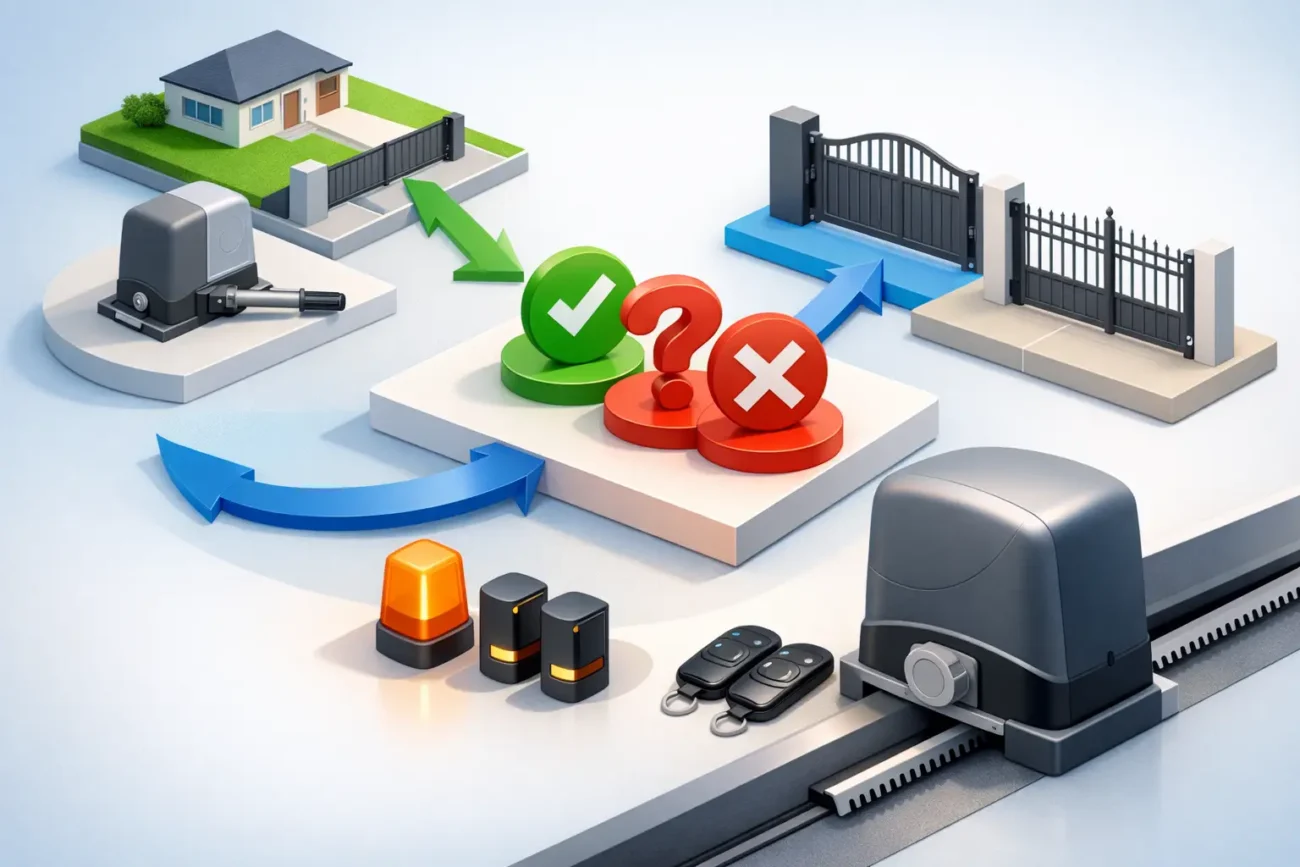
Some buyers understandably want like-for-like only. In many cases, that is the safest route. But not always. If a part is obsolete, damaged beyond recognition, or part of a known unreliable setup, a compatible alternative may be the better option.
That does not mean any substitute will do. It means checking operating voltage, dimensions, signal type, mounting, environmental rating and controller compatibility before recommending an alternative. A replacement sensor that fits physically but outputs the wrong signal is no replacement at all.
There are also jobs where replacing a single component is false economy. If a motor brake has failed on an older operator and the control side is also showing age-related issues, it may be worth considering whether a broader repair or upgrade is more sensible. That depends on budget, lead time, usage and the consequences of another breakdown.
The real point of an ask dora parts sourcing example
The point is not to make sourcing sound clever. It is to show that the right support can shorten the path from fault to fix, especially when the information on site is incomplete. A good example proves that even when a customer does not know the exact part name, there is still a practical route forward.
That matters because automated door failures are rarely convenient. They affect security, traffic flow, compliance and day-to-day operations. Whether you are an engineer trying to avoid a second trip or a facilities manager trying to keep a building running, the best result is usually the same – identify properly, supply accurately, and get the system back into service without guesswork.
If you have only a photo, a symptom and a bit of urgency, that is often enough to start the right conversation.



Leave a comment