


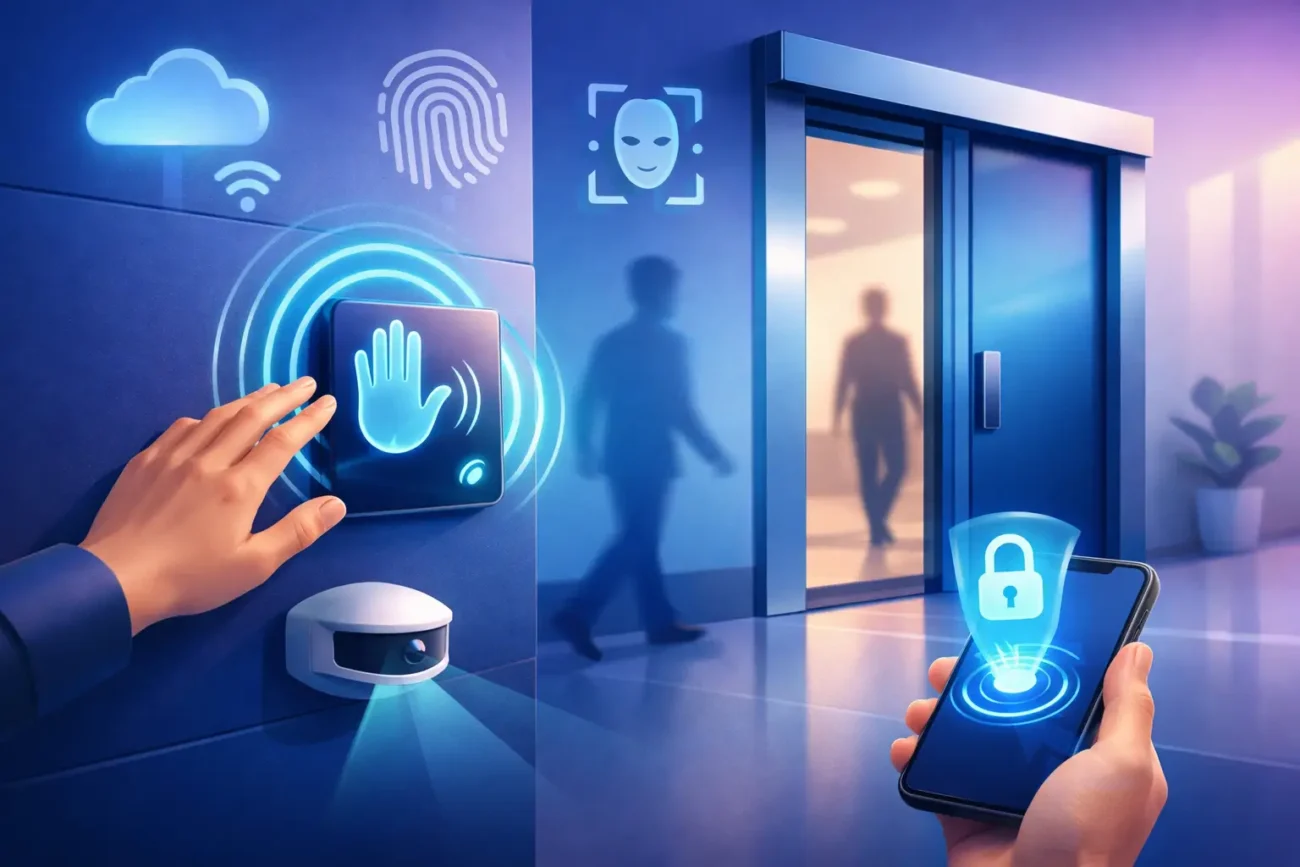
A failed entrance on a busy site does more than slow people down. It creates queues, frustrates staff, affects accessibility, and can turn into a safety issue very quickly. That is why the future of touchless door entry matters far beyond convenience. For facilities teams, installers and site operators, it is really about keeping access reliable, hygienic, secure and easy to manage.
Touchless entry has already moved well past the early wave of basic wave-to-open sensors. What comes next is not one single technology replacing everything else. It is a steady shift towards better detection, smarter control, stronger integration and more precise maintenance. In practice, that means doors that make better decisions, parts that are easier to monitor, and systems that suit the building instead of forcing the building to suit the system.
What the future of touchless door entry looks like
The next stage of touchless entry will be shaped by a simple question: what does the door need to detect, and what should happen next? On a hospital corridor, the priority may be hygiene and safe pedestrian flow. On a warehouse entrance, it may be traffic separation and durability. On a commercial office, it may be secure authorised access without slowing people down.
That is why the future of touchless door entry is likely to be more layered than many expect. Rather than relying on a single activation method, more systems will combine sensors, credentials, software rules and safety devices. A person might approach a pedestrian automatic door and be detected by a motion sensor, while the system also checks direction of travel, time schedules, lock status and emergency settings before opening.
This is a more useful way to think about touchless access. It is not just hands-free activation. It is controlled, low-friction entry with fewer unnecessary contact points.
Better sensors will do more of the heavy lifting
Sensor technology is one of the biggest areas of change. Older systems often rely on fairly blunt detection. They open when movement appears in a defined zone, which works well enough until it does not. False activations, poor discrimination and awkward door behaviour can all follow.
Newer sensor setups are becoming far more selective. They can better distinguish between someone approaching the door and someone simply passing nearby. They can cover awkward thresholds more accurately and improve user safety by detecting presence where older systems leave blind spots.
For trade professionals, this matters because sensor choice increasingly affects both user experience and service calls. A cheap or poorly matched sensor may still open a door, but if it causes nuisance openings, missed detections or unreliable hold-open behaviour, the site will not care that the initial cost was lower. They will care that the entrance is causing problems.
This is especially relevant in schools, healthcare settings, retail frontages and high-traffic commercial sites where door cycles are constant and pedestrian behaviour is less predictable.
Access control and touchless entry are moving closer together
For years, touchless activation and access control were often treated as separate conversations. One was about convenience and hygiene, the other about security. That line is fading.
Increasingly, touchless entry is being tied into credential-based systems such as fobs, mobile access, number plate recognition for vehicle gates, and cloud-managed permissions. In practical terms, that allows a site to decide who can enter, when, and through which route, without relying on a keypad or push plate.
Mobile credentials are likely to keep growing, particularly in commercial buildings and managed residential developments. They reduce the need for shared touchpoints and can be updated remotely. That said, they are not a universal answer. Some users do not want access tied to a personal device, and some sites need simpler, more durable arrangements. Industrial locations, for example, may still prefer hardened external readers, radar sensors or loop-based vehicle detection that can cope with demanding conditions.
The right answer depends on traffic type, risk level and maintenance capability. A system is only better if the site can realistically operate it.
Touchless does not mean maintenance-free
One of the biggest misunderstandings around automation is that fewer contact points somehow means fewer service needs. In reality, the future of touchless door entry will depend heavily on maintenance quality.
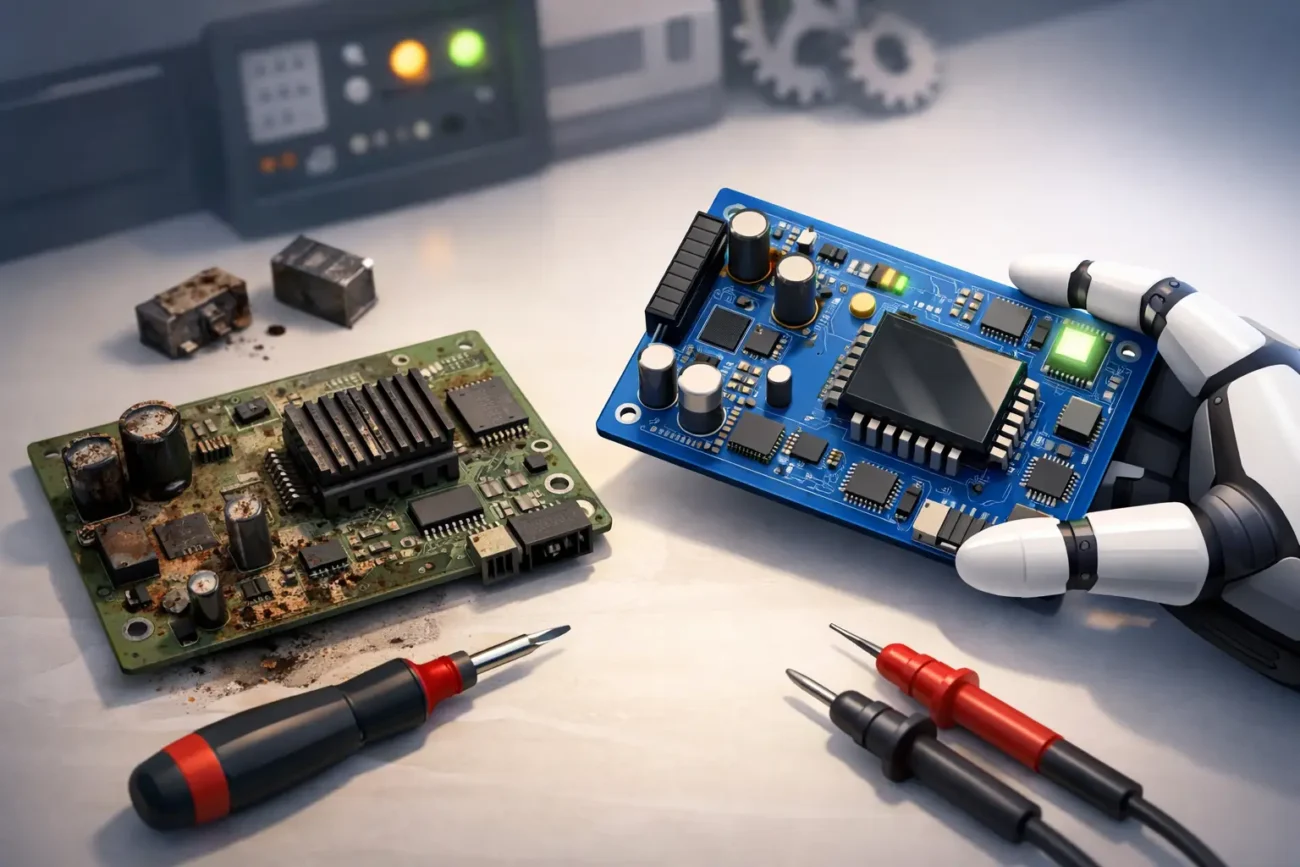
Sensors drift out of alignment. Control boards fail. Motors wear. Safety devices get knocked, contaminated or bypassed. Environmental conditions matter as well. External doors face wind load, water ingress, dirt and fluctuating temperatures, all of which affect performance over time.
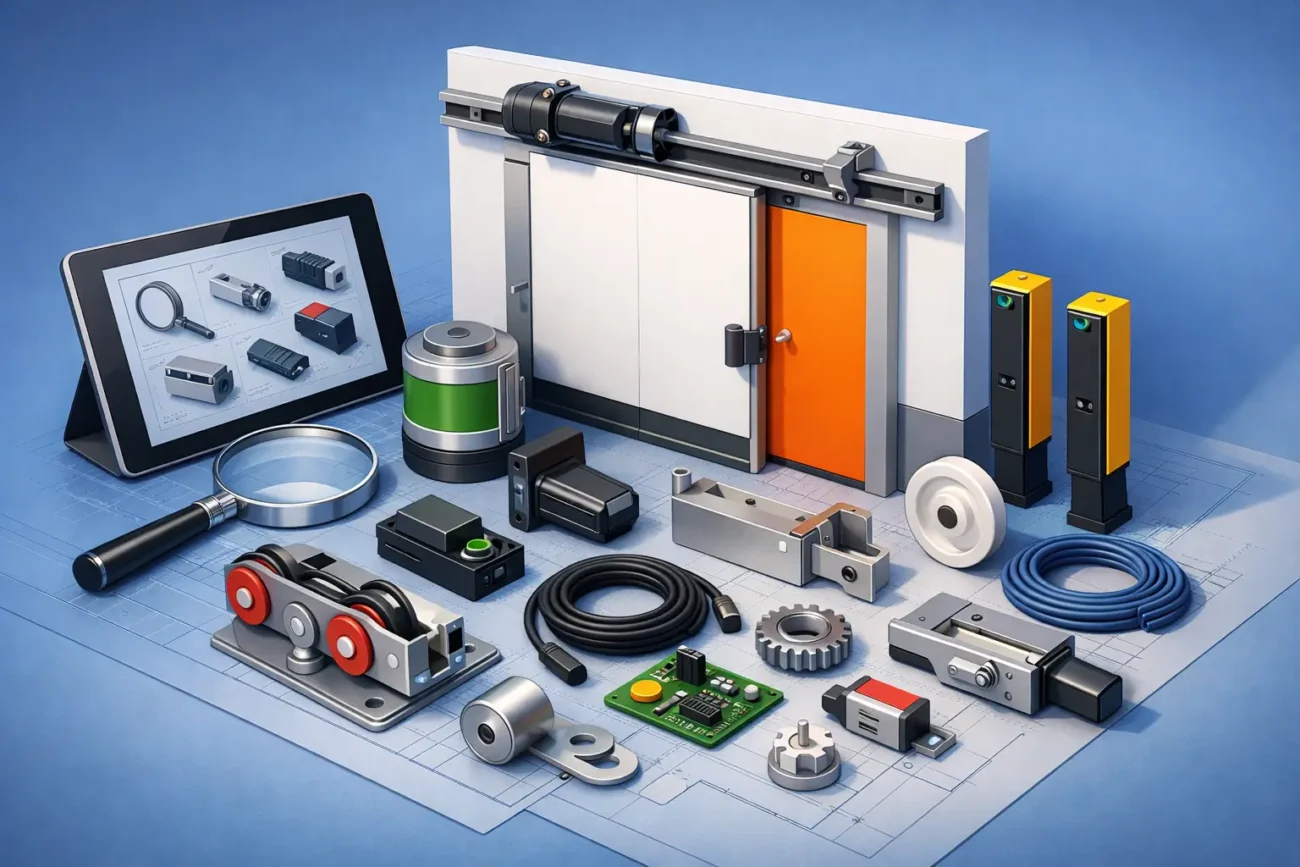
As systems become smarter, fault-finding should improve. Better diagnostics, status indicators and remote monitoring can help engineers identify the likely cause of issues before visiting site. That can reduce downtime and cut out some of the guesswork, especially when sourcing a replacement encoder, sensor, board or motor.
Still, more intelligence in a system can also mean more complexity. If a door depends on multiple devices communicating properly, a single weak point can disrupt the whole sequence. This is where exact-fit parts and sound technical support matter. Swapping in a near match is often what creates repeat faults.
Hygiene will remain part of the picture, but not the whole story
It is easy to frame touchless entry around public health concerns, but that only tells part of the story. Hygiene drove rapid adoption in many settings, yet the long-term case is wider and more practical.
Touchless operation helps with accessibility. It improves flow in buildings where people are carrying stock, pushing trolleys or moving patients. It reduces wear on manual hardware. It also supports better traffic management in mixed-use environments where speed and safety need balancing.
That broader value is why touchless systems are likely to stay standard in many new and refurbished buildings. Once a site gets used to smoother entry and fewer choke points, going backwards rarely looks attractive.
Data will shape how entrances are managed
A quieter shift is happening in the background: entrance systems are starting to produce more usable operational data. This is not about making every door overly clever for the sake of it. It is about giving site teams a clearer picture of how systems are actually performing.
Cycle counts, fault history, opening times, lock events and sensor activity can all help with planning. If one entrance is cycling far more heavily than expected, maintenance intervals may need adjusting. If a recurring fault appears after weather events, enclosure protection or component choice may need reviewing. If a door is opening unnecessarily hundreds of times a day, sensor setup may be costing energy and reducing component life.
For facilities managers, this kind of information can improve budgeting and reduce surprise failures. For engineers and installers, it supports better recommendations instead of guesswork.
Older doors will not disappear overnight
There is always a temptation to talk about the future as if every site is about to replace its entrance systems at once. That is not how this sector works. Many buildings across the UK are running older operators, legacy controls and mixed hardware estates. Budget, compatibility and downtime constraints all affect upgrade decisions.
In many cases, the future of touchless door entry will arrive through phased retrofits rather than full replacements. A site may keep its existing operator but upgrade the activation sensor, safety side, controller logic or access device. That can be the right move if core mechanical elements are still sound.
The trade-off is compatibility. Not every new component plays nicely with older systems, and not every door is worth modernising. Sometimes a targeted upgrade extends service life sensibly. Sometimes it only delays a bigger problem. Knowing the difference saves money.
The best systems will feel almost invisible
When touchless entry is specified well, users barely think about it. The door opens when it should, stays closed when it should, and does not create friction in the middle of a working day. That is the real benchmark.
The future is not just about more technology on the door leaf or more software behind the scenes. It is about reducing unnecessary intervention. Better setup, better parts, better diagnostics and better support all push in that direction.
For anyone responsible for keeping access systems working, the message is fairly straightforward. Focus less on novelty and more on fit. Choose equipment that matches the site, plan for maintenance, and do not treat sensors, controls and safety devices as afterthoughts. If you are dealing with a difficult legacy setup or trying to identify the right replacement part, that practical approach matters more than any trend report. Sometimes the smartest step is simply getting the exact component and advice you need, quickly. That is where specialist support, including part-finding help such as Ask Dora, earns its keep.

Leave a comment