


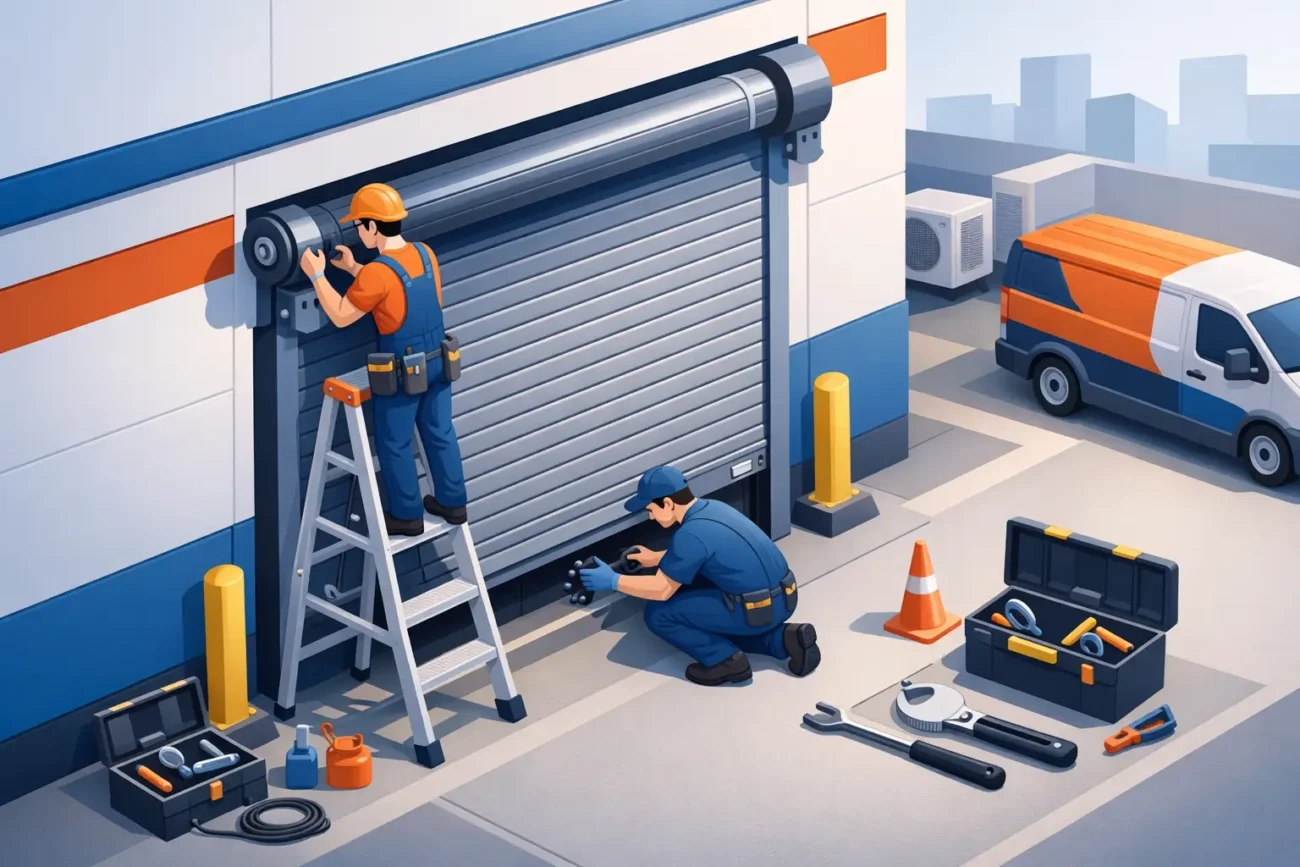
A roller door usually starts asking for attention long before it fails. It gets noisier on travel, slows slightly on the way up, leaves a mark on the curtain, or stops closing cleanly at one side. On a busy site, those small changes are easy to ignore until the door is out of action and operations are held up. This commercial roller door maintenance guide is built for that reality – keeping doors safe, reliable and easier to repair before downtime becomes the main issue.
Why routine maintenance matters more than most sites expect
Commercial roller doors do a hard job. They open and close repeatedly, take knocks from traffic, collect dust and moisture, and often operate in buildings where temperature, wind and debris add extra strain. Even a well-made door will wear if it is left unchecked.
The cost of neglect is not just the repair invoice. A faulty door can affect loading schedules, site security, staff access and compliance. If the door is part of a fire compartment or forms a key security line, the stakes are even higher. That is why good maintenance is not about making equipment last forever. It is about spotting wear early enough to plan parts, labour and downtime properly.
There is also a practical point many facilities teams know well – faults rarely stay isolated. A worn guide can put extra stress on the curtain. A struggling motor can affect limits and control gear. A damaged safety edge can stop the whole system from operating as intended. One small issue often pulls another behind it.
What to include in a commercial roller door maintenance guide
A useful maintenance routine needs to be realistic. If checks are too complicated, they will not be done. If they are too light, obvious problems will be missed. The right balance depends on door usage, the environment and the consequences of failure.
For a warehouse door cycling all day, inspection intervals should be tighter than for a lightly used shutter on a storage unit. A coastal site, food production area or dusty industrial setting may also need more frequent attention because corrosion, residue and contamination can shorten component life.
At a minimum, your maintenance plan should cover the curtain, guides, barrel assembly, motor, controls, safety devices and fixings. It should also record what has changed since the last inspection. That last point matters. Wear tends to show up as change – more noise, slower travel, rougher movement, increased vibration, damage around contact points or repeated reset issues.
Start with safe visual checks
Before touching any part of the system, isolate power where appropriate and follow site safety procedures. A visual inspection often reveals more than people expect. Look for dents, bent slats, curtain damage, worn bottom rails, damaged seals and signs that the curtain is rubbing in the guides.
Check the guides themselves for wear, impact damage and loose fixings. If forklifts or pallet traffic operate nearby, guide damage is common. Even a slight misalignment can affect curtain travel and increase strain on the operator.
Look at the area around the opening as well. Debris in the guides, stored goods too close to the door line or repeated vehicle contact can all create faults that appear mechanical but start with the environment.
Listen to the door in operation
A door that has been working smoothly for months should not suddenly sound different without reason. Grinding, scraping, rattling and straining noises usually point to wear, poor alignment or a problem developing in the drive system.
Watch a full opening and closing cycle. The door should travel evenly, stop where expected and respond correctly to controls. Jerky movement, hesitation or uneven bottom edge travel can indicate issues with springs, balance, guide alignment or the motor setup, depending on the door design.
If the operator sounds laboured, do not assume it is just age. Motors often end up blamed for faults caused elsewhere. A door with excessive resistance will make the drive work harder than it should.
Key components that need regular attention
The curtain and guides are the obvious starting point, but they are only part of the picture. On automated doors, the control side matters just as much.
Motors, gearboxes, limit assemblies, control panels, safety edges, photocells and transmitters all play a role in reliable operation. If one element drifts out of tolerance or begins to fail, the whole system can become inconsistent. That inconsistency is often what users notice first.
Check electrical enclosures for moisture ingress, damaged cable glands, loose terminals and signs of overheating. Inspect control boards and wiring for contamination or wear. In older systems, intermittent faults can come from tired components rather than one obvious break.
Safety devices deserve particular attention. If the door uses photocells, test that they are aligned, clean and functioning correctly. If it has a safety edge, inspect for physical damage and confirm it reacts as intended. A safety component that is present but not working properly creates a false sense of security, which is worse than a visible fault.
Lubrication and cleaning – useful, but not a cure-all
Cleaning and lubrication help, but they should not be used to mask a deeper problem. If a guide is bent or a bearing is failing, adding lubricant may quieten the symptom briefly while the underlying issue gets worse.
Use the correct products for the specific door and component. Over-lubrication can attract dirt, and the wrong lubricant can damage materials or interfere with braking and grip in places where friction matters. Cleaning should focus on removing debris, dust and residue from guides, sensors and moving areas without forcing contaminants further into the mechanism.
If a site is washing down regularly or dealing with corrosive conditions, protective maintenance may need adjusting. What works in a dry warehouse may not suit a food site or exposed loading bay.
Common warning signs that should not be ignored
Some faults need immediate action, while others allow a short window for planned repair. Knowing the difference helps avoid unnecessary shutdowns without taking risks.
Repeated tripping, failure to complete a cycle, inconsistent limit stopping, visible cable damage, heavy impact to the guides, and failed safety devices should be treated seriously. A door that drops, snatches or moves unpredictably should be taken out of service until assessed properly.
Other issues, such as increased noise, worn seals, slower operation or occasional control faults, may allow time to source parts and schedule work. Even then, it pays to move quickly. Commercial doors rarely improve on their own.
Service intervals depend on use, not just the calendar
One annual visit is enough for some doors and nowhere near enough for others. Usage is the better measure. A door that cycles dozens of times per day will age differently from one used twice a week, even if both were installed on the same date.
For busy commercial and industrial sites, planned inspections at suitable intervals are usually the safer approach. High-cycle doors, doors exposed to impacts, and doors critical to security or operations may justify more frequent checks. Lower-use installations may need less, but they still need routine review.
A basic rule is simple: the more critical the opening, the less sense it makes to wait for failure. Planned maintenance is easier to budget for than urgent call-outs, emergency labour and delayed deliveries.
Parts management makes maintenance faster
A good maintenance routine is only half the job. When a component does fail, speed depends on identifying the correct part without guesswork. That can be difficult with older doors, mixed-site equipment or systems where previous repairs have changed the original setup.
This is where accurate records help. Keep note of the door type, operator model, control panel details, safety devices and any part numbers visible on motors, encoders, boards or sensors. Photographs are often just as useful as written notes, especially when labels are worn or missing.
For engineers and facilities teams, this cuts wasted time. Instead of describing a fault in general terms, you can match the exact component and get on with the repair. If the part is obsolete or unclear, technical support matters. Door Spares UK Ltd sees this regularly, particularly when customers are trying to identify older automation parts from limited markings or site photos.
When maintenance should become repair or replacement
Not every worn part justifies a full door replacement. Equally, not every failing door is worth repeatedly patching up. The right choice depends on age, condition, parts availability and how critical the opening is.
If the structure is sound and the issue is limited to a defined component, replacement parts are usually the sensible route. Motors, control boards, safety devices, transmitters and other automation elements can often restore dependable operation without major works.
If the door has recurring alignment issues, extensive curtain damage, structural wear or unsupported controls, ongoing repair may become poor value. The real test is whether the next repair improves reliability or simply postpones another failure. On busy sites, repeat downtime often costs more than the part itself.
The value of a maintenance record
A written record turns maintenance from a vague intention into something useful. It helps identify patterns, justify spend and reduce repeat faults. It also gives service engineers a clearer starting point when a problem does arise.
Keep records simple and practical. Log inspection dates, faults found, parts replaced, adjustments made and any recurring issues. If one door is repeatedly damaging guides or losing sensor alignment, that points to a wider operational cause worth fixing.
The best maintenance plans are not complicated. They are consistent, realistic and tied to how the door is actually used. If your roller door is critical to access, security or site flow, treat the early signs seriously, keep accurate parts information, and deal with small faults while they are still small.



Leave a comment