


When an automatic or industrial door starts misreading position, stopping short, reversing without reason or throwing intermittent faults, the encoder is often high on the list of suspects. Knowing how to match door encoders properly saves time on site and stops a simple replacement turning into a return, a wiring issue or a door that still will not run correctly.
The problem is that encoders can look deceptively similar. Two units may share the same housing, shaft size or connector style, yet still be incompatible because the pulse output, supply voltage or signal format is different. If you are ordering against appearance alone, you are taking a risk.
Why matching the encoder matters
A door encoder is there to tell the control system where the door is, how far it has travelled and, in some systems, which direction it is moving. If the control board receives the wrong signal, the operator can lose position reference, fail to complete a learning cycle or trigger safety responses that stop normal operation.
On a busy industrial site, that quickly becomes more than an inconvenience. A fast action door that will not close properly affects heat retention, security and traffic flow. A shutter with poor positional feedback can become unreliable in daily use. On pedestrian operators, incorrect feedback can lead to erratic movement and faults that are difficult to trace unless the replacement part has been checked properly from the start.
How to match door encoders without guesswork
The safest way to match an encoder is to work from the original part details and the door system information together, not one or the other in isolation. The encoder itself tells part of the story. The motor, control unit and door manufacturer tell the rest.
Start with the data on the original encoder
If the label is still readable, this is your best starting point. Look for the manufacturer name, exact part code, voltage, output type and any pulse information. Sometimes the crucial detail is a short suffix at the end of the code rather than the main number. That suffix may indicate shaft size, cable length, connector orientation or electrical output.
If the label is damaged, do not assume the part is unidentifiable. A clear photo of the body, rear connector, cable entry, mounting face and shaft can still narrow things down significantly. In practice, image matching often works best when supported by the door model and control board reference.
Check the encoder type, not just the size
This is where many mismatches happen. Incremental encoders and absolute encoders are not interchangeable unless the system is specifically designed to accept both, which is uncommon in door automation. Even within incremental encoders, the signal format matters. Some supply simple pulse outputs, while others use channel A and B quadrature signals, and some include an index signal as well.
A unit that fits mechanically but sends the wrong type of signal is still the wrong part. The control board will not care that the shaft diameter is perfect if the feedback format is incorrect.
Confirm voltage and output specifications
A matching encoder must work within the voltage range expected by the controller. Common supply values vary by manufacturer and operator type, and a mismatch here can lead to immediate failure or unreliable performance.
You also need to confirm the output style. Open collector, push-pull, line driver and other signal standards are not interchangeable by default. Some controllers are tolerant. Many are not. If the technical sheet is unavailable, the original wiring layout and terminal markings on the control board can help point you in the right direction.
Mechanical fit still matters
Electrical compatibility is only half the job. The encoder also has to mount correctly and transmit movement without strain or slippage.
Check shaft details and mounting pattern
Measure the shaft diameter, shaft length and whether it is solid or hollow. Check for flats, keyways or clamping styles. Then look at the fixing pattern, body diameter and overall depth. Tight spaces inside motor assemblies can rule out near matches that are technically similar but physically too large.
This matters particularly on older operators where access is already awkward. If an encoder sits under tension, fouls a cover or requires improvised spacing, you are building in a future fault.
Look at connector and cable orientation
A connector in the wrong position can be enough to make an otherwise suitable part unusable. Some installations have little clearance around the motor or gearbox. A straight rear exit may not fit where the original had a side-exit cable. Equally, different pin layouts on similar plugs can catch people out.
Never rely on plug shape alone. Always compare the pinout if that information is available. Re-pinning may be possible in some cases, but only if the signal standard and voltage are also correct. It is not a shortcut for making the wrong encoder work.
Use the door and controller details
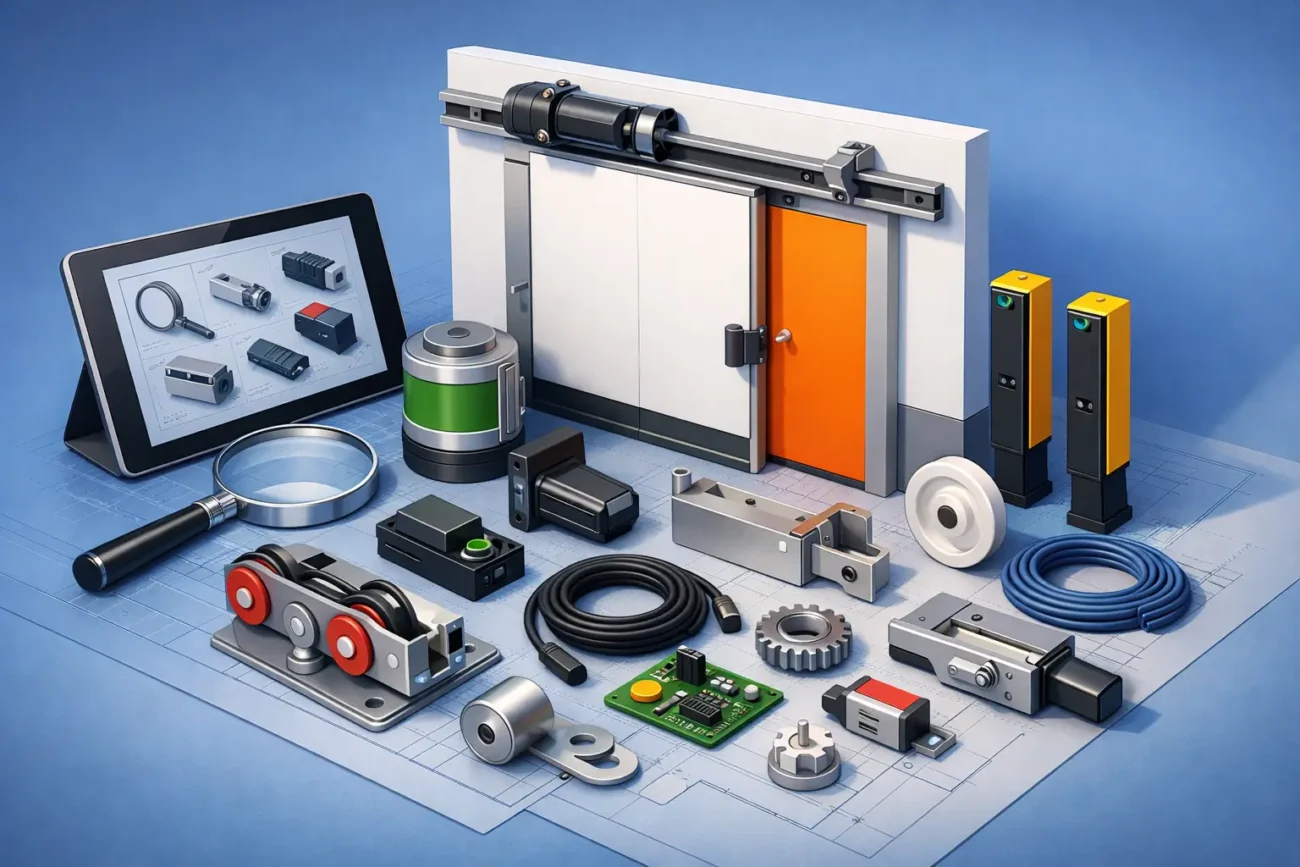
If you are trying to work out how to match door encoders and the part number is missing, the next best route is to identify the wider system. The door brand, operator model, motor reference and control board number often provide enough information to trace the correct encoder.
On many doors, the encoder is selected as part of a motor or drive package rather than as a universal stand-alone item. That means the same door brand may use different encoders across different production years or controller revisions. This is why model-only ordering can be risky unless the serial number or board version is checked too.
For trade engineers, this is usually the point where a few site photos save a lot of back and forth. One image of the encoder, one of the motor plate and one of the control board is often far more useful than a brief description saying it is from a fast door or roller shutter.
Common mistakes when matching encoders
The most common mistake is ordering by appearance. The second is assuming all encoders on the same brand of door are interchangeable. The third is replacing the encoder without confirming it is actually the failed component.
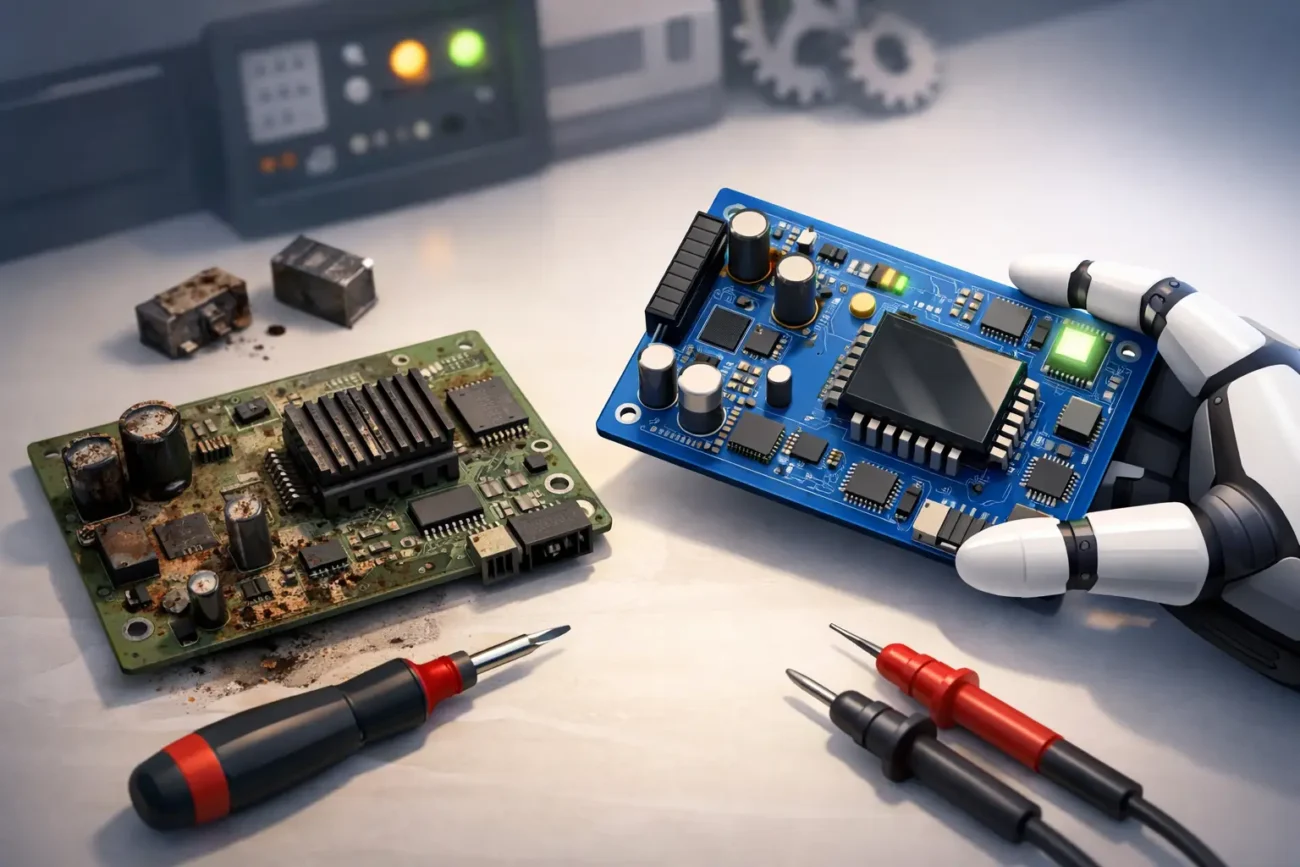
Faults linked to position errors can also come from damaged cables, contaminated connectors, loose couplings, motor brake issues or control board faults. If the original encoder is physically damaged, burnt out or has obvious bearing wear, that points you in the right direction. If not, it is worth checking power supply, continuity and signal behaviour before replacing parts on assumption.
Another trap is fitting an encoder that appears to work during setup but becomes unstable in service. That usually comes back to incorrect pulse count, noisy signal output, weak connection quality or a mechanical fit that allows slight movement under load.
When a like-for-like replacement is not available
Older door systems do create awkward situations. A direct replacement may be obsolete, out of production or tied to a discontinued motor assembly. In those cases, a substitute can sometimes be sourced, but only after checking compatibility in detail.
That is an area where experience matters. A substitute is not simply the nearest electrical match. You need to consider mounting arrangement, signal expectations, controller tolerance and whether any connector adaptation is safe and practical. Sometimes there is a proven alternative. Sometimes there is not, and forcing it costs more in labour than sourcing the right original-spec part.
For end users and facilities teams, this is usually where specialist support pays for itself. Sending over part photos and system details early is far quicker than trialling two or three uncertain replacements.
A practical approach on site
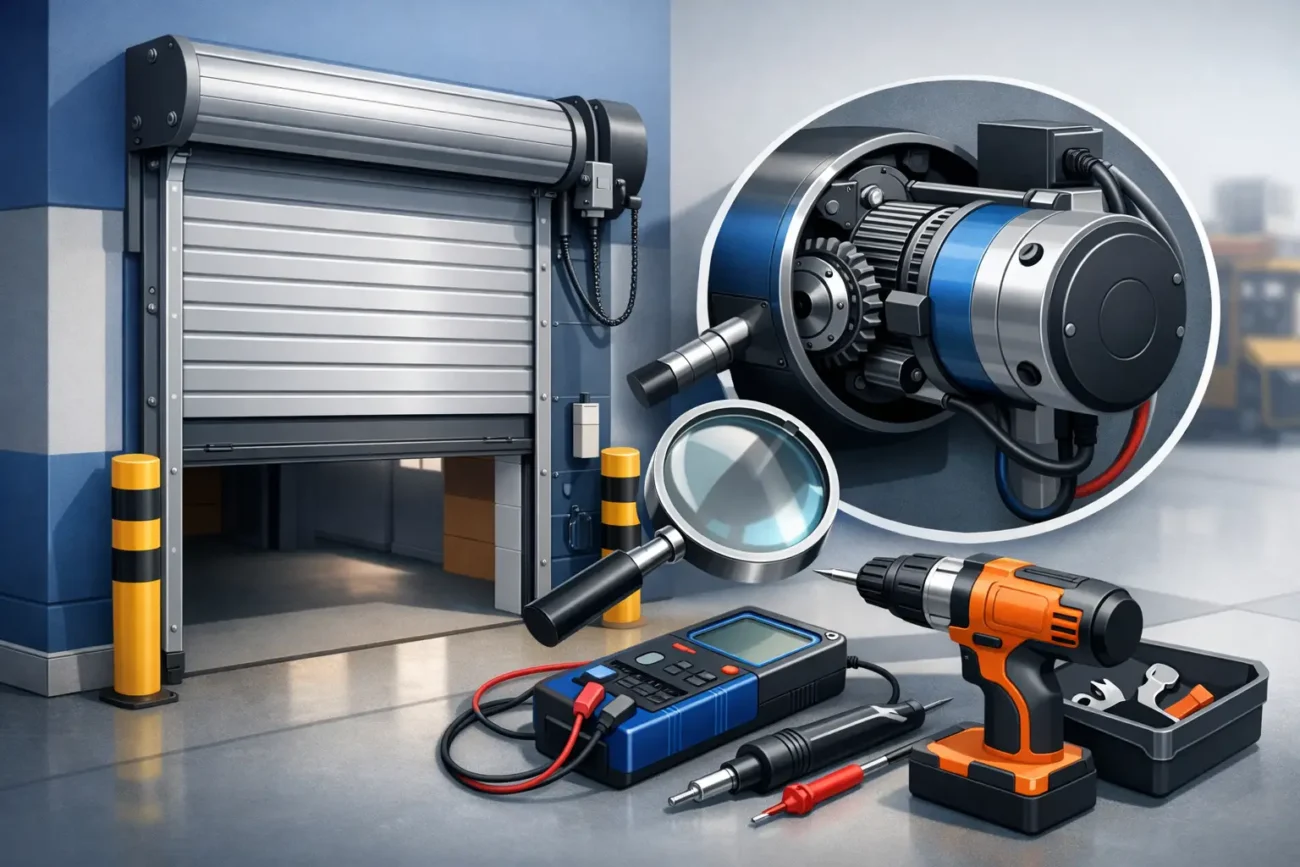
If you are standing in front of a faulty operator, take five minutes to gather the right information before ordering. Photograph the encoder label, the mounting position, the connector, the motor plate and the control board. Note any fault codes, learning issues or travel symptoms. Record the door make and model if it is visible.
That gives you a proper basis for identifying the part instead of relying on memory or visual comparison. It also helps rule out the cases where the encoder is only one part of the fault.
Door Spares UK often sees jobs delayed because the first replacement was chosen on shape rather than spec. A little more detail at the start usually means the right part arrives first time, which is what matters when a site needs the door back in service quickly.
If there is one rule worth keeping, it is this: match the function before you match the housing. The correct encoder is the one that speaks the right language to the controller, fits the drive properly and keeps the door operating safely day after day.


Leave a comment