


A closing gate does not get a second chance. If a vehicle, pedestrian, pallet lorry or child enters its path, the safety system must detect the risk and stop or reverse the movement before harm is done. The best gate safety devices are therefore not simply the most expensive components. They are the devices that address the real hazards of a particular gate, entrance and pattern of use.
For installers, facilities teams and property owners, the starting point is always the same: assess the gate as a complete automated system. Gate leaf weight, travel speed, hinge-side gaps, public access, vehicle movements and the condition of the control panel all affect what protection is required.
What makes a gate safety device effective?
A safe installation normally uses more than one protective measure. A pair of photocells may prevent a gate from closing on a passing vehicle, but they cannot necessarily protect a person caught between the moving leaf and a fixed post. A safety edge can cover a crushing point, but it may not provide sufficient advance warning in a busy entrance. Each device has a job to do.
The most effective systems combine detection, controlled movement and clear operation. That means correctly positioned sensors, suitable force limitation, safe controls and regular testing. It also means selecting equipment compatible with the gate operator and control board. A good device connected incorrectly, set to the wrong input or bypassed after a fault offers very little protection.
Risk assessment and commissioning should be carried out by a competent person. For automated gates in the UK, relevant safety requirements and standards, including BS EN 12453 and BS EN 12445, help installers establish suitable protection and test performance. The exact combination needed depends on the installation rather than a one-size-fits-all shopping list.
The best gate safety devices for common risks
Photocells for the gate opening
Photocells are among the most widely used gate safety devices. A transmitter sends an infrared beam to a receiver across the entrance. When a person, vehicle or object breaks the beam, the control panel responds according to its programmed function, commonly stopping or reversing a closing gate.
They are particularly useful across driveways, commercial yards and access roads because they protect a broad route through the gate. A correctly aligned hard-wired photocell is often the dependable choice for high-use or industrial locations. Wireless units can be practical where trenching is difficult, although batteries, signal range and site interference need to be considered.
One pair is not always enough. Low-mounted photocells can detect cars and pedestrians, while a second set at a different height may be needed for taller vehicles or to cover a specific hazard. They should not be placed where parked vehicles, vegetation, standing water or regular site activity will constantly obstruct them. Nuisance activations soon lead to unsafe workarounds.
Safety edges at crushing and shearing points
Safety edges are pressure-sensitive strips fitted to a moving gate edge or fixed structure. When compressed, they send a signal to stop or reverse the gate. They are essential where a person could be trapped, crushed or sheared between a gate and a post, wall, fence, hinge area or other fixed object.
For sliding gates, edges are commonly fitted to the leading edge and may also be needed along the rear edge or at other hazardous points. For swing gates, consider the closing edge, the hinge-side area and any gaps created as the leaf moves. The physical layout matters far more than fitting an edge simply because one was supplied with the operator.
A safety edge needs the right profile, length and activation system for the application. Wired edges suit many permanent installations. Radio safety edges are useful where cabling to a moving leaf is impractical, but their batteries and monitored safety transmission must be maintained. Damaged rubber, loose end caps and faulty cabling can prevent reliable operation, so inspection is not optional.
Force limitation and encoder control
Modern operators can monitor motor force or use encoders to detect abnormal resistance. If the gate meets an obstruction, the operator should stop and, where configured, reverse. This is a valuable secondary layer of protection and can reduce the force applied during contact.
However, force limitation should not be treated as a substitute for physical safeguarding. Changes in temperature, gate condition, wind loading and wear can affect the force required to move a gate. A gate that appears to reverse correctly on one day may behave differently when rollers are tight, hinges are worn or the entrance is exposed to strong winds.
Correct setup is critical. Excessive force settings make the system less sensitive, while settings that are too low can create repeated stoppages and access problems. Engineers should test the gate under realistic conditions after installation, repair or adjustment.
Laser scanners and presence detection
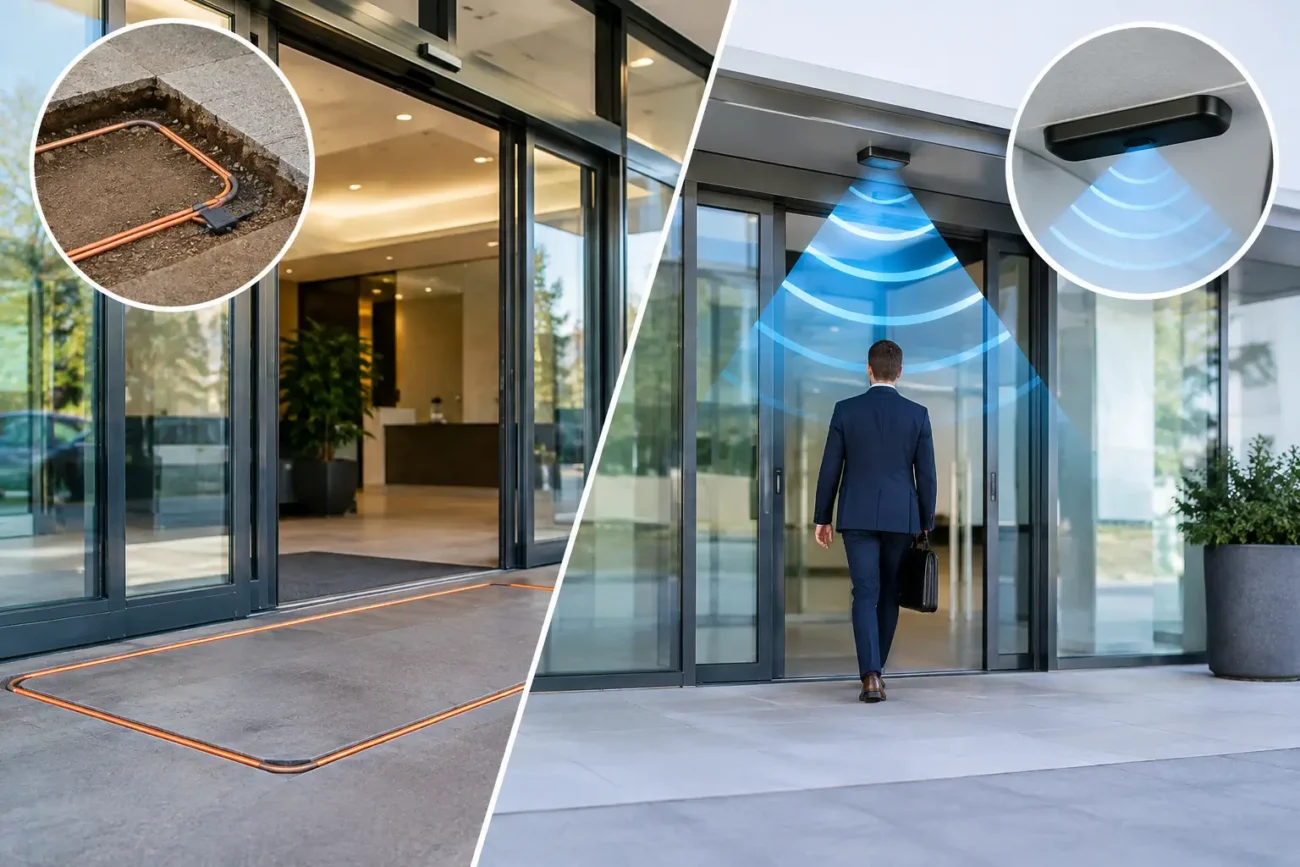
Where people and vehicles share a busy entrance, advanced presence detection can provide more flexible coverage than a single beam. Laser scanners create monitored detection fields around the gate and can be configured to detect approach, presence or intrusion in defined zones. They are often suited to commercial yards, logistics sites and entrances with complex geometry.
These systems can reduce the need for multiple conventional sensors, but they require careful setup. Vehicle shapes, reflective surfaces, poor mounting positions and changes to the site layout can all affect performance. They also need routine cleaning and validation. For a simple private driveway, a scanner may be more than the application requires. For a busy site with pedestrians and forklifts, it may be the sensible option.
Warning lights, sounders and traffic control
Flashing beacons and audible warning devices do not physically prevent contact, but they make gate movement more obvious. This matters at entrances with restricted sightlines, frequent deliveries or unfamiliar visitors. They should be viewed as supporting safety measures, not as a replacement for sensing devices.
Traffic lights, road markings, fixed barriers and clear signage can further control how vehicles approach an automated gate. On commercial premises, separating pedestrian and vehicle routes is often one of the most effective ways to reduce risk. If pedestrians regularly squeeze around a sliding gate because there is no nearby access door, the issue is not solved by adding another warning sticker.
Emergency stop and safe manual release
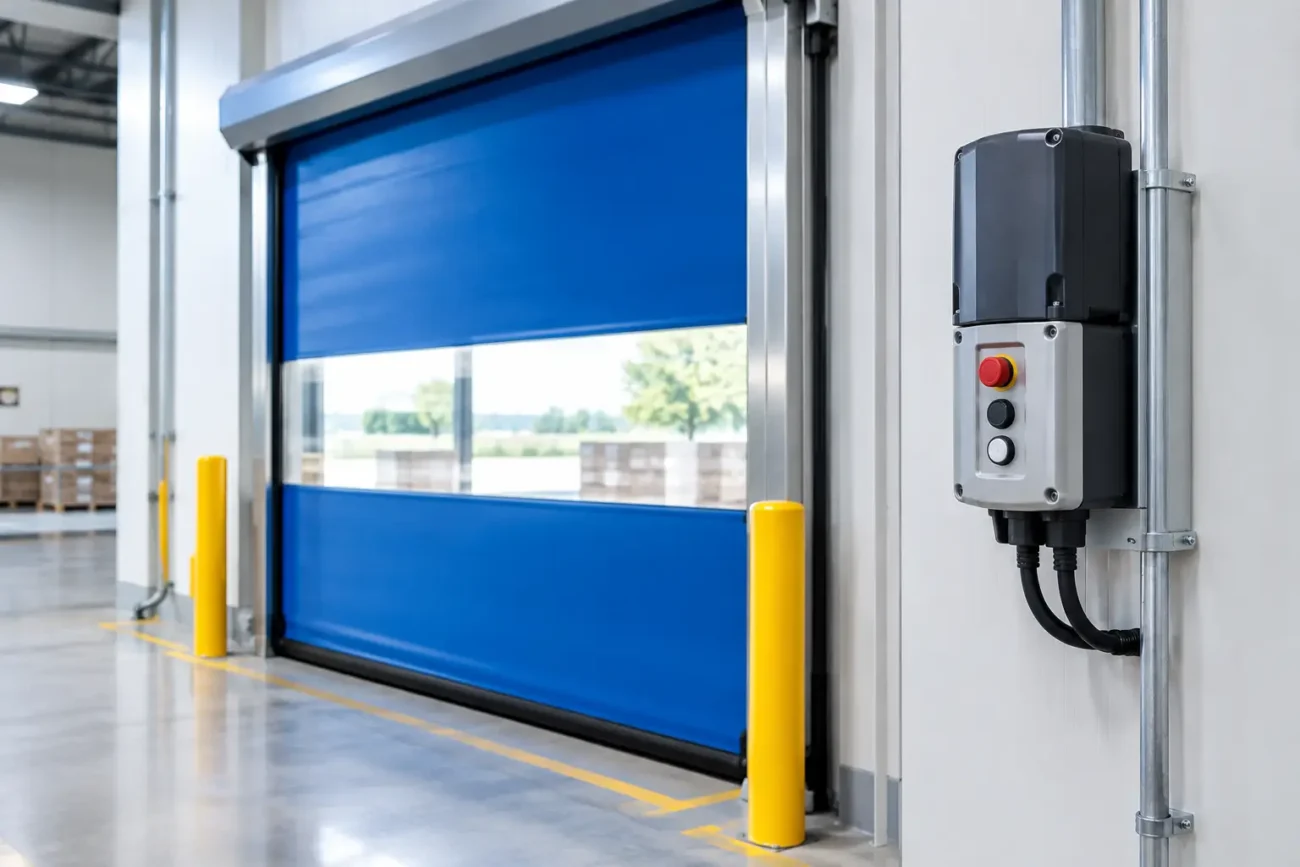
An accessible emergency stop allows gate movement to be halted quickly when a fault or dangerous situation develops. It must be positioned where an authorised user can reach it without entering a danger zone, clearly identified and tested as part of routine maintenance.
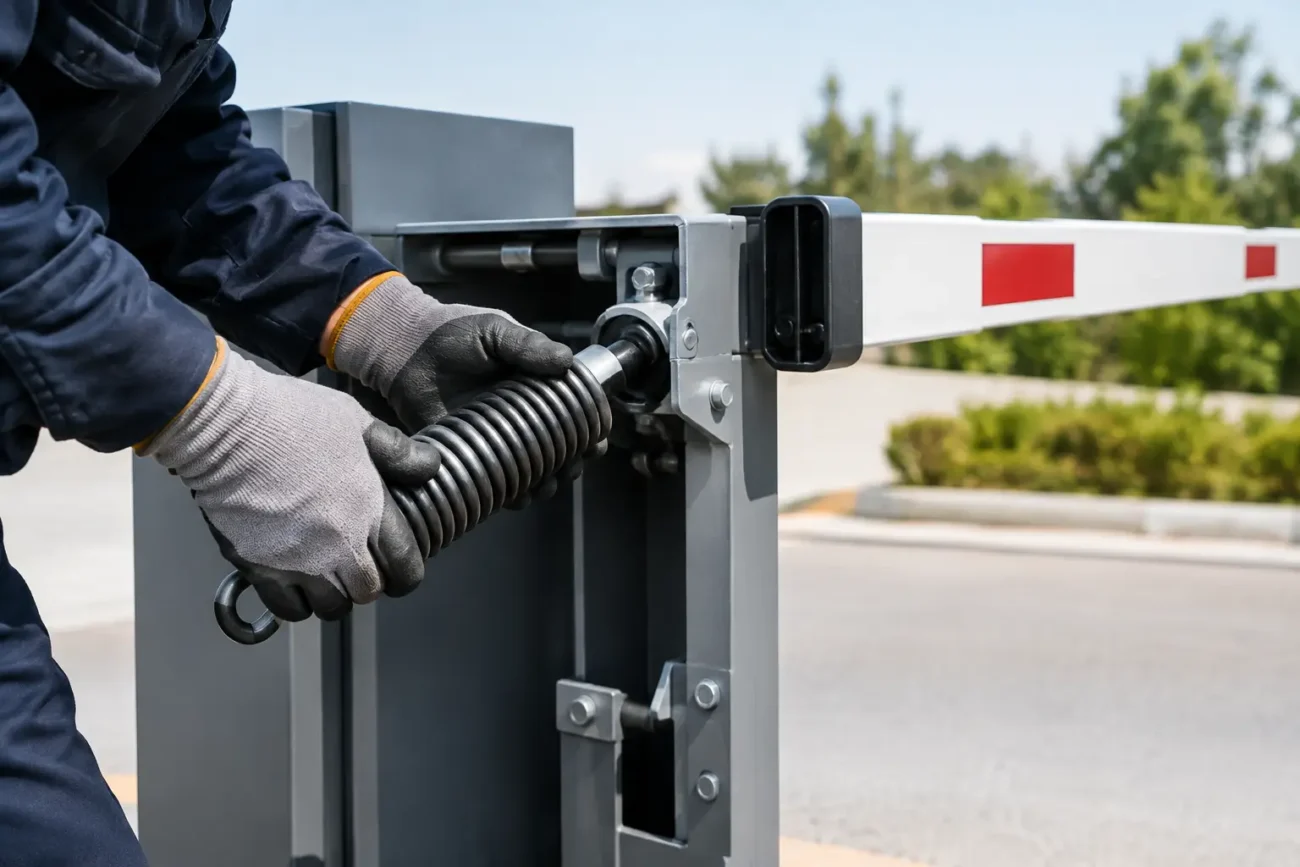
Manual release mechanisms are equally important during power failures or operator faults. The release must be secure against unauthorised use but available to trained users who may need to open the entrance safely. A release key stored in an unknown office drawer is not a workable emergency arrangement.
Choosing devices for the gate you actually have
Before ordering parts, identify the operator make and model, control board, existing safety inputs and the gate type. Compatibility affects more than plug connections. Some control panels require monitored safety devices, normally closed contacts, resistive edge systems or specific radio receivers. Mixing parts without checking the wiring and safety logic can cause persistent faults or leave protection inactive.
Also inspect the gate itself. A safety upgrade cannot compensate for bent tracks, damaged rollers, loose posts, failing hinges or excessive gaps in the structure. Mechanical defects raise the force needed to move the gate and can create new trapping points. Repair the gate first, then set up the automation and protection around a sound structure.
For a typical domestic sliding gate, correctly placed photocells, leading-edge protection where risk assessment requires it, force limitation and a suitable manual release may form the core package. A swing gate near a public pavement may demand a more detailed approach to hinge-side and closing-edge hazards. A high-traffic industrial entrance may need multiple photocell lines, safety edges, a scanner, warning equipment and controlled pedestrian access.
Installation and maintenance are part of the safety system
Gate safety devices are not fit-and-forget items. Dirt on photocell lenses, water ingress in junction boxes, corrosion on terminals, flat radio-edge batteries and accidental alignment changes can all cause a fault. A gate may continue to operate after a safety device has been compromised, particularly where a fault has been incorrectly overridden to keep traffic moving.
Set a planned inspection routine based on the gate’s use and environment. Check that photocells stop or reverse movement, safety edges activate across their full length, warning devices operate, manual release works and the gate travels smoothly. Record faults and repairs. If a device repeatedly fails, find the underlying cause rather than bypassing it.
When an exact replacement is unclear, clear photographs of the existing component, its label, cable connections and control board can save time and prevent an unsuitable order. Door Spares UK Ltd can help identify hard-to-find automation and safety parts through Ask Dora, particularly where an older installation has limited paperwork.
The right safety devices protect people first, but they also protect uptime. A properly assessed, correctly installed and regularly tested gate is less likely to cause an incident, a site closure or an urgent call-out when access matters most.

Leave a comment