


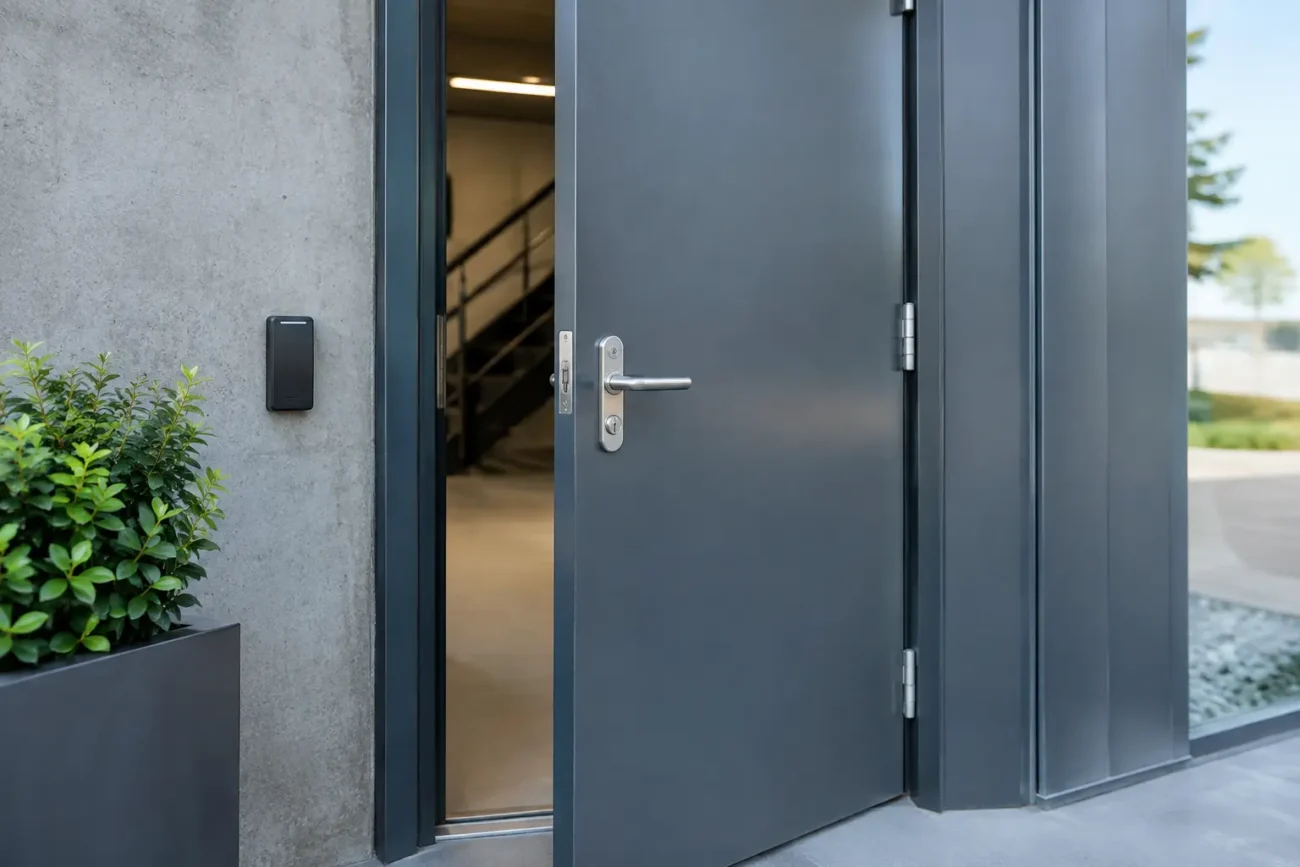
A damaged latch, a loose frame fixing or a badly adjusted closer can turn a door that looks formidable into the easiest route into a building. When assessing how secure a steel personnel door really is, the steel leaf is only one part of the answer. The lock, hinges, frame, wall opening, installation quality and day-to-day use all carry equal weight.
For warehouses, plant rooms, workshops, service yards and communal commercial areas, a properly specified steel personnel door can provide a high level of protection. But “steel door” is not a security rating in itself. Security depends on the threat you are trying to resist and whether the entire doorset has been tested and fitted as intended.
How secure is a steel personnel door?
A basic external steel door is generally more resistant to impact, kicking and casual forced entry than a lightweight timber or hollow metal alternative. Its face panels and internal structure are harder to damage quickly, while a steel frame can support heavier locking hardware and security hinges.
That said, a thin, untested steel door with a standard latch lock may only deter opportunistic entry. A certified security steel doorset, correctly installed into a suitable opening, is designed to withstand more determined attempts using physical force and hand tools. The difference is significant.
For most commercial premises, the right question is not simply whether the door is steel. It is whether its tested performance matches the site risk. A rear entrance beside an unmonitored alley, for example, needs a different specification from a staff-only door inside a secured industrial estate.
The doorset matters more than the leaf alone
A secure door works as a complete assembly: door leaf, frame, hinges, locking points, keeps, glazing where fitted, threshold and fixings. Replacing only one weak part does not automatically make the whole entrance secure.
A strong leaf can be defeated if the frame is poorly anchored, if the masonry around it is weak, or if lock bolts engage only shallowly into the keep. Equally, a high-security cylinder cannot compensate for a warped door that no longer closes tightly. Security is built around the weakest component.
Security ratings worth understanding
Where a site needs evidenced protection, look for a tested rating rather than relying on a general description such as “heavy-duty” or “security”. In the UK, common standards include LPS 1175 and STS 202, both of which assess resistance to forced entry. Test classifications indicate the type and duration of attack a doorset has resisted using defined tools.
European resistance classes under EN 1627 may also be specified. These run from RC1 upwards and are based on different attack methods and tool sets. The appropriate rating depends on the insurer’s requirements, the value of stock or equipment, the site’s location and the likely time an intruder could work without being noticed.
Do not assume a higher rating is always the best commercial decision. Higher-security doors are normally heavier and more costly, and may require stronger supporting construction, specialist hardware and more careful maintenance. For a low-risk internal store, that may be unnecessary. For a pharmaceutical store, data room, high-value stock area or isolated plant room, it may be entirely justified.
If fire resistance is also required, make sure the complete door specification addresses both needs. A fire door must remain a tested, certified assembly. Changing locks, drilling the leaf, fitting unauthorised vision panels or substituting components can compromise its fire performance as well as its security.
Locks, cylinders and locking points
The lock is often the first component an intruder will test. A single-point mortice lock can be suitable for some lower-risk applications, but external commercial doors frequently benefit from multi-point locking or additional deadlocking. Multiple locking points make it harder to spread the leaf away from the frame.
Cylinder choice matters on euro-profile lock cases. An anti-snap, anti-drill and anti-pick cylinder can reduce common attack methods, but it must be compatible with the lock case and security escutcheon. The cylinder should not project excessively beyond the door furniture, where it can be easier to grip or attack.
For sites with many users, key control should be considered at the same time as physical security. Restricted key systems, master key arrangements and clear procedures for recovering keys from departing staff can prevent a security problem that no door upgrade will solve. If access needs to be tracked or remotely managed, electronic access control can be paired with suitable mechanical locking, provided the door’s escape requirements are maintained.
Do not overlook emergency escape
A secure personnel door must still allow people to leave safely. Doors on escape routes may need panic hardware, emergency exit devices or controlled escape locking depending on the building use and occupancy. The hardware must be selected and installed so that security measures do not obstruct a lawful and safe means of escape.
This is one area where fitting a stronger lock without checking the wider door function can create serious risk. Facilities teams should assess security, fire safety and escape obligations together rather than treating them as separate jobs.
Hinges, frames and the gap side
Hinges are a common weak point on outward-opening doors. Security hinges, hinge bolts or dog bolts help prevent the leaf being removed if hinge pins are attacked. On a quality steel doorset, these features are usually designed into the assembly rather than added as an afterthought.
The gap between the door leaf and frame also deserves attention. Excessive gaps can give a pry bar somewhere to start. Correct adjustment of hinges, locks and keeps helps maintain a close, even fit and allows bolts to engage fully.
Frame fixings need the same scrutiny. A frame should be fixed securely into sound structural material, not merely packed into an oversized opening and covered with sealant. The condition of the surrounding brickwork, blockwork or steelwork is part of the security assessment. A determined attack may target the wall-to-frame connection instead of the lock.
Installation can make or break door security
Even a certified steel doorset may not deliver its expected performance if it is installed outside the manufacturer’s instructions. Incorrect fixings, unsuitable packers, distorted frames and incompatible ironmongery can all reduce resistance to attack.
Before handover, check that the door closes freely, latches consistently and does not need to be forced shut. Test every locking point, inspect the keep engagement and confirm that hinges, closers and panic furniture operate correctly. On automatic or access-controlled entrances, make sure the release method works as intended during a power failure and emergency condition.
For replacement work, accurate measurements are essential. Record the structural opening size, handing, swing direction, threshold requirement, wall construction, lock backset, existing hardware and any fire or escape obligation. This avoids the costly mistake of ordering a door that physically fits but cannot be safely or securely commissioned.
Glazing, side panels and nearby vulnerabilities
Glazed apertures can be useful for visibility and safety, but the glazing specification should match the security level of the door. Standard glass beside a high-security lock may provide a quick route to reaching the internal handle or release. Consider the position of internal thumbturns, access-control release buttons and keys stored near the entrance.
Side panels, fanlights, roller shutter guides and adjacent windows should also be considered. There is little value in fitting a high-security personnel door if an intruder can simply force a lightweight panel beside it. Security works best when the full opening and its immediate surroundings are assessed together.
Lighting, CCTV coverage, fencing and clear sightlines can further reduce opportunity. They do not replace a secure door, but they can reduce the time and privacy an intruder needs to attack it.
Keeping a steel door secure over time
Security deteriorates through neglect more often than through dramatic failure. A door dragged across the threshold, a closer that no longer controls the leaf, damaged seals, loose handles and rattling keeps all deserve prompt attention. Small alignment issues can stop locking points from engaging properly and accelerate wear on cylinders and lock cases.
A practical inspection routine should include checking the door closes and locks without force, the frame has no movement, hinges are secure, bolts engage fully and no unauthorised holes or alterations have been made. Report damage early, particularly after attempted break-ins, vehicle strikes or forced opening.
Where an exact replacement lock, closer, hinge, cylinder, control component or safety device is needed, identifying the existing part correctly saves time and prevents compatibility issues. Door Spares UK Ltd can help source difficult-to-identify components when a photograph, dimensions or product markings are available.
A steel personnel door is most secure when its rating suits the risk, its hardware works as one system and its condition is checked before a minor fault becomes an open invitation.

Leave a comment