



A barrier that lifts on cue can look simple enough from the cabin or control room. On site, it is anything but simple. Any automatic barrier safety guide worth using has to start with the reality that barriers sit in live environments – delivery yards, staff car parks, depots, commercial entrances and mixed pedestrian-vehicle routes – where one small fault or poor setup can quickly become a safety issue.
For facilities teams, engineers and site managers, the point is not just to keep traffic moving. It is to make sure the barrier behaves predictably, stops when it should, detects what it should, and does not create unnecessary risk for drivers, pedestrians or maintenance staff. That means looking beyond the arm itself and focusing on the full system: controls, safety devices, access logic, mounting points, visibility and routine inspection.
What an automatic barrier safety guide should actually cover
A useful automatic barrier safety guide is not a box-ticking exercise. It should help you answer three practical questions. First, can people use the barrier safely in normal operation? Second, will it respond safely when something goes wrong? Third, can your team identify wear or failure before it leads to an incident or shutdown?
On most sites, barrier risk comes from a combination of movement, force and poor visibility. A barrier arm can strike a vehicle roofline, close onto a tailback, or sweep across a pedestrian route if the setup is wrong. The higher the traffic volume and the tighter the space, the less margin for error you have.
That is why safety has to be approached as a system issue. A well-made barrier still becomes a problem if the photocells are misaligned, the loop detector is unreliable, the control board settings are incorrect, or the warning signage is unclear. Equally, a site can have all the right components fitted and still fall short if routine checks are inconsistent.
Start with the site, not the catalogue
Barrier safety always depends on the environment. A private staff car park with low traffic and clear lane separation has different demands from a distribution yard with HGVs, visiting drivers and pedestrians cutting across access routes. Before changing any part or replacing any control equipment, take a close look at how the barrier is actually being used.
Think about lane width, approach speed, lighting, drainage and line of sight. If drivers have to turn sharply before reaching the barrier, detection and stopping distances matter more. If the site gets frequent standing water, underground loop performance may be affected. If pedestrians share the same route, physical segregation or additional sensing may be needed.
This is where people often go wrong. They focus on the failed component in front of them and miss the wider reason it failed or became unsafe. Replacing the arm, motor or sensor may solve the immediate problem, but it will not fix a poor layout or unsuitable operating logic.
The core safety components that need regular attention
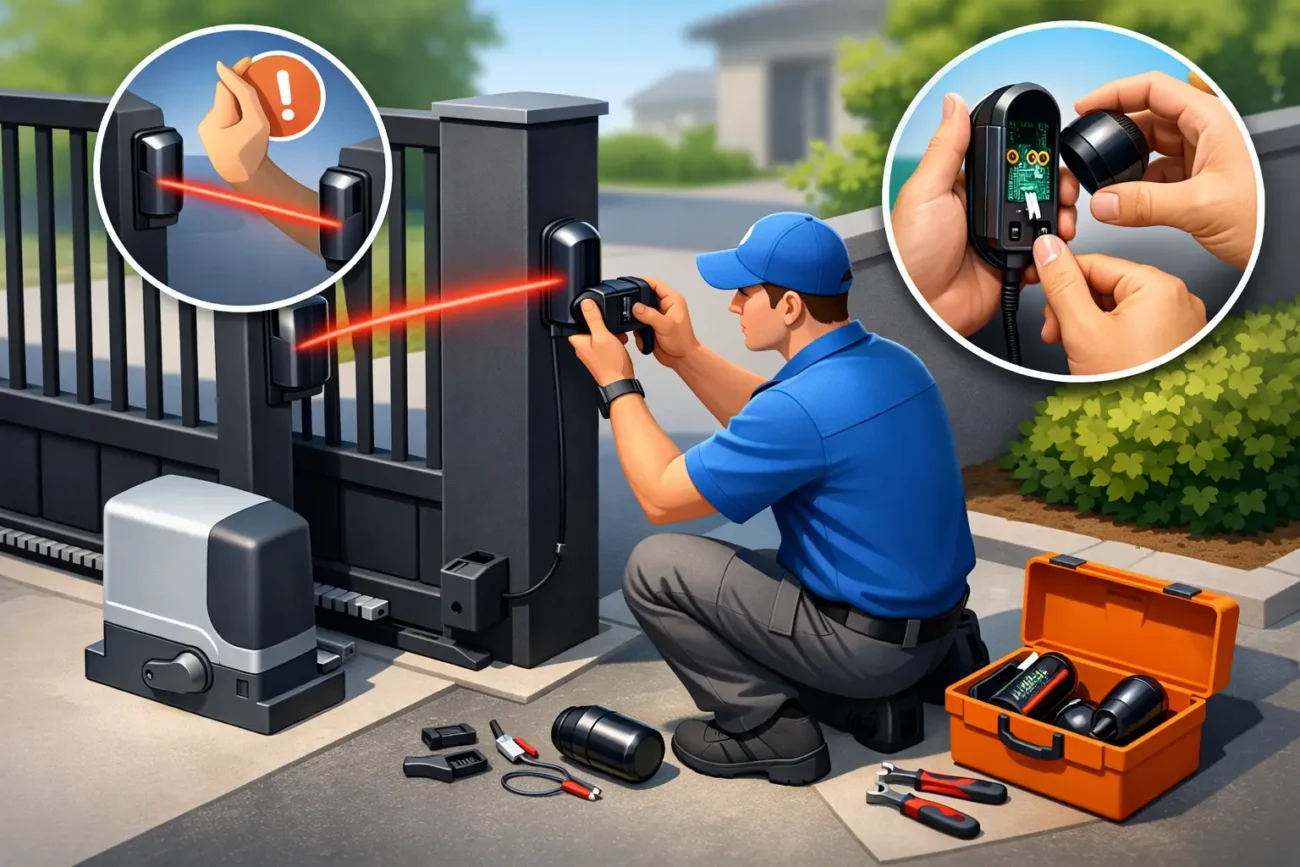
Every barrier setup differs slightly, but the same critical areas come up again and again. Detection devices are a good example. Safety photocells, loop detectors and presence sensing all have one job: stop the barrier from moving into a vehicle or person. If they are dirty, damaged, badly positioned or incorrectly wired, that protection can disappear without much warning.
The control board is another key point. Settings for opening time, closing delay, automatic re-close and obstacle response need to match the site conditions. A setting that works well at a gated private entrance may be completely wrong for a busy commercial site with slow-moving vans and occasional trailers.
Then there is the barrier arm itself. Check for visible cracks, impact damage, loose fixings and signs of sagging. A worn or unbalanced boom can place extra strain on the operator and affect how smoothly the system responds. Even small alignment issues can lead to inconsistent stopping positions or premature wear elsewhere in the mechanism.
Warning lights, signage and any audible alerts also deserve more respect than they often get. They do not replace physical safety devices, but they help users understand what the barrier is doing. On a noisy or poorly lit site, that extra cue can make a real difference.
Common faults that create safety problems
Some faults stop a barrier altogether. Others are more dangerous because the system still works, just not properly. Intermittent sensor faults fall into that second category. A photocell that only fails in bright sunlight, or a loop detector that misses certain vehicles, can leave site teams chasing a problem that appears random until the wrong moment.
Impact damage is also common, especially where barriers are exposed to delivery traffic or unfamiliar drivers. After a strike, the barrier may continue opening and closing, but internal damage to linkages, mountings or housings can compromise safe operation. If a barrier has been hit, do not assume that because it still moves, it is fit to keep using.
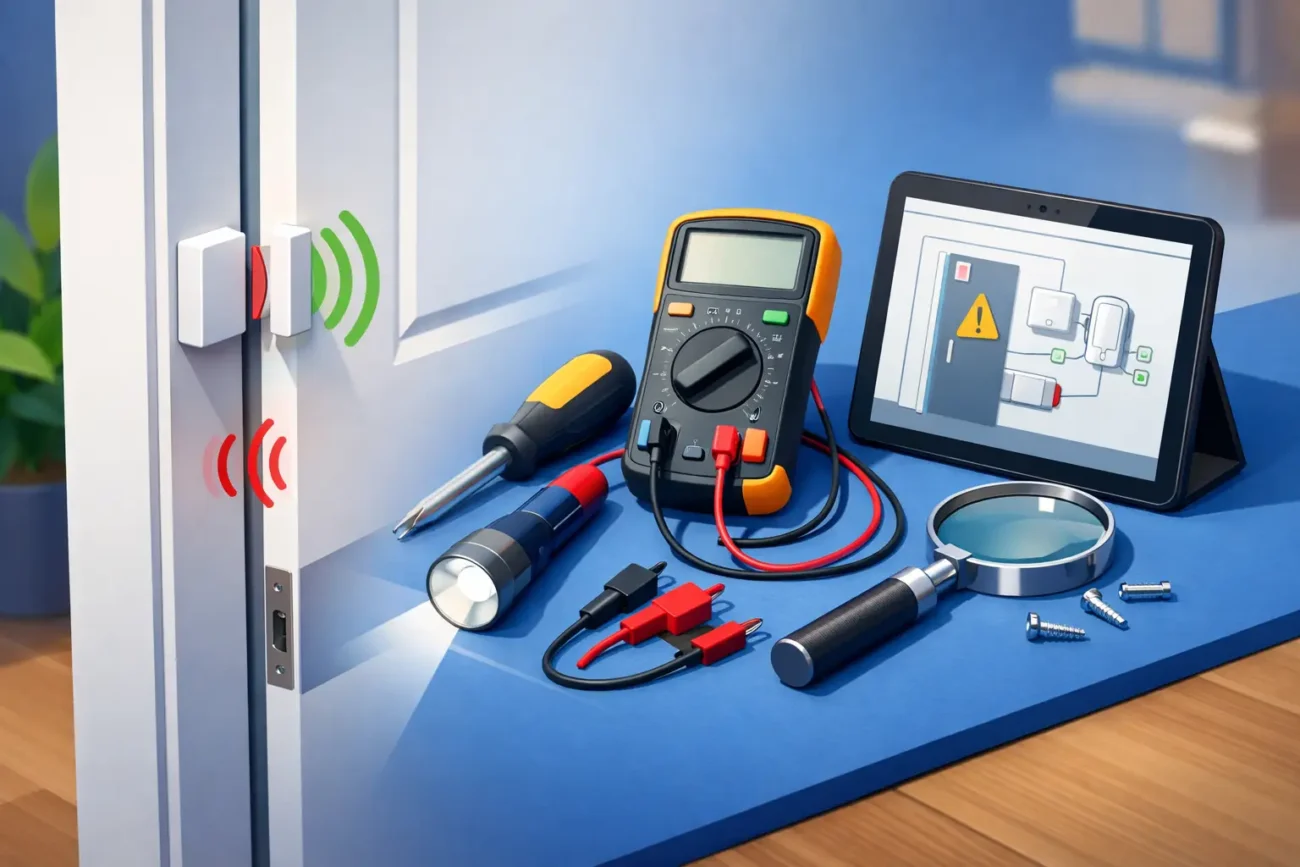
Electrical issues can be less obvious. Water ingress, damaged cables, loose terminals and ageing boards can all affect response times or sensor behaviour. If a barrier has started acting inconsistently – delayed movement, nuisance reversals, unexplained stops, failure to hold open when a vehicle is present – treat that as a safety issue first and a convenience issue second.
Maintenance is where most safety wins are found
Routine inspection does more for barrier safety than dramatic emergency callouts ever will. The best maintenance approach is simple, consistent and site-specific. You are looking for wear, contamination, misalignment and changes in behaviour.
A visual check should cover arm condition, cabinet damage, safety devices, labels and lane markings. An operational check should confirm that the barrier opens and closes smoothly, stops in the correct positions and responds properly to every connected safety input. If your site uses access control, test that logic as well. Unsafe behaviour often starts where automation and access permissions interact badly.
Cleaning matters too. Dirty photocells, debris around the cabinet base and built-up grime in moving parts can all affect performance. In exposed outdoor locations, weather does not just make things look tired – it actively shortens component life and changes how systems behave.
For busy sites, keeping a maintenance record is worth the effort. It helps engineers spot recurring faults, track replaced parts and identify patterns before they turn into downtime. It also gives facilities teams a clearer basis for deciding whether a repair is still sensible or whether a fuller upgrade is now the safer option.
When to repair, when to replace
Not every barrier problem calls for a complete new unit. In many cases, replacing a damaged safety device, worn spring, control board, receiver, loop card or motor component is the right fix. The trade-off comes down to age, parts availability, fault history and the safety performance of the existing setup.
If the barrier is fundamentally sound and the correct spares are available, a targeted repair can be cost-effective and quick. If faults are recurring, safety inputs are outdated, or exact-fit parts are becoming hard to source, replacement starts to make more sense. That is particularly true where a site has changed use over time and the original barrier specification no longer suits present traffic levels.
This is where accurate part identification matters. Guessing with automation components is expensive and can create fresh safety issues. Matching the right board, sensor, encoder or motor assembly to the exact system is far safer than trying to make a near-enough part work.
What site teams should never overlook
There is a tendency to think of barrier safety as an engineering issue only. It is not. User behaviour matters. If drivers regularly tailgate through, reverse under a descending arm, or ignore lane discipline, the problem is partly procedural. Safety devices reduce risk, but they cannot compensate for a badly managed access point.
Training helps here, even if it is brief. Staff should know what the barrier is designed to do, what warning signs to watch for, and what to report immediately. A barrier that jerks, hesitates, closes too quickly or makes unusual noise should not be left until the next planned visit if the site is actively using it.
It also helps to have a clear reporting route for faults and part enquiries. When an engineer or facilities manager can quickly identify the make, model and failed component, downtime drops. When they cannot, having technical support that can work from photos, labels or descriptions saves time and avoids ordering mistakes. That is exactly the sort of practical problem-solving we deal with every day at Door Spares UK Ltd.
A safer barrier is usually a better-run barrier
Good barrier safety is rarely about adding complexity for the sake of it. More often, it comes from getting the basics right: correct sensing, sensible settings, sound parts, regular checks and honest decisions about when equipment has reached the end of the road. If your barrier is part of a busy site operation, treat every strange movement, delayed response or damaged component as useful early warning, not background noise.
The best time to sort a barrier safety issue is before the next near miss gives you no choice.



Leave a comment