


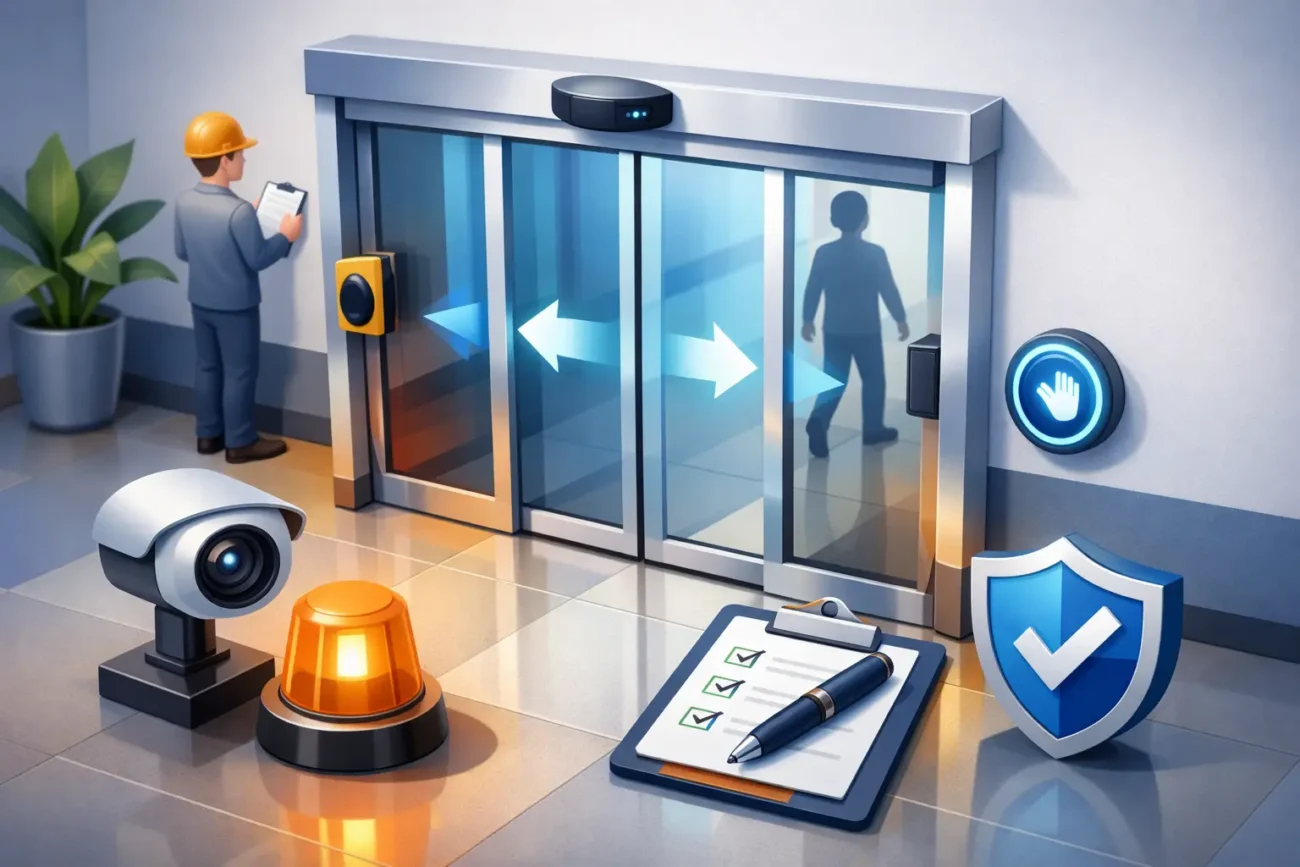
A failed safety sensor on an automatic entrance is rarely just a small fault. It can stop footfall, create a risk to users, trigger complaints and leave a site manager explaining why a known issue was not dealt with sooner. That is why an automatic door safety compliance guide matters – not as paperwork for its own sake, but as a working standard for keeping people safe and doors operating as they should.
For facilities teams, installers and property owners, compliance sits at the point where legal duty, practical maintenance and component condition all meet. If one part of that chain slips, the whole system becomes harder to defend. A door that opens and closes is not automatically a compliant one.
What automatic door safety compliance really covers
Automatic door safety compliance is about more than fitting a motor and a pair of sensors. It covers the complete operation of the entrance system, including activation, detection, guarding of hazardous areas, force limitation where applicable, signage, maintenance history and whether the door remains safe under normal daily use.
In practical terms, the standard of compliance depends on the door type and environment. A low-traffic office entrance has different demands from a hospital, supermarket or industrial site with constant pedestrian flow and trolleys moving through. The principle stays the same though – the door must be safe for the people using it, and the people responsible for it must be able to show that safety has been considered, checked and maintained.
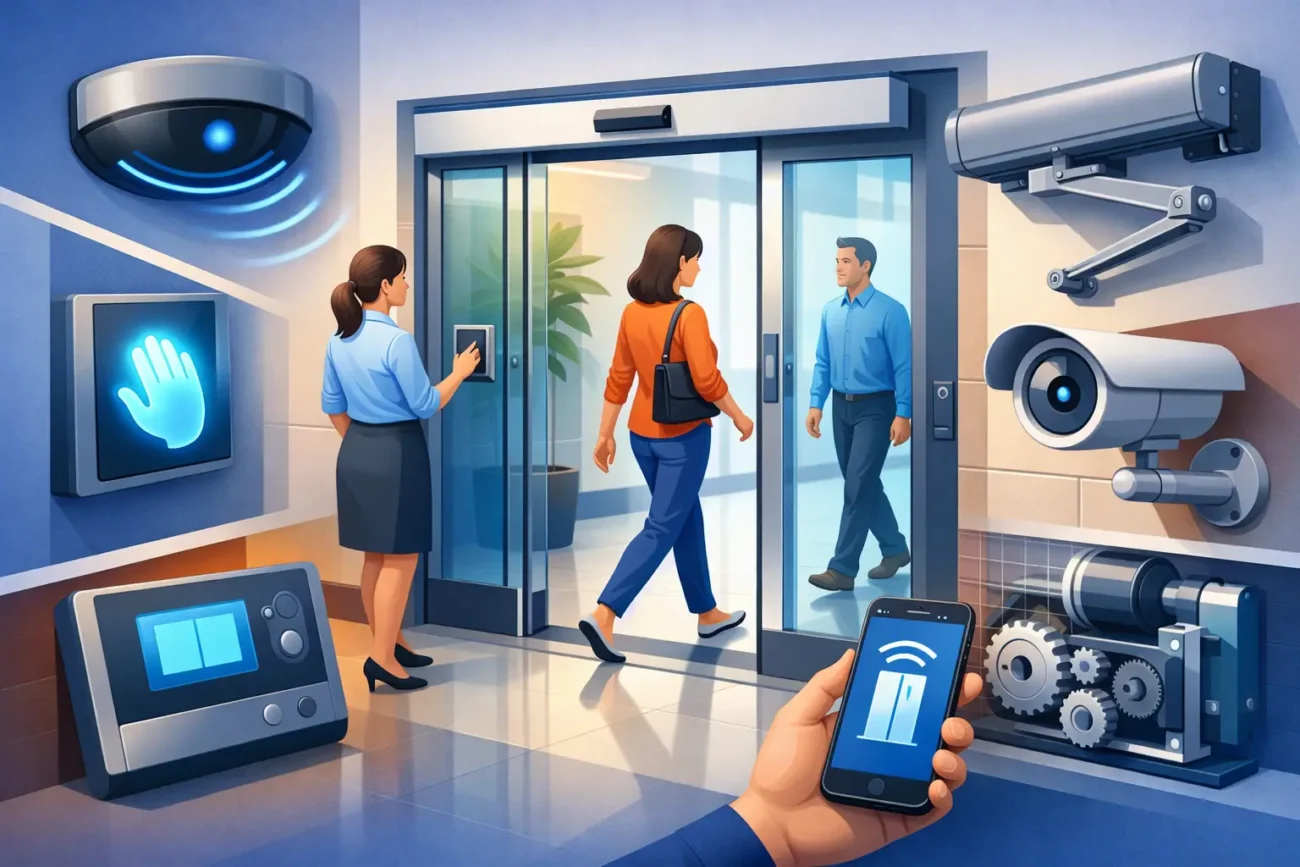
That means looking at the full system rather than a single faulty item. Presence sensors, safety beams, control boards, activation devices, guide rails, leaves, operators and emergency functions all play a part. Swapping one part for a cheap substitute without checking compatibility can create a fresh compliance issue even if the door starts moving again.
The main risks that push doors out of compliance
Most compliance failures do not begin with a dramatic breakdown. They usually start with wear, drift in settings, poor servicing or a replacement part that is not quite right. Sensors can become misaligned. Detection zones can narrow over time. Door leaves can drag. Operators can develop inconsistent opening force. A control board can behave unpredictably after moisture ingress or voltage issues.
The real problem is that these faults are easy to underestimate when the entrance still appears usable. Staff may get used to a door hesitating, closing too quickly or missing the odd pedestrian at the threshold. From a compliance point of view, that is exactly when action is needed.
High-use sites are especially exposed. Retail entrances, healthcare settings, public buildings and logistics environments put far more strain on automation systems than a lightly used internal office door. Dirt, weather, impact and user behaviour all affect performance. Compliance is not a one-off pass mark. It is an ongoing condition.
Automatic door safety compliance guide for responsible duty holders
If you are responsible for a building, start with a simple question: can you show that the door system has been assessed, maintained and repaired in a way that keeps it safe? If the answer is vague, that is where to focus first.
A workable automatic door safety compliance guide begins with identification. Know what doors you have, what operators and safety devices are fitted, when they were installed, what traffic they handle and when they were last properly serviced. Many sites struggle here because records are split between old contractors, site files and maintenance teams.
Next, check whether each door has a current maintenance routine that reflects actual use. A heavily trafficked main entrance may need more frequent inspection than a side access door. Treating every opening the same may look tidy on paper, but it rarely matches real risk.
After that, review the door’s safety functions in use. Does it detect approach reliably? Does it protect the sweep area? Does it reopen or stop correctly when obstructed? Are hold-open and emergency features functioning as intended? These are not box-ticking points. They are the basis of whether the installation is safe for daily public use.
Inspection, servicing and records – the part people leave too late
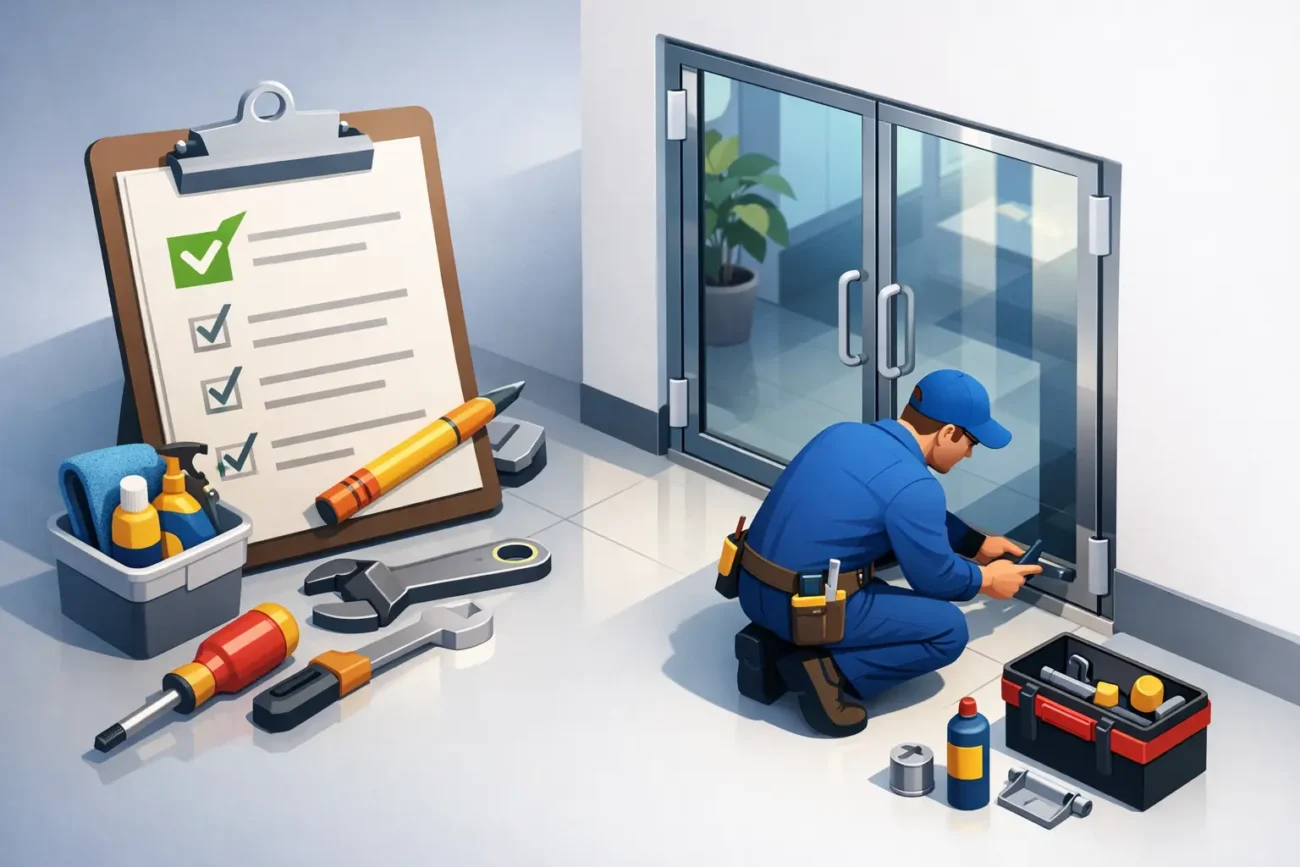
A compliant door is easier to manage when its service record is current and detailed. If there is an incident, vague notes such as “door checked” are not much use. A proper record should show what was inspected, what was adjusted, what was replaced and whether any safety concerns were found.
This is where planned maintenance pays for itself. It is cheaper to replace a tired sensor bracket, worn roller or unreliable activation switch during service than to deal with a full failure during trading hours. It also gives you a clearer trail of responsible management.
There is a trade-off, of course. Some sites try to reduce servicing spend by stretching intervals or only reacting when a fault becomes visible. That may save money in the short term, but it tends to increase downtime and weakens your position if the door later causes harm or disruption.
Why the right replacement parts matter
Compliance is often lost during repair, not installation. An engineer under pressure may need to get a door running quickly, but if the replacement sensor, control unit or safety edge is not suitable for that specific system, the fix can compromise performance.
This happens more often with older operators and mixed-brand setups where original components are harder to source. A part may fit physically but behave differently in the system, changing timing, detection range or response. On automatic pedestrian doors, even small differences in setup can affect safe operation.
That is why accurate identification matters. Manufacturer, model, board version, sensor type and application all need checking before parts are ordered. If a site has no clear part reference, photos, labels and fault behaviour usually help narrow it down. This is where specialist support saves time. Companies such as Door Spares UK Ltd deal with this kind of sourcing problem every day, especially where exact-fit replacements are needed fast.
Common weak points to check first
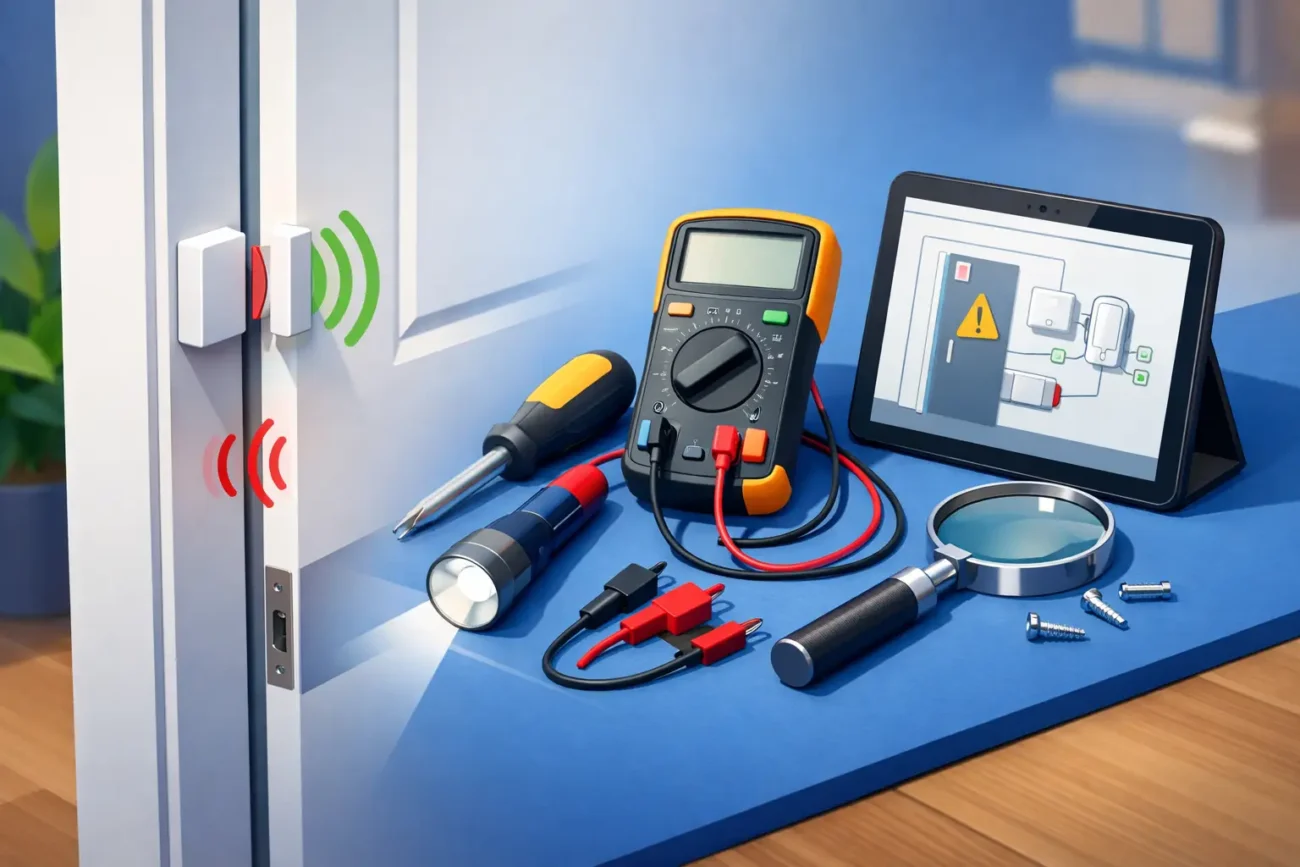
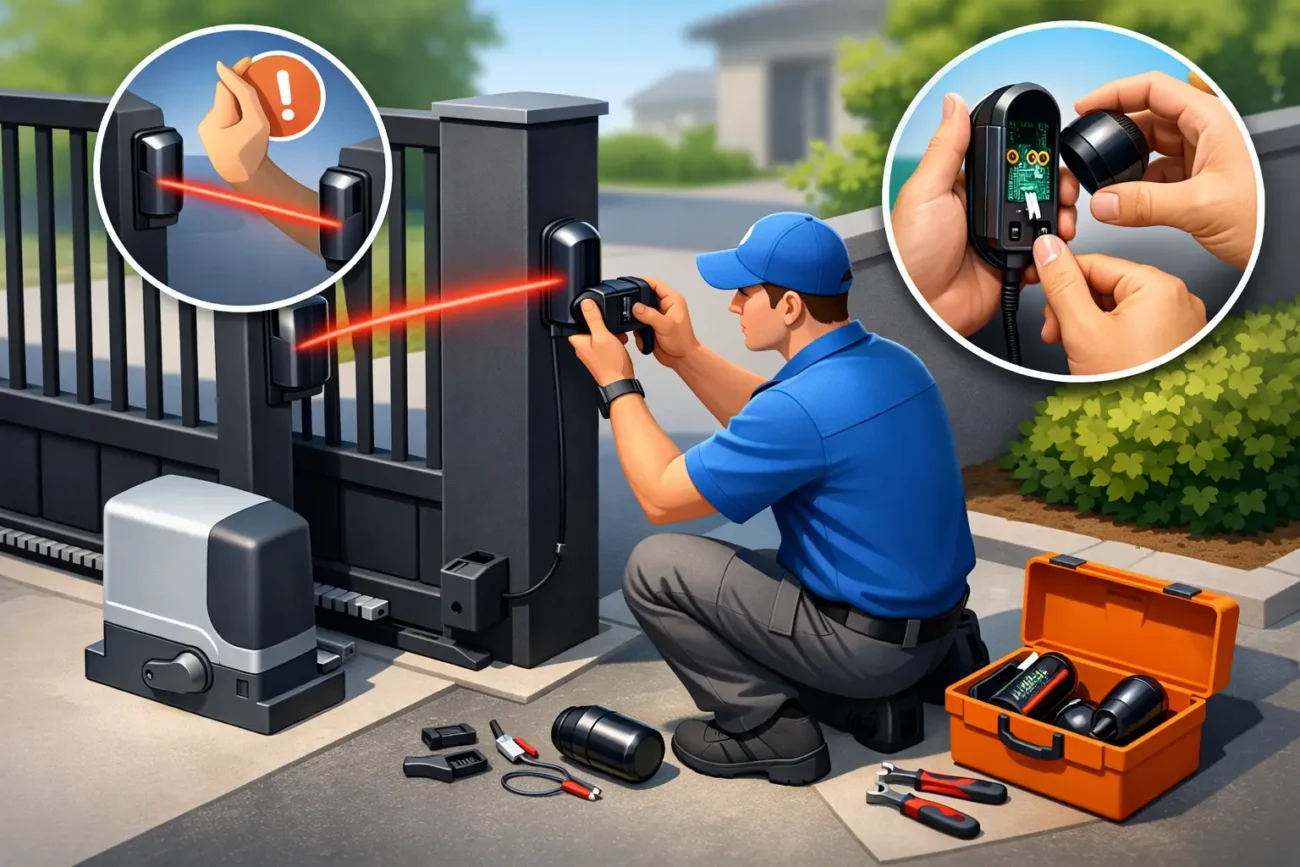
When a door starts behaving inconsistently, a few areas deserve immediate attention. Activation and presence sensors are obvious candidates, particularly where doors open late, close on slow users or fail to hold open in the threshold. Safety beams and monitored devices should also be checked if the operator reports faults or drops into a restricted mode.
Control boards are another frequent issue, especially on ageing systems. Intermittent faults, failed relays, corrupted settings or damage from power fluctuation can all affect compliance because safety behaviour becomes unreliable. Mechanical wear matters as well. A healthy sensor cannot compensate for a damaged track, misaligned leaf or worn drive component.
It depends on the door type, but a fault that looks electronic is not always electronic. Good diagnosis matters. Replacing parts at random gets expensive quickly and does little for safety.
What installers and maintenance teams should document
For trade professionals, compliance is easier to defend when your paperwork matches the work carried out. That includes recording test results, noting any limitations found on site, identifying parts fitted and making clear recommendations where further work is needed.
If a customer declines a required repair, that should be recorded plainly. The same goes for temporary fixes. A short-term measure may be necessary to secure access, but it should never be allowed to look like a final compliant repair if it is not one.
Clear handover also matters. End users should know what has been done, what has been tested and what warning signs mean they need to call for support. This is especially important on sites where non-technical staff are left to monitor the entrance between service visits.
Compliance is not the same on every site
One reason automatic door safety compliance gets muddled is that building owners expect a single rulebook to cover every entrance. In reality, usage patterns make a big difference. A school, care home, warehouse office and retail unit may all have automatic doors, but the risk profile is different in each case.
Public-facing entrances generally need closer attention because users are less predictable. Children, elderly users, visitors carrying bags and people distracted by phones all interact with the door differently. Industrial and back-of-house doors may involve lower public exposure but higher wear and more environmental stress.
That is why the best compliance approach is practical rather than generic. Look at who uses the door, how often, what could go wrong and whether the current components and maintenance regime still suit the application.
A sensible standard to work to
If you manage automatic doors, the aim is not perfection on paper. It is being able to stand over the condition of the system with confidence. Know the equipment, inspect it properly, keep records, replace failing components with the right parts and do not ignore behaviour that has started to drift.
Most serious door problems give warning before they become incidents. The sites that stay on top of compliance are usually the ones that act early, ask the right technical questions and treat replacement parts as a safety decision rather than a quick purchase. If a door is starting to feel uncertain, that is the right time to deal with it – not after someone gets caught by it.

Leave a comment