


A pedestrian entrance that opens late, a warehouse door that cycles for no reason, or a shutter that refuses to stop when something is in the way usually points to one thing first – the sensors. Automatic door sensors are small components with a big job, and when they are wrong, dirty, misaligned or failing, the whole system becomes unreliable.
For engineers, facilities teams and site managers, that is not a minor nuisance. It affects safety, footfall, workflow and compliance. For homeowners and small business owners, it often means trying to work out whether the fault sits with the sensor, the controller or the operator. Knowing what the sensor is meant to do makes that process a lot quicker.
What automatic door sensors actually do
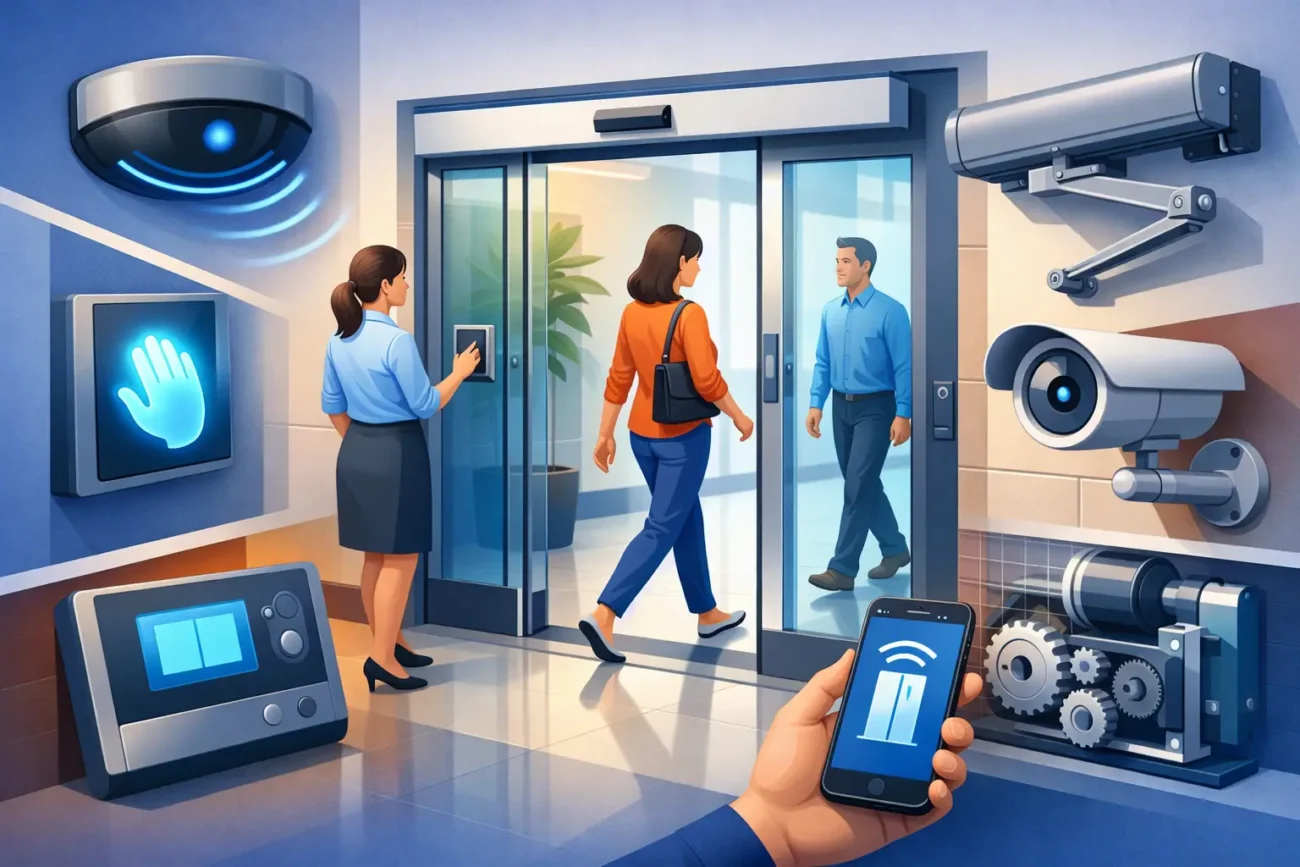
At the simplest level, sensors tell an automated door system when to open, when to stay open and when not to close. That sounds straightforward, but most systems rely on more than one sensing function. One device may activate the opening cycle, while another protects the threshold and prevents contact with people, trolleys or vehicles.
That distinction matters. An activation sensor is there to detect approach or motion. A safety sensor is there to detect presence in a danger zone. In some modern systems, one unit can handle both roles, but many installations still use separate devices depending on the door type, site conditions and required standards.
On a busy commercial entrance, the sensor must respond quickly without opening every time someone walks past the façade. On an industrial door, it may need to cope with forklifts, dust, moisture and vibration. In a care setting or retail environment, it also needs to behave predictably around slower-moving users, prams and wheelchairs. Good sensing is not just about making the door move. It is about making it move at the right time, for the right reason.
The main types of automatic door sensors
Motion sensors are commonly used to trigger opening. These often use microwave technology, which detects movement within a set field. They are useful because they cover a broad area and can be adjusted for sensitivity and direction. That said, they can sometimes be too generous if badly set up, especially near passing traffic or reflective surfaces.
Presence sensors are more focused on safety. These are often infrared-based and monitor the threshold or closing path for a person or object that remains in the detection area. If something is there, the door should not close into it. On sliding doors, that usually means protection across the opening. On swing doors, it may include the sweep area and approach side depending on the application.
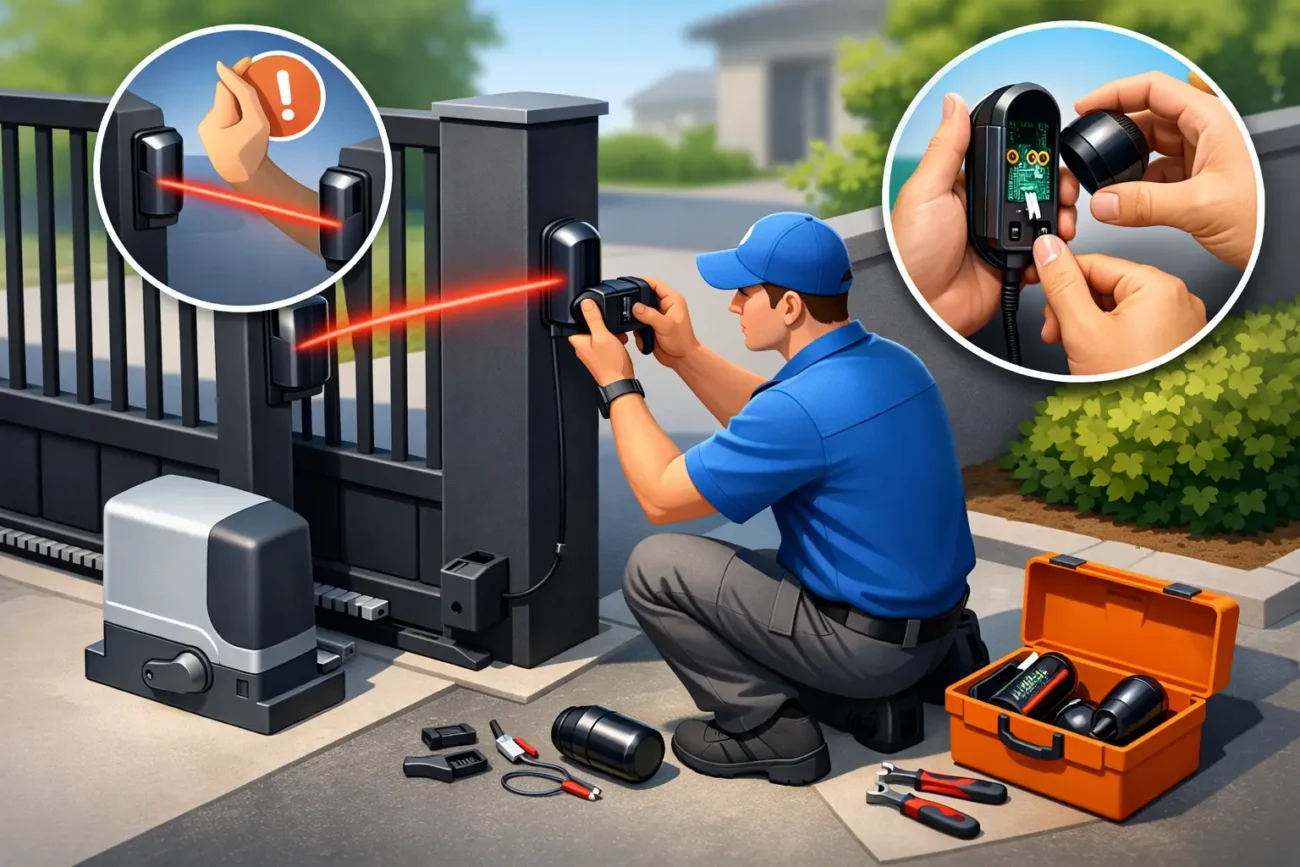
Photocells are another familiar option, especially on industrial doors, gates and barriers. They create a beam between transmitter and receiver, and if that beam is broken, the system reacts. They are simple, effective and widely used, but alignment is critical. Dirt, impact or vibration can be enough to create nuisance faults.
Some systems use induction loops, pressure mats or more specialised sensors for vehicle access and high-traffic industrial settings. The right choice depends on the environment, the speed of the door, how people and equipment move through the opening, and what level of protection the application requires.
Why the right sensor matters more than many people think
It is easy to treat sensors as interchangeable because they are small and often sit quietly above or beside the door. In practice, the wrong sensor can cause constant operational problems. A unit that is fine on a clean office entrance may struggle in a loading bay. A sensor chosen only by appearance or mounting size may not offer the detection pattern the operator needs.
There is also the issue of compatibility. Voltage, output type, relay behaviour, monitoring requirements and setup options all need to match the control board and the door application. Even where a substitute part can be made to work, it may not deliver the same detection quality or safety performance as the original specification.
That is why part identification matters. Engineers usually start with a make and model. End users often start with a photo, a label or a rough description of the fault. Both approaches are valid, but guessing is where delays begin. If a site is down, getting the exact fit first time saves far more than the cost of the component.
Common faults with automatic door sensors
Most sensor faults fall into a few practical categories. The first is contamination. Dust, insects, condensation and general grime can interfere with lenses and beams, particularly on industrial doors and external entrances. The sensor may still have power, but its performance becomes erratic.
The second is misalignment. This is especially common with photocells and threshold safety devices. A minor knock from equipment, vibration from repeated operation, or movement in the mounting bracket can shift the detection field enough to cause false trips or missed detections.
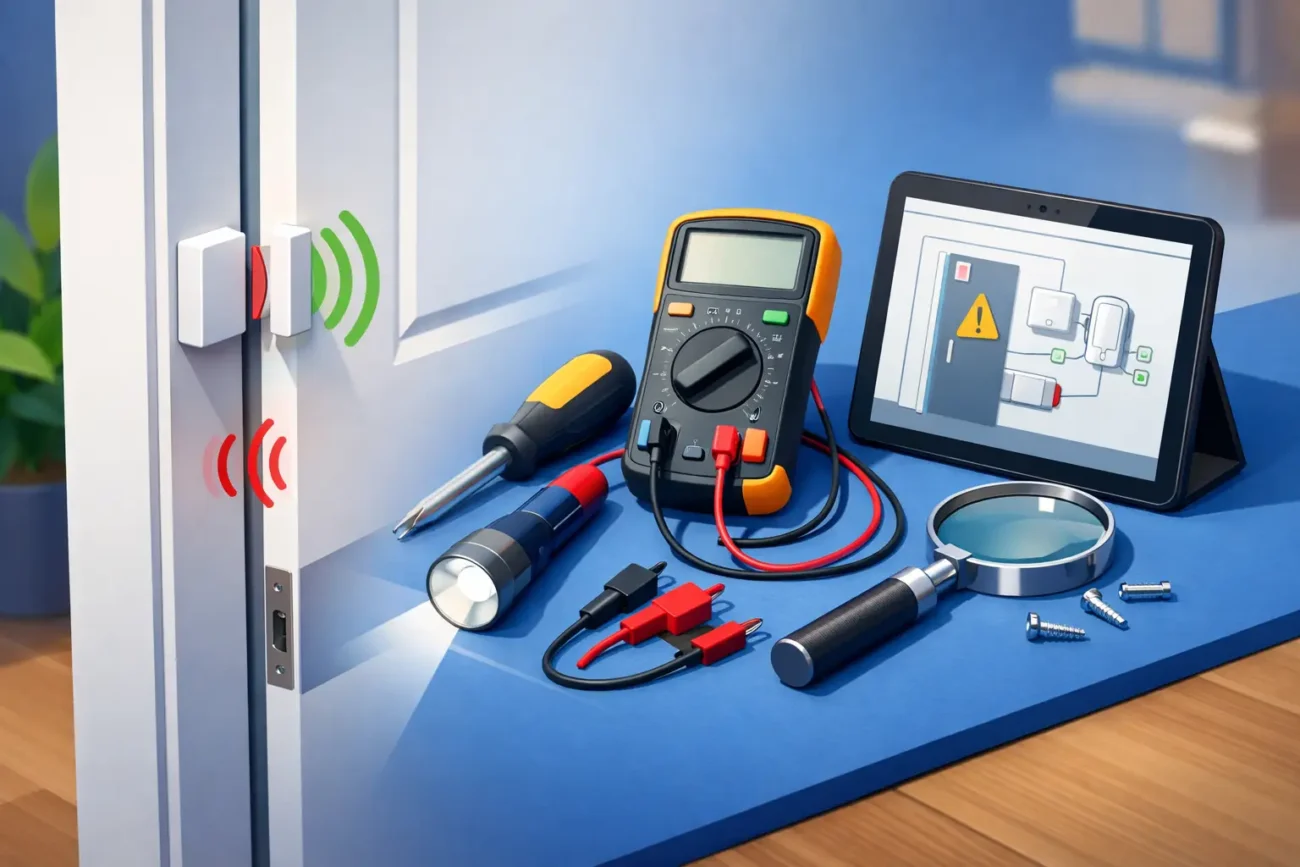
The third is wiring and power supply trouble. Loose terminals, damaged cable, water ingress and incorrect voltage all show up as sensor problems even when the sensor itself is sound. Before replacing a unit, it is worth confirming that the controller is supplying what the device expects.
Then there is configuration. Many sensors have adjustable detection depth, width, immunity settings and output logic. A sensor may appear faulty when it is simply set too wide, too narrow or in the wrong operating mode for the door. This happens regularly after replacement, when a new unit is fitted but not commissioned properly.
Finally, components do wear out. Age, UV exposure, repeated thermal cycling and environmental stress all take their toll. If the housing is cracked, the LED behaviour is inconsistent, or the unit only works intermittently after cleaning and realignment, replacement is usually the sensible route.
Choosing automatic door sensors for a replacement
When replacing automatic door sensors, start with the door type and function. A sliding pedestrian entrance, a swing operator, an industrial sectional door and a high-speed roller door all present different risks and different detection needs. That affects not only the sensor technology but also where the unit is mounted and how it is adjusted.
Next, look at the original part details if they are available. Manufacturer, model number, voltage, detection type and any markings on the housing can narrow things down quickly. If there is no visible part number, photos of the sensor, fixing arrangement and control board often help identify a suitable match.
Environment should never be an afterthought. Indoor and outdoor use, exposure to rain, dust levels, ambient light, traffic flow and the presence of vehicles all influence what will work reliably. A cheaper sensor that needs constant attention is rarely the cheapest option on site.
If the installation has safety implications, caution is sensible. The correct replacement is not always the one that physically fits. It needs to perform the same role, with the same reliability, within the same system logic. That is where technical support saves time. For hard-to-find or older parts, a supplier that understands automation components can usually cut through a lot of trial and error.
Repair or replace?
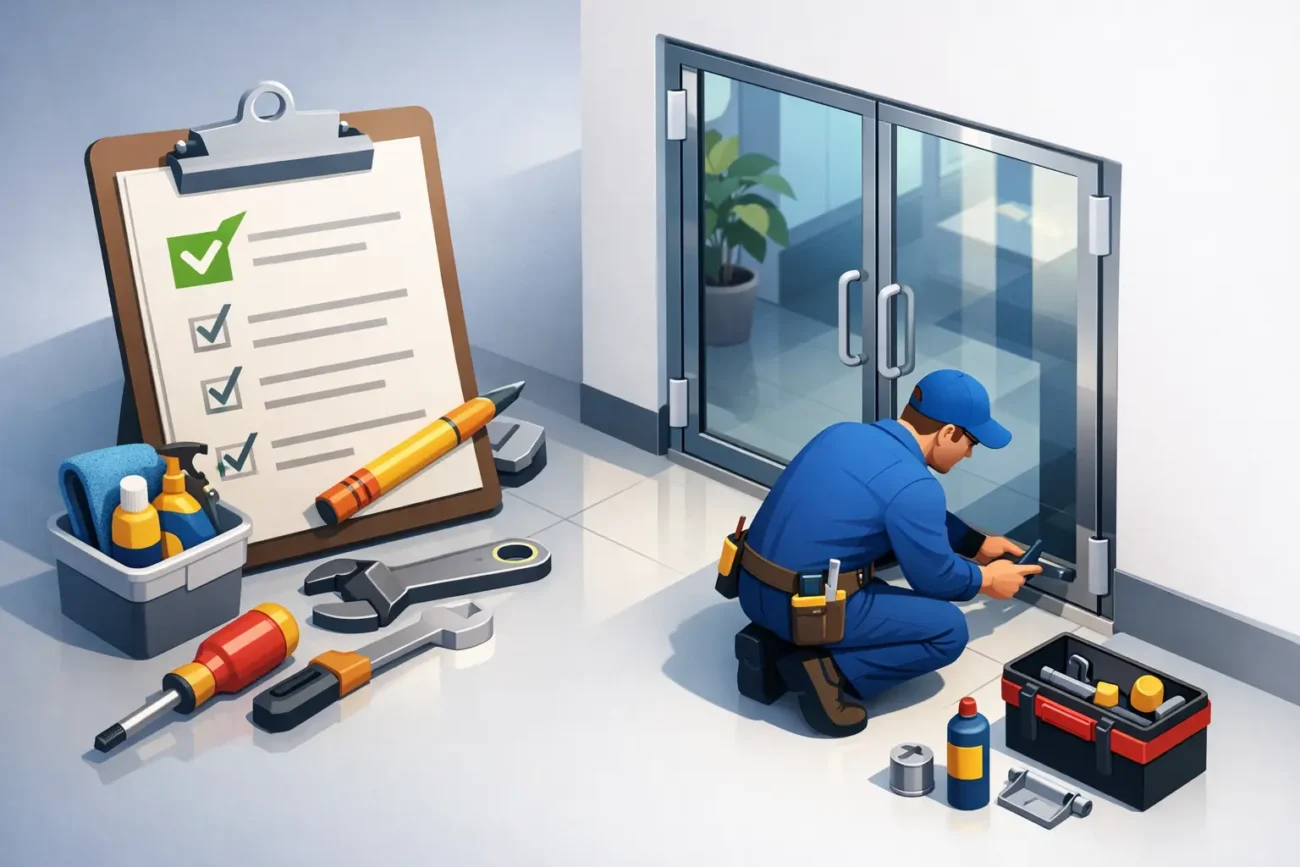
It depends on the fault. If the issue is dirt on a lens, a loose bracket or a simple alignment problem, repair is often straightforward. If the cable has been crushed or the housing has been damaged by impact, a localised repair may be possible, but reliability becomes the real question.
For doors in constant daily use, intermittent sensor faults are expensive because they waste engineer time and disrupt operations. In that case, replacement is often the better decision even if the old unit can be coaxed back into life. For low-use doors, a careful repair may be enough if the rest of the system is in good order.
A sensible test is to ask whether the component can be trusted once the site is back in service. If the answer is not a firm yes, replacing it is usually the safer option.
When support makes the difference
Sensor issues are not always obvious from the symptom. A door that reopens unexpectedly may have a sensor problem, a setup problem or a controller issue. A non-closing door may be seeing a permanent safety signal, or it may be reacting correctly to a fault elsewhere.
That is why clear identification and practical advice matter. Door Spares UK works with trade customers and end users who often need an answer quickly, whether they have a part number ready or just a few site photos and a rough description. Sometimes the fastest route is a direct replacement. Sometimes it is ruling out the sensor before money is spent on the wrong part.
If your door system depends on accurate detection, treat the sensor as a working safety component, not a generic accessory. A clean signal, the correct detection field and proper compatibility make the difference between a door that merely moves and a door that operates as it should, day after day. When in doubt, get the part identified properly first – it is usually the quickest way back to a reliable door.
Leave a comment