


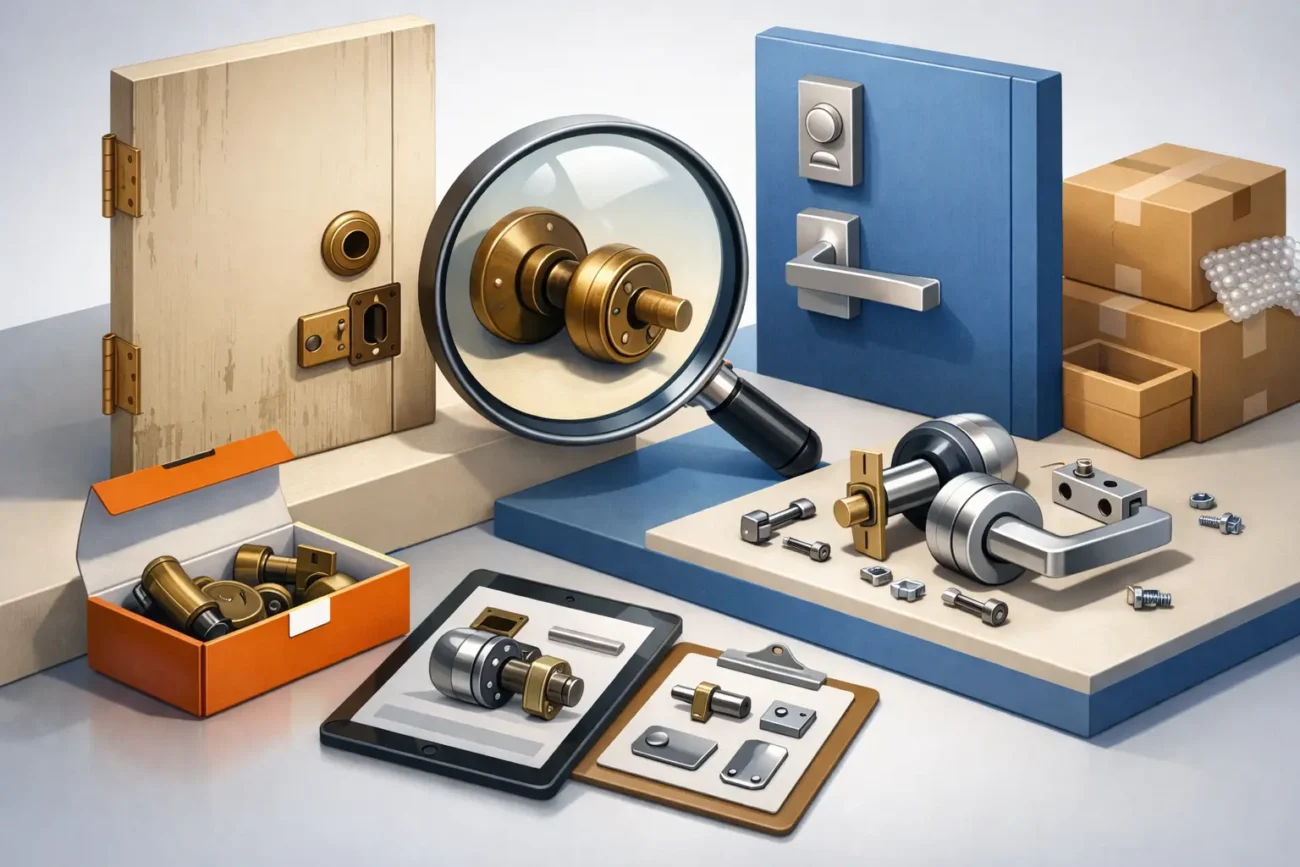
A site door is down at 7:15 on a wet Tuesday, the loading bay is backing up, and the label on the failed component has long since faded. That is where an obsolete door part sourcing example becomes useful – not as theory, but as a working method for getting the right part without wasting a day on guesswork.
For engineers, facilities teams and property managers, obsolete parts are rarely the main problem. The real issue is delay. A door that will not close properly creates a security risk. A shutter that will not open stalls operations. An automatic entrance with an intermittent fault quickly becomes a safety concern. When the original part is discontinued, every wrong turn costs time.
An obsolete door part sourcing example from the real world
Take a fairly typical case. An industrial sectional door on a busy commercial site starts stopping mid-travel. The engineer on site suspects the control side first, because the motor is still live and the mechanicals are moving freely. The original panel is an older model, the manufacturer has changed ownership twice, and the printed part number is only partly readable.
At this point, many sourcing attempts go wrong. Someone orders by brand alone. Someone else matches a photograph to a newer board that looks close enough. A third supplier says the part is obsolete and leaves it there. None of that gets the door moving.
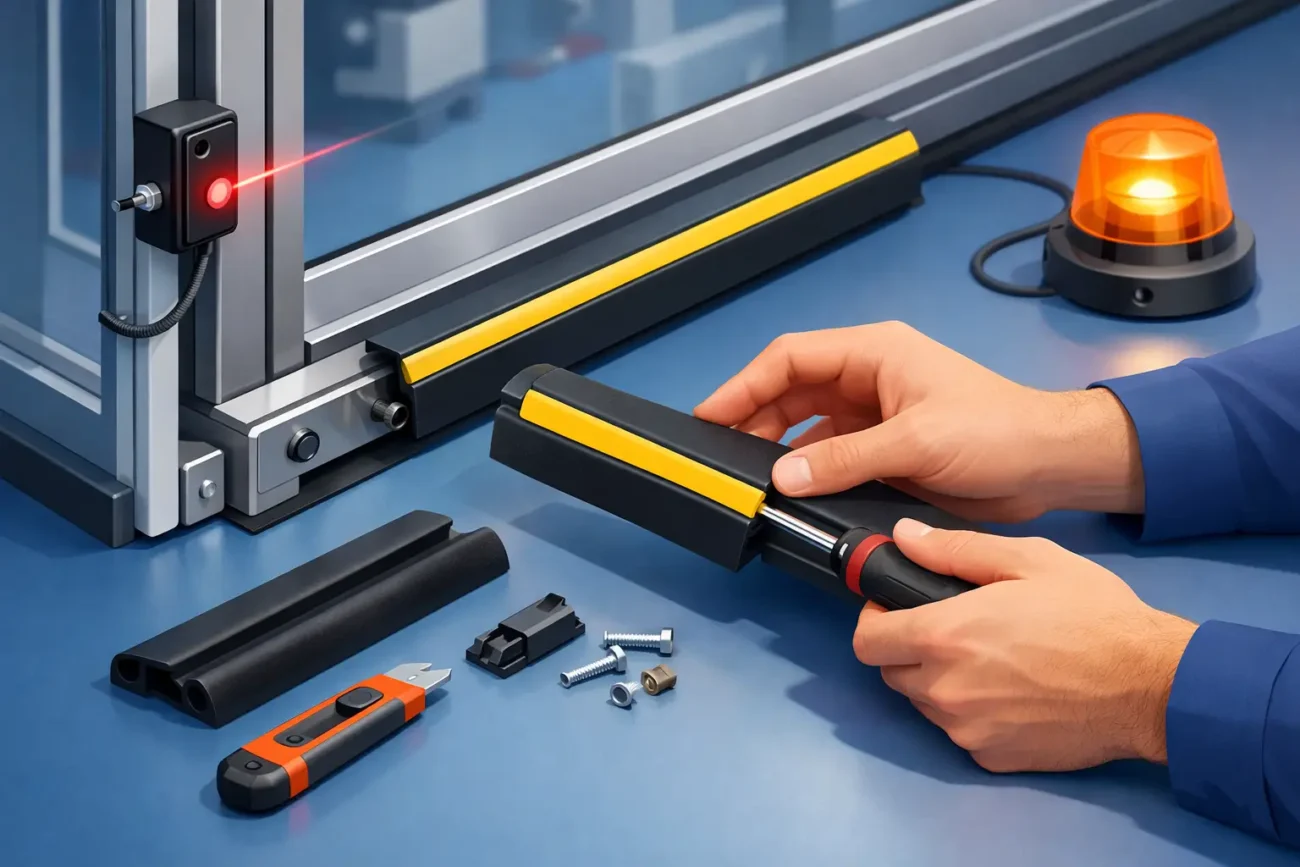
The better approach is more methodical. Start with the function of the failed part, not just its name. Is it a control board, encoder, limit switch assembly, motor capacitor, safety edge transmitter or photocell? Then look at how it connects into the system. Terminal layout, voltage, mounting points, software compatibility and signal type often matter more than what is printed on the casing.
In this example, the failed component turns out to be an older control board used on a now-superseded operator. The original board is no longer manufactured, but the system can accept a replacement if the engineer confirms three details: supply voltage, motor output configuration and input arrangement for safety devices. With those checked against site photos and wiring references, an alternative can be sourced that fits the application rather than just resembling the old unit.
Why obsolete door part sourcing often fails
The hardest jobs are not always the oldest doors. They are the ones with incomplete history. A door may have had a motor replaced ten years ago, a third-party radio receiver added later, and a photocell upgrade carried out by another contractor. By the time a part fails, the system is a mix of original and retrofit components.
That is why a dead-simple answer like just replace the whole thing is not always the right one. Sometimes a full upgrade is sensible, especially where parts are unsafe, unsupported or economically poor to keep alive. But there are plenty of cases where one correctly identified replacement part restores safe operation at a fraction of the cost.
Another common problem is relying too heavily on old invoice descriptions. Terms like sensor, panel or receiver are too vague to source accurately. Even a proper model number can be misleading if the manufacturer issued revisions with different firmware, connectors or enclosure styles. Obsolete part sourcing is often less about finding a perfect catalogue match and more about building enough technical certainty to avoid ordering the wrong item.
How to handle obsolete door part sourcing properly
The quickest results usually come from gathering the right evidence before anyone starts searching stock. A clear photo of the failed part matters, but so does a wider shot showing where it sits in the operator or control cabinet. Close-ups of terminals, stickers, cable entry points and dip switch settings can save a lot of back and forth.
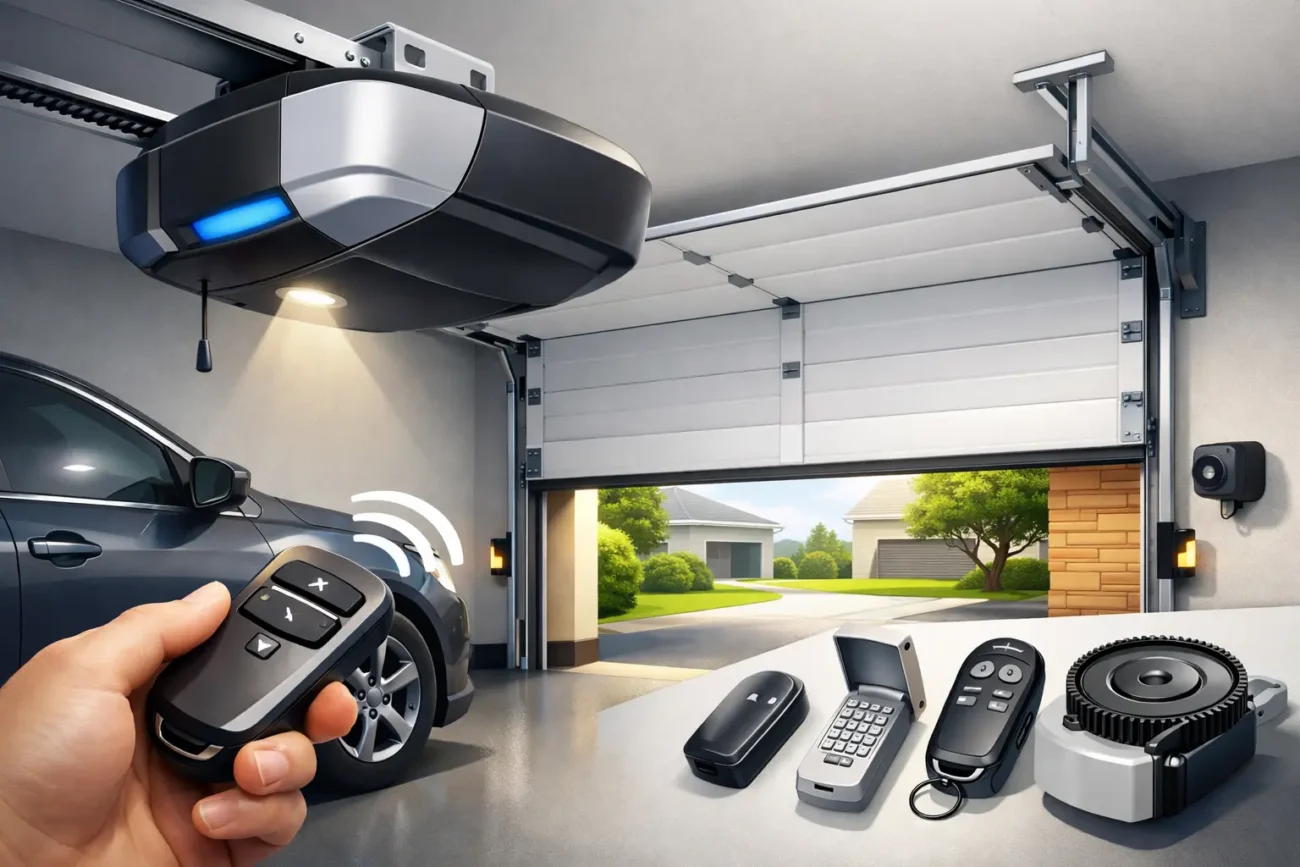
It also helps to know the symptom, not just the suspected part. If a rapid roll door is resetting, a facilities manager may assume the issue is the board, while the fault could actually sit with the encoder feedback. If an automatic swing door is opening but not holding, the problem may lie with the sensor arrangement rather than the operator itself. The sourcing process improves when the failure mode is described properly.
A practical workflow looks like this. First identify the door type and brand if possible. Next, collect markings from the part and the operator. Then check what the part actually does within the system. After that, compare the physical and electrical characteristics against available replacements or legacy stock. Only then should an order be placed.
That may sound slower than taking a punt on the nearest-looking part. In reality, it is usually faster because it avoids repeat deliveries, return delays and more time on site.
The minimum information that makes a difference
If you are trying to source an obsolete part, five things usually move the job forward quickly: the door make or operator brand, photos of the part and surrounding assembly, any visible numbers or labels, the fault behaviour, and the dimensions or connector layout where relevant.
For trade buyers, that level of detail often means the difference between same-day identification and a long email chain. For end users, it gives the supplier a fighting chance of translating a vague description into the correct component. That is exactly where a hands-on service like Ask Dora earns its keep.
When an exact match is not available
This is where experience matters. Some obsolete parts have true direct replacements. Others have approved successor models with modified mounting or wiring. Others again can only be replaced by a functional equivalent, which may require minor adjustments by a competent engineer.
There is no universal rule. A safety device should never be substituted casually. A control board replacement may need proper parameter setup. A motor with the wrong duty cycle or brake arrangement can create a second fault. Even something as simple as a limit switch can become a poor fit if shaft size or cam travel differs.
On the other hand, not every obsolete part requires a major redesign. Plenty of older industrial and commercial doors can remain serviceable if the replacement is chosen on the basis of operating logic, electrical compatibility and physical fit. That is why technical support matters as much as stockholding.
Cost, downtime and the replace-or-repair question
Customers often ask the same sensible question: is it worth sourcing an obsolete part, or should the system be upgraded? The honest answer is it depends.
If the failed part is isolated, the rest of the door is in sound condition, and a reliable replacement is available, repairing is often the right call. It keeps downtime shorter and avoids unnecessary spend. This is common with sensors, control accessories, receivers, encoders and some boards.
If the door has repeated faults, poor safety performance, damaged wiring or multiple unsupported components, the maths changes. Chasing one obsolete part after another can cost more than a planned upgrade. There is also the issue of future serviceability. A cheap fix today is not always the cheapest route over the next twelve months.
A good supplier should not force that decision either way. The sensible approach is to explain what can still be sourced, what compromises are involved, and where replacement starts making better operational sense.
What a good sourcing partner actually does
An obsolete door part sourcing example is not really about one part. It is about process. A useful supplier does more than search a shelf. They help identify the component, sense-check the diagnosis, flag compatibility issues and advise whether a newer substitute is viable.
That support is especially valuable on urgent jobs where the buyer has partial information. Engineers on site do not always have the luxury of full manuals and clean serial plates. Facilities teams may inherit old systems with no paperwork at all. In those situations, practical technical support can be just as important as fast dispatch.
For UK buyers, speed matters, but speed without accuracy is expensive. The right part sent quickly gets a door back into service. The wrong part sent quickly still leaves the opening out of action.
A better way to approach the next obsolete part
When the next failed component turns up, resist the urge to search by appearance alone. Start with function, compatibility and evidence from site. Treat the old part number as one clue, not the whole answer. If the system has been modified over time, assume there may be more to verify.
That is the practical lesson from any solid obsolete door part sourcing example. The fastest route is usually the one with the fewest assumptions. Clear photos, accurate fault details and a supplier who understands automated doors will beat guesswork every time.
If you are stuck with a discontinued board, worn sensor, failed encoder or mystery component from an ageing operator, the job is rarely hopeless. It just needs the right information and someone willing to work through it properly. That is often all it takes to turn a door-offline problem into a straightforward parts solution.



Leave a comment