



A delivery driver turns up early, a staff member forgets their fob, and a site needs to let one vehicle in without opening access to everyone else. That is where the choice between automatic bollards vs barriers stops being a spec-sheet exercise and becomes an operational decision. Both control vehicle access, but they do it in very different ways, and choosing the wrong one can create headaches in security, traffic flow, maintenance and cost.
For facilities managers, installers and site owners, the right answer usually comes down to what you are trying to stop, how often vehicles need access, and what happens when the system is down. A warehouse entrance, private car park, distribution yard and sensitive commercial site may all need vehicle control, but they do not need the same hardware.
Automatic bollards vs barriers – the core difference
At a basic level, an automatic barrier controls passage by lowering and raising an arm. It tells drivers whether they can proceed, but it does not physically stop a determined vehicle in the same way a bollard can. An automatic bollard rises vertically from the ground and creates a solid obstacle in the vehicle path.
That difference matters. If your main requirement is organised traffic control, such as managing entry to a staff car park or pay-and-display site, a barrier is often the more practical choice. If your priority is stronger perimeter protection, preventing unauthorised vehicle access, or securing a location where impact resistance matters, bollards are usually the better fit.
This is why the question is not which system is better in general. It is which one matches the risk, traffic pattern and duty cycle of the site.
Where barriers make more sense
Barriers are common because they are efficient, visible and relatively economical for managing frequent vehicle movements. On sites where authorised traffic needs to move quickly, they are often the least disruptive option.
A barrier works well at car parks, commercial premises, flat developments, industrial estates and service roads where vehicles need a clear stop-go signal. The arm is easy to understand from a driver’s point of view, and when paired with access control, intercoms, loops or ANPR, it can keep vehicles moving with very little delay.
There is also a practical maintenance point here. Barrier systems are generally easier to inspect, access and repair than retractable bollards because most of the key components are housed above ground in the cabinet. If an arm is damaged, it can often be replaced more simply than carrying out groundworks around a failed bollard unit.
That said, barriers are not ideal everywhere. They are vulnerable to impact, misuse and tailgating. A barrier arm may discourage entry, but it will not stop an aggressive vehicle. If your site has a genuine hostile vehicle concern, barriers alone are unlikely to be enough.
When automatic bollards are the stronger option
Automatic bollards come into their own where controlled access and physical protection need to work together. They are often used outside commercial buildings, government sites, pedestrianised areas, private developments and high-value premises where a clear vehicle stopping point is required.
Unlike barriers, bollards can secure an opening without leaving a long arm exposed to wind, accidental strikes or visibility issues. When lowered, they also keep the entrance visually cleaner, which is one reason they are popular in architect-led schemes and prestige commercial environments.
The main advantage, though, is security. A rising bollard provides a much more substantial physical deterrent than a barrier arm. Even standard security bollards offer more resistance to vehicle intrusion than a typical traffic barrier, and rated systems go further again where tested impact performance is needed.
There are trade-offs. Bollards usually involve more complex installation because they require excavation, drainage planning, foundations and careful consideration of underground services. If drainage is poor or the civil work is rushed, reliability can suffer. In the UK climate, that matters. Water ingress, debris and winter conditions can all affect below-ground equipment if the system is not specified and maintained properly.
Security versus throughput
One of the clearest ways to assess automatic bollards vs barriers is to look at security and throughput as two separate priorities.
If you need to process a high volume of vehicles with minimal delay, barriers often win. Opening and closing is fast, the visual cue is obvious, and they suit repetitive traffic patterns. This is especially true for staff car parks, logistics entrances and managed access roads where the focus is control rather than defence.
If you need a stronger physical obstacle, bollards are usually the better answer. They are better suited to sites where one unauthorised vehicle could create a serious security or safety issue. In those cases, slower installation and higher upfront cost may be justified by the level of protection.
Some sites try to split the difference by installing both. A barrier can manage routine traffic flow, while bollards secure a vulnerable line or restrict access to a more sensitive zone. That is often the most practical setup on mixed-use commercial or industrial sites.
Installation and ground conditions matter more than people think
It is easy to compare brochure features and miss the real-world part of the job. Installation conditions can make or break the long-term result.
Barriers are generally quicker and simpler to install. They need a stable base, suitable power supply and the right safety devices, but the civil works are usually more straightforward. For retrofit jobs or sites where disruption needs to be kept to a minimum, that can be a major advantage.
Bollards demand more planning. Excavation depth, concrete requirements, drainage, service routes and access for future maintenance all need to be right from the start. On older sites, particularly where drawings are incomplete, that can add cost and delay. It does not mean bollards are the wrong choice, but it does mean they should not be treated as a quick swap.
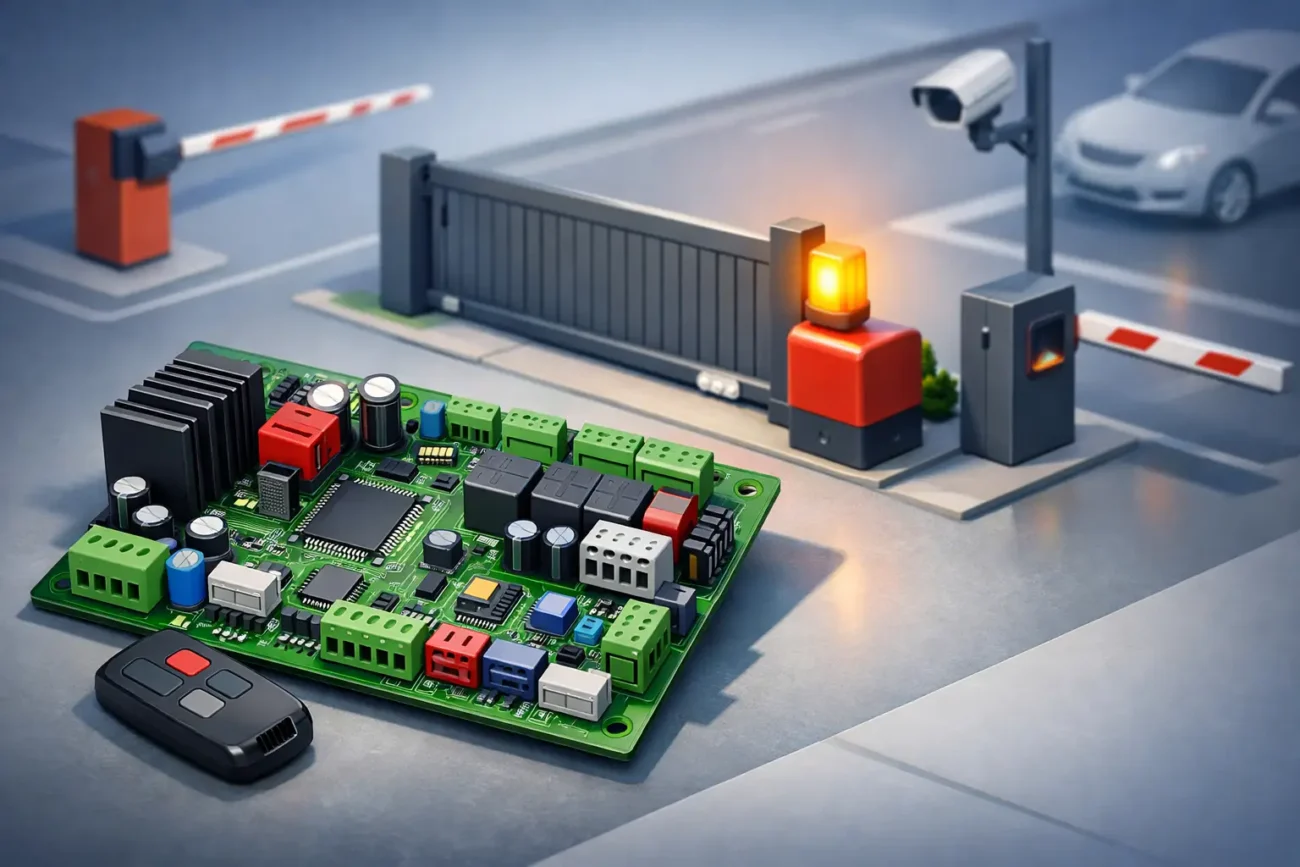
This is also where product support matters. If a control board, hydraulic component, sensor or safety accessory fails, downtime on a vehicle access system is not just inconvenient. It can compromise security or block operations entirely. Having access to the correct automation parts quickly is often just as important as the original product choice.
Safety is not optional
Whether you choose bollards or barriers, the safety side cannot be bolted on afterwards. Both systems involve moving equipment, vehicle interaction and public or staff access, so proper safety edges, loops, photocells, warning lights and controls should be part of the design from day one.
Barriers create obvious pinch and strike risks around the boom movement area. Bollards introduce crush and under-vehicle hazards if they rise unexpectedly or are triggered without clear lane control. In busy environments, the control logic matters as much as the hardware.
A system that works perfectly on a quiet gated entrance may be completely wrong for a mixed pedestrian and vehicle area. That is why site layout, user behaviour and traffic type need proper attention, not assumptions.
Cost is more than the purchase price
Barriers are often cheaper to buy and install, so they can look like the easy choice on budget alone. In many cases, they are the right value option. But low upfront cost is not the same as low whole-life cost.
If a barrier arm is frequently struck, if misuse is common, or if the site really needed stronger access protection from the start, savings disappear quickly. Repeated repairs, downtime and weak control can cost more than choosing a more suitable system in the first place.
Bollards usually cost more upfront, especially when groundworks are factored in. But on security-sensitive sites, they may offer better long-term value because they provide the level of protection the site actually needs. The key is being honest about the operating environment rather than buying for best-case conditions.
Which should you choose?
If your site needs efficient vehicle management, clear access control and fast throughput, a barrier is often the sensible choice. If your site needs a stronger physical deterrent, tighter perimeter protection or controlled access to a vulnerable area, automatic bollards are usually the better fit.
If the answer still feels unclear, that is normal. Many sites sit in the middle. A commercial yard may need barriers at the main entrance and bollards near pedestrian routes or restricted zones. A residential development may prefer bollards for appearance and security, while a retail car park may need the speed of barriers.
The best decision usually comes from asking a few blunt questions. What are you trying to stop? How many vehicles use the entrance each day? What happens if the system fails? How quickly can the right parts be sourced if it does?
Those questions tend to cut through marketing language very quickly. And if you are replacing or maintaining an existing access setup, getting accurate advice on controls, safety devices and automation components can save a lot of wasted time. That is often where specialist support makes the difference between a tidy fix and a recurring fault.
Choose the system that matches the job, not the one that looks easiest on paper. Your entrance will tell you soon enough whether you got it right.




Leave a comment