


A gate that opens slowly, stops short, or refuses to move when the weather turns is rarely suffering from one bad part alone. In most cases, the problem starts earlier, when gate automation equipment has been chosen on price, guesswork, or whatever was easiest to get hold of that week. That works until traffic builds up, users complain, or the first avoidable breakdown takes the entrance out of service.
For installers, facilities teams and property owners, the better approach is simpler than it sounds. Start with the gate itself, then work outward to the operator, control equipment and safety devices. When the equipment suits the weight, usage and environment, the whole system behaves properly. It opens at the right speed, closes reliably, and stays compliant with far fewer call-backs.
What gate automation equipment needs to do
At a basic level, every automated gate system has the same job. It has to move the gate safely, stop when it should, respond to authorised users, and keep working in real site conditions. The details change depending on whether you are dealing with a domestic driveway, a busy commercial yard or a shared residential entrance, but the principle stays the same.
That is why specification matters. A lightly used swing gate at a private property may cope perfectly well with a modest underground or articulated arm setup. A large cantilever sliding gate at an industrial site is a different job altogether. It may need a more powerful motor, a tougher control board, better obstacle detection and safety devices that can cope with regular traffic, poor weather and a less forgiving operating environment.
The mistake people make is treating all automation kits as broadly interchangeable. They are not. Even when two products look similar on paper, duty cycle, voltage, control logic and accessory compatibility can make one suitable and the other a liability.
Matching gate automation equipment to the gate type
The first question is not which brand to buy. It is what the gate is asking the automation to do.
Swing gates
Swing gates are common on domestic and light commercial sites, but they still vary a lot. The width of each leaf, the weight, the hinge geometry and the available mounting space all affect which operator will work properly. Rams are often chosen for their straightforward setup, but they are not ideal for every installation. Articulated arm motors can help where hinge positions are awkward, while underground motors may suit sites where appearance matters more.
This is where trade-offs come in. Underground automation can look cleaner, but it may be less convenient to access for servicing if drainage and installation have not been handled properly. Above-ground options are easier to maintain, though they are more visible and can be exposed to knocks or vandalism.
Sliding gates
Sliding gates usually make more sense where space behind the gate is limited or where the opening needs to stay controlled in tighter areas. They are often preferred for commercial entrances because they are predictable in operation and can be well suited to higher use.
Here, motor sizing matters. A motor rated for the gate weight on paper may still struggle if the track is poor, the gate has increased wind loading, or the site sees frequent cycling throughout the day. The control setup also matters more than some buyers expect. Acceleration, deceleration and obstacle detection need to match the physical behaviour of the gate, not just the product brochure.
The core components that make the system work
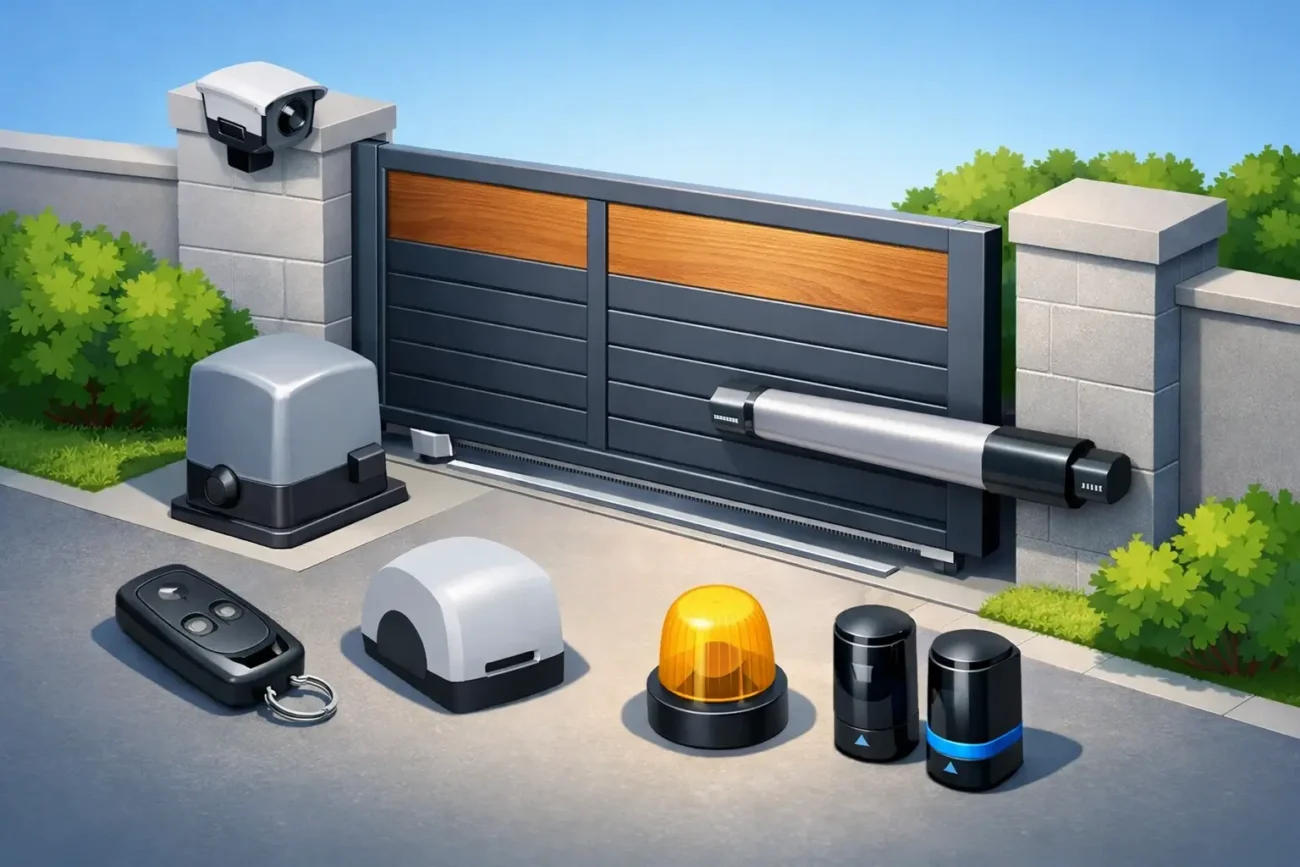
Most gate automation equipment falls into a few essential groups. The motor or operator provides movement. The control board manages the logic. Safety devices protect people, vehicles and the gate itself. Access control devices tell the system when to open, close or hold position.
If one of those areas is wrong, the whole entrance suffers.
Motors and operators
The operator has to be sized for real conditions, not ideal ones. Gate leaf length, weight and frequency of use are the obvious starting points, but installers also need to account for friction, alignment, wind exposure and the quality of the gate structure. A worn or poorly fabricated gate can burn through motors, gearboxes and brackets even when the automation is technically within rating.
For busy sites, duty cycle is one of the most important checks. Some operators are fine for occasional use. Others are built for repeated operation over long working days. If the entrance serves warehouses, depots or multi-user developments, under-specifying duty cycle is asking for downtime.
Control boards and logic
The control panel is where a lot of reliability is won or lost. It governs opening times, closing delays, partial opening, safety inputs and fault responses. A decent motor paired with the wrong board or poor programming can still produce erratic operation.
This is also the part of the system that tends to cause headaches when replacements are needed. Control boards are not always plug-and-play, and compatibility between older equipment and newer components can be awkward. That is one reason exact part identification matters, especially on existing systems where a like-for-like replacement avoids unnecessary rewiring or programming changes.
Safety devices
Safety is not an optional extra. Photocells, safety edges, loop detectors and warning devices all play a role depending on the site layout and risk profile. The right setup depends on who uses the entrance, how often it operates, and whether vehicles and pedestrians share the same route.
A private domestic entrance may need a straightforward but properly configured set of photocells and force limitation. A commercial gate with lorry access, delivery traffic or public interaction may require a much more considered arrangement. Good safety design reduces nuisance stoppages as well as risk, which matters when users are already under pressure.
Why site conditions change the buying decision
The catalogue description only tells part of the story. What really decides whether gate automation equipment performs well is the site itself.
Weather is an obvious factor in the UK. Driving rain, standing water, frost and exposed coastal conditions all affect longevity. Underground systems need drainage taken seriously. External housings and electronics need suitable protection. If the gate sits in an area prone to flooding, mud or grit build-up, the best operator in the world will not compensate for poor environmental planning.
Power supply is another practical issue. Voltage availability, cable runs and voltage drop can all affect performance. On remote entrances, it may be necessary to consider low-voltage systems, battery backup or solar-assisted options, but these need realistic expectations. They can be effective in the right setting, though not every site has the usage pattern or environmental conditions to make them the best choice.
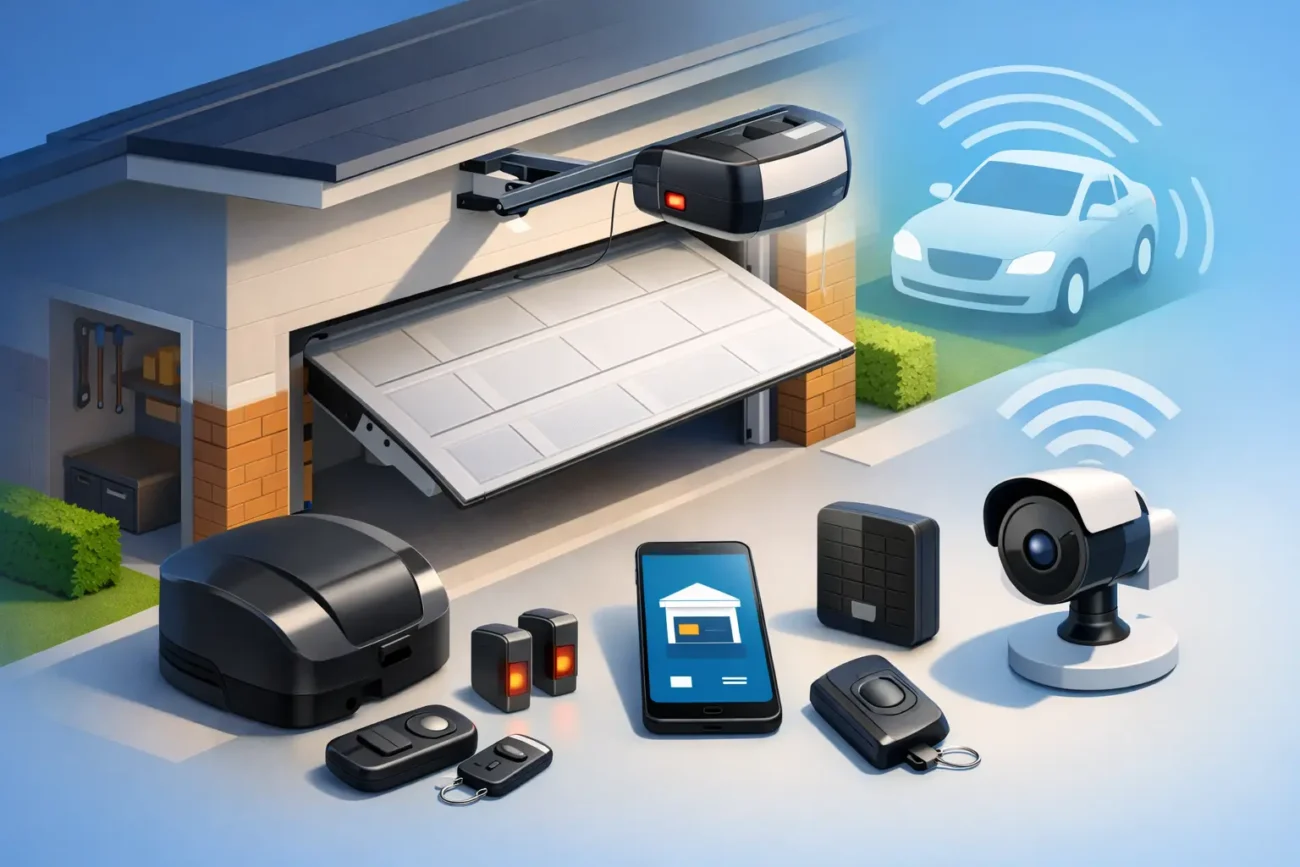
Then there is user behaviour. A gate serving one homeowner is different from a gate used by delivery drivers, visitors, staff and contractors. The more users involved, the more important it becomes to choose controls that are simple, durable and easy to manage. Keypads, fobs, GSM access and intercom integrations all have their place, but the right answer depends on how the entrance is actually used from Monday to Sunday.
Replacement parts versus full system changes
Not every fault means the whole system needs replacing. In many cases, the smartest move is to source the exact part and get the existing equipment back into service quickly.
That said, there are times when replacing a single motor, board or photocell only postpones a bigger issue. If the gate is mechanically poor, if multiple components are obsolete, or if the system no longer suits current traffic levels, piecemeal repair may stop being cost-effective. Engineers know this balancing act well. The cheapest immediate fix is not always the least expensive route over twelve months.
This is where technical support has real value. A site team may know a board has failed but not have the part number. An installer may have inherited an older system with mixed components from several repair visits. In those cases, image-based identification, brand knowledge and access to harder-to-find parts can save a lot of wasted ordering.
Door Spares UK deals with that kind of problem every day, particularly where fast part matching matters more than browsing a generic kit and hoping for the best. When a gate is down, accuracy is usually more valuable than speed alone.
Buying for reliability, not just installation day
It is easy to choose equipment based on what gets the gate moving on handover day. A better test is how the system will behave six months later.
Will the operator cope with peak use? Are replacement parts available? Is the control setup sensible for the people using it? Can the safety devices be maintained easily? These are not glamorous questions, but they are the ones that reduce return visits and unplanned failure.
Brand also matters, though not in a simplistic way. Well-known manufacturers often make sourcing easier and support more predictable, but the best result still comes from selecting the right product within that range. Even strong brands have entry-level and heavy-duty options, and choosing between them should come down to the job rather than habit.
If you are buying gate automation equipment for a live site, the sensible move is to treat it as part of a working access system, not as a standalone gadget. The gate structure, controls, safety and user demands all need to line up. Get that right, and you spend less time reacting to faults and more time with an entrance that simply gets on with the job.


Leave a comment