


A roller shutter that stops halfway open at 7am is not a minor inconvenience. It can delay deliveries, prevent staff access, expose stock, and leave a site vulnerable overnight. Roller shutter parts explained: what every business owner should know starts with one practical point: the visible curtain is only one part of a system. Accurate diagnosis matters because fitting the wrong replacement can create more downtime, not less.
Whether your shutter protects a shopfront, warehouse, loading bay or workshop, knowing the main components helps you describe faults clearly, make better repair decisions and order the correct part first time.
Roller shutter parts explained: the main assemblies
Most roller shutters are built around three working areas: the curtain and guide system, the barrel assembly, and the drive and controls. A fault in one area can show up elsewhere. For example, a shutter that is struggling to lift may have a motor issue, but it could also be binding in damaged guides or carrying too much weight because of a spring problem.
The curtain, bottom rail and guides
The curtain is the interlocking run of steel or aluminium slats that moves up and down. It may be solid, perforated, insulated or punched, depending on the required balance of security, visibility and ventilation. Individual slats can bend after impact, while worn or missing end locks can allow the curtain to move sideways and catch in the guides.
At the bottom sits the bottom rail, which gives the curtain rigidity and often carries a rubber weather seal. A distorted bottom rail can prevent the shutter from closing squarely. It may also affect safety-edge operation where one is fitted.
The guide rails, fixed vertically at each side of the opening, keep the curtain on its intended path. They are simple-looking parts, but they take regular punishment from pallets, forklifts, trolleys and vehicle movements. A dented guide can make a perfectly serviceable motor sound underpowered. Before replacing electrical components, check that the curtain travels freely and that the guides are clear of debris.
The barrel, axle and springs
Above the opening, the curtain wraps around a barrel or axle. This assembly supports the curtain’s weight and transfers power from the motor or manual operation system.
On spring-assisted shutters, the springs counterbalance much of the curtain weight. Correct spring tension is critical. If the shutter suddenly feels heavy, drops too quickly or the motor strains on the lift, a damaged or incorrectly tensioned spring may be involved. Spring work should be left to a competent door engineer: stored energy in a shutter assembly can cause serious injury if released unexpectedly.
Bearings, end plates, shafts, collars and suspension links also sit around the barrel assembly. These are often overlooked until a shutter becomes noisy, uneven or slow. A worn bearing can create vibration and misalignment, which then places additional strain on the motor, gearbox and curtain.
Motors, gearboxes and manual override
Electrically operated roller shutters commonly use a tubular motor inside the barrel or an external motor and gearbox arrangement. The right choice depends on shutter size, curtain weight, duty cycle and site layout. A motor that suits a small shopfront may not be suitable for a busy industrial door opening dozens of times a day.
The gearbox reduces speed and provides the torque needed to lift the shutter. If the motor can be heard running but the curtain does not move, the issue may be within the gearbox, drive chain, sprocket or coupling rather than the motor itself.
Many powered shutters include a manual override, such as a hand chain or crank handle. This is not just a convenience. It is a contingency measure when power is lost or a control fault prevents normal operation. The override must be compatible with the motor and installed where it can be operated safely.
Controls and limits: the parts that tell the shutter when to stop
The control panel is the decision-making point for an automated shutter. It receives instructions from push buttons, key switches, remote controls or access-control systems, then supplies power to the motor while monitoring safety devices.
A control panel fault can look like a motor fault. The shutter may work in one direction only, fail to respond intermittently, trip an electrical supply, or stop without reaching its normal position. Burnt relays, damaged contactors, water ingress and loose terminals are common causes, particularly on older equipment or doors exposed to weather and washdown conditions.
Limit switches tell the motor where the fully open and fully closed positions are. If limits are set incorrectly, the shutter may stop short, overrun, pull too tightly onto the floor or continue trying to run after it has reached the end of travel. Repeated overrun can damage the curtain, motor and barrel components. Limit adjustment is not difficult for a trained engineer, but it should be done with the door under observation and with safety devices working correctly.
Safety parts are not optional extras
A roller shutter is a moving piece of industrial equipment. Safety devices help prevent it from closing onto people, stock or vehicles, but their suitability depends on the door type, operation method and risk assessment.
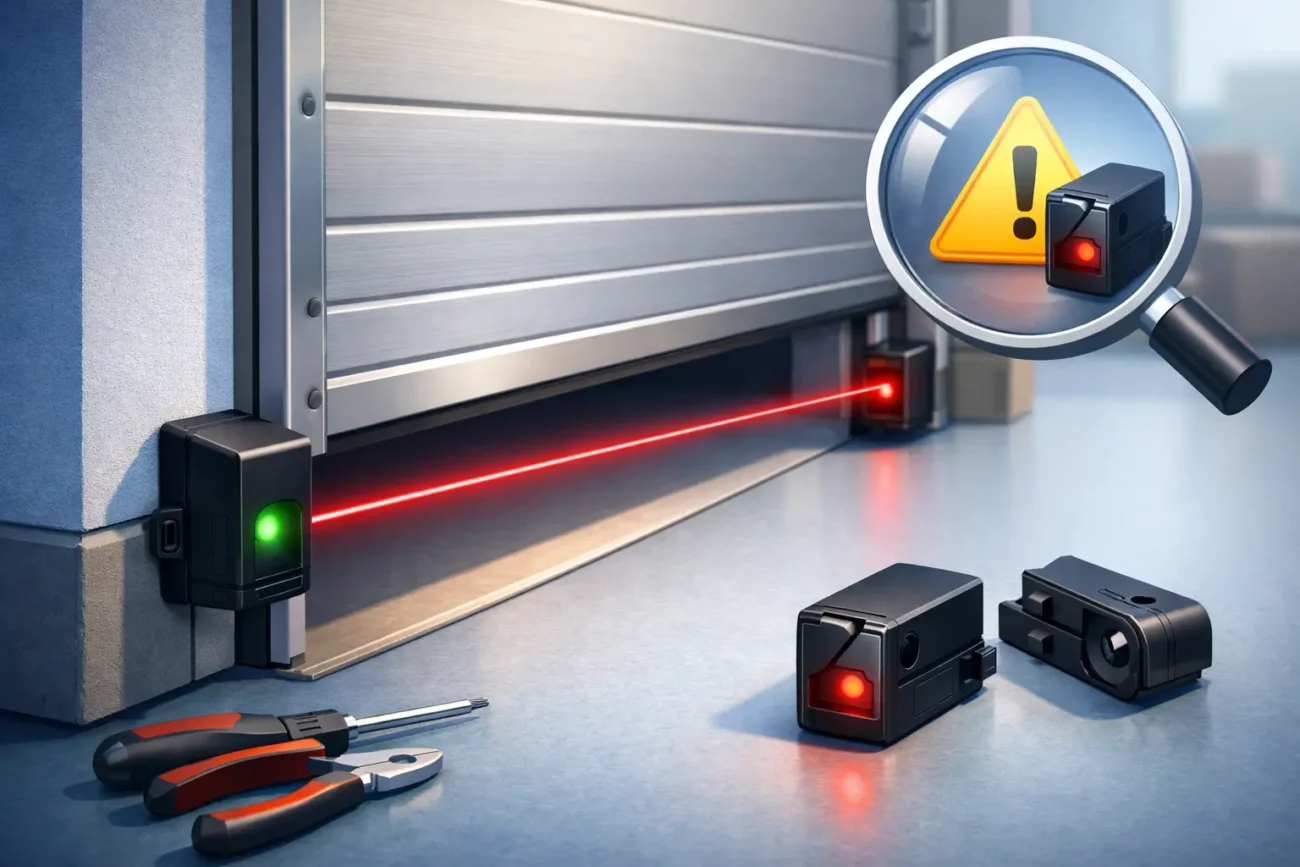
A safety edge is fitted to the bottom rail and detects contact during closing. Photocells create a beam across the opening and stop or reverse the shutter if that beam is interrupted. Safety brakes can prevent uncontrolled curtain movement if a drive component fails, while emergency stop controls allow the system to be halted quickly.
Do not assume a shutter is safe because it has a motor and a button. A missing safety edge, misaligned photocell or bypassed control input can turn a manageable repair into an accident. If a safety device is damaged, treat the shutter’s operation as restricted until it has been checked and repaired by a competent person.
Getting the right roller shutter spare first time
Roller shutter components are rarely universal, even when two parts appear similar. A motor may have a specific torque rating, limit arrangement, shaft size and manual-release type. A replacement slat needs to match the curtain profile, thickness, finish and effective width. Control boards must suit the existing motor and safety circuit.
Before ordering, gather the manufacturer and model details where available. Photograph the part in place and include close-ups of labels, connectors and any stamped numbers. For motors, record the voltage, power rating, shaft or tube dimensions, duty information and hand of operation if shown. For curtains and guides, accurate measurements are essential.
It also helps to describe what the shutter is actually doing. “Not working” can mean no power, a humming motor, a door that rises crookedly, an intermittent control response or a curtain jammed in the guides. Those details narrow the search quickly and can prevent an unnecessary purchase.
If the identification plate is missing or the part is obsolete, an experienced supplier can often work from photographs, dimensions and fault symptoms. Door Spares UK Ltd’s Ask Dora service is designed for exactly this situation: getting from an uncertain part description to a suitable replacement without guesswork.
Repair or replace: make the decision on condition, not frustration
A single worn end lock, damaged photocell or failed push button is usually a sensible repair. Replacing a serviceable motor because the shutter is catching in a guide is not. Equally, repeatedly replacing small parts on a badly corroded curtain or unreliable control system can become false economy.
Consider the shutter’s age, usage level, availability of compatible spares and the consequence of failure. A lightly used internal shutter may justify targeted repairs for years. A heavily used loading-bay shutter that protects stock and supports daily dispatches may warrant a more substantial overhaul if failures are becoming regular.
Fire-rated shutters require additional care. Components must remain compatible with the shutter’s tested arrangement, including release mechanisms, fusible links, control equipment and closing function. Substituting parts without checking suitability can compromise performance when it matters most.
A few checks that prevent expensive call-outs
Routine checks do not replace professional servicing, but they help catch obvious issues early. Keep the guides clear, look for damaged slats and loose fixings, and listen for new grinding, rattling or banging noises. Watch the shutter complete a full open and close cycle where it is safe to do so, paying attention to uneven movement and whether it stops in the right place.
Test safety devices only in line with the manufacturer’s instructions and site procedures. Never hold a photocell blocked, defeat a safety edge or force a shutter that is jammed. Record faults as they appear, particularly intermittent ones, because the time of day, weather conditions and operating pattern can all help identify the cause.
The best outcome is not simply getting the shutter moving again. It is restoring safe, reliable operation with parts that genuinely fit the system. A clear photograph, a model number and a good description of the fault can save valuable time when your premises cannot afford to stay closed.



Leave a comment