


A barrier arm that will not lift at 7:45 on a Monday morning causes more than a queue. It creates a security issue, frustrates drivers, and leaves site teams under pressure to fix the problem quickly. In most cases, the fault comes down to a handful of traffic barrier parts that wear out, drift out of adjustment, or fail after years of daily cycles.
If you manage a car park, commercial entrance, industrial yard or residential access point, knowing which parts commonly fail makes fault-finding faster and ordering more accurate. It also helps you avoid replacing complete units when the real issue is a single component.
Which traffic barrier parts fail most often?
Not every barrier fails in the same way. Usage levels, weather exposure, installation quality and the control setup all play a part. That said, some traffic barrier parts come up again and again in breakdowns because they sit at the heart of movement, safety or command.
The first group is the obvious mechanical wear items. Springs lose tension, balancing systems drift, hinges wear, and mounting points take repeated stress. A barrier that feels heavy, rises unevenly or drops too quickly often points to those areas before anything else.
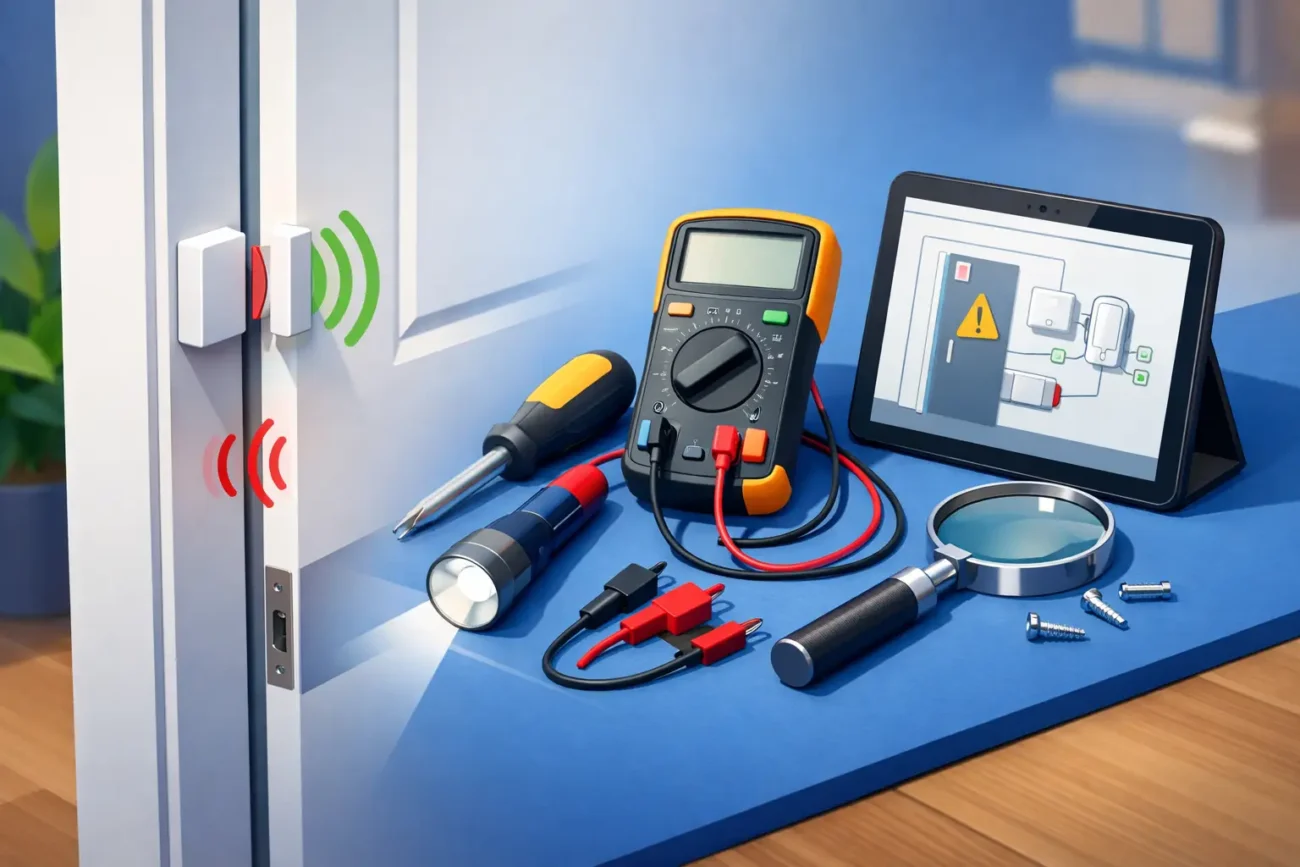
The second group is electrical and control-based. Control boards, capacitors, limit switches, loop detectors, photocells and radio receivers all have the power to stop an otherwise sound barrier. When the cabinet has power but the arm does not respond correctly, these are usually the first places an engineer will check.
The third group is the motor and drive assembly. If the barrier hums, struggles, overheats or works intermittently, the fault may sit with the motor, gearbox or encoder. These parts are under constant load, especially on high-traffic sites where the barrier runs hundreds of cycles a day.
Mechanical parts wear slowly until they do not
Mechanical failure is often less dramatic at first. The barrier still works, but not quite as it should. It might jerk on startup, stop slightly off position, or make more noise than usual. These are the warning signs that get missed because the system is still operational.
Springs and balancing assemblies
Barrier springs are one of the most common replacement items. They counterbalance the boom arm and reduce the strain on the motor. Over time, fatigue sets in. The spring can weaken, stretch, or snap outright.
When that happens, the barrier may lift slowly, fail to stay in position, or place extra load on the drive system. Left too long, a spring issue can lead to motor or gearbox damage, which turns a straightforward parts job into a more expensive repair.
Boom arm fixings and hinges
The arm itself gets most of the attention, but the fixings and hinge points are where repeated movement causes real wear. If the arm starts wobbling, sits out of line, or knocks on travel, worn joints or loose hardware may be to blame.
This is where correct part matching matters. A generic fixing kit might physically fit, but if the dimensions or load rating are wrong, the problem returns quickly.
Electrical faults can look random, but usually are not
A barrier that works perfectly for three days and then stops without warning can feel like a mystery fault. In practice, intermittent operation often comes from control or sensor issues rather than major mechanical failure.
Control boards and relays
The control board is the decision-making part of the system. It handles inputs from safety devices, loop detectors, key switches, remotes and access control. If the board is damaged by age, moisture, surge events or heat, the barrier may refuse commands, lose settings or behave unpredictably.
Relays can also fail after long service. You may hear a click from the cabinet with no actual movement, or see the board receive an input without sending proper output to the motor.
Capacitors and power components
Single-phase motors often rely on a capacitor to start and run properly. When the capacitor weakens, the barrier may struggle to move, stall under load or need a push to begin travel. This is a common issue and one that can easily be mistaken for total motor failure.
Power supply components, fuses and transformers also deserve attention. If the barrier appears dead or keeps dropping out, a simple electrical part may be the real cause.
Limit switches and encoders
A barrier needs to know where to stop. Depending on the model, that information comes from limit switches, magnetic sensors or an encoder. If one of these traffic barrier parts fails, the arm may overrun, stop short, reverse unexpectedly or refuse to complete a cycle.
These faults are not just inconvenient. They can create safety risks and put the barrier out of compliance with the intended operating setup.
Safety devices are critical, not optional extras
Photocells, safety edges, induction loop systems and presence detectors are often blamed when a barrier will not close. Sometimes that diagnosis is right. Sometimes the device is doing exactly what it should and detecting a real obstruction or poor alignment.
Photocells and sensors
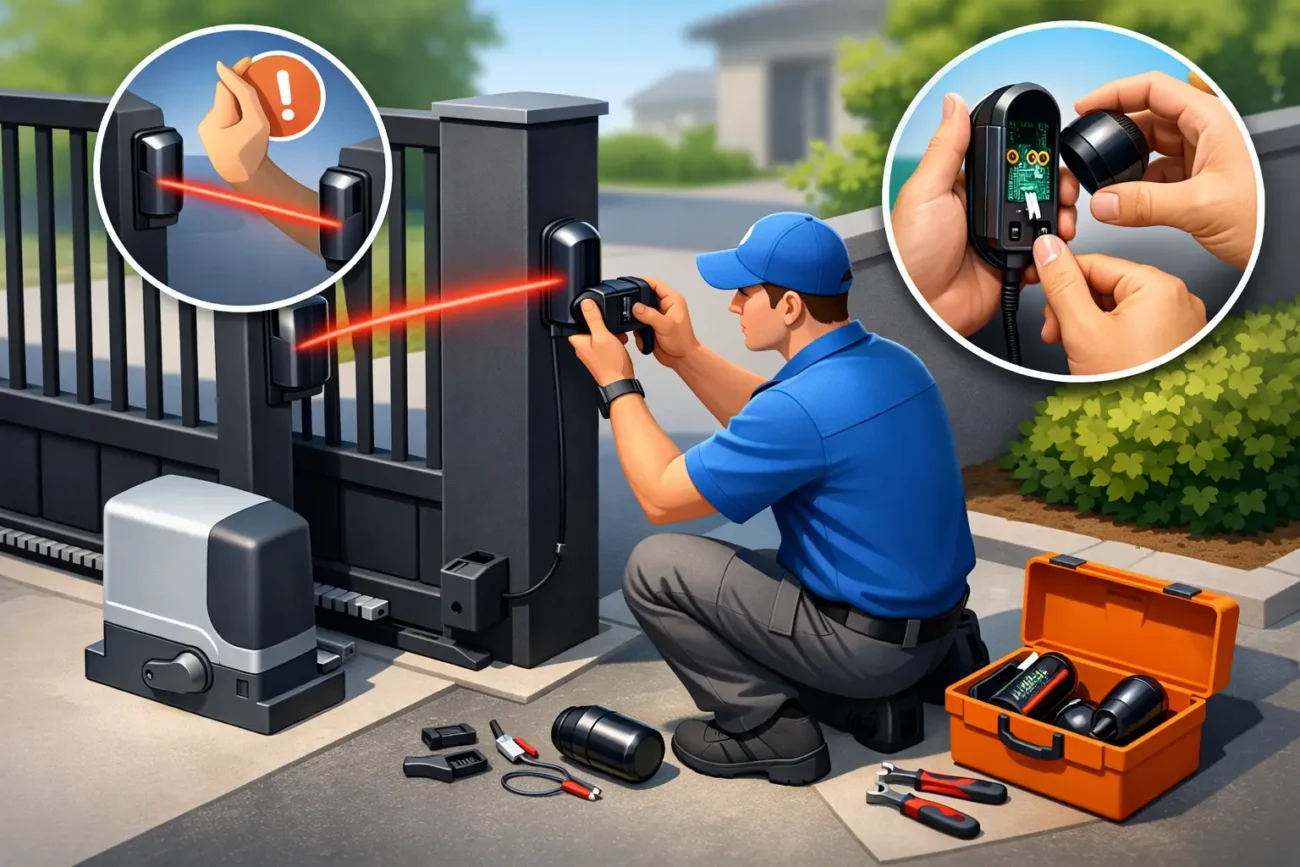
Photocells suffer from weather, impact, dirt and misalignment. A unit can still show power but fail to transmit a clean signal. On exposed sites, this is particularly common after heavy rain, frost or accidental knocks.
If the barrier opens but will not close, or reverses without anything obvious in the way, the safety beam should be checked early. Replacing the wrong part here wastes time and leaves the original fault untouched.
Loop detectors and ground loops
At vehicle entrances, loop detectors do a lot of hidden work. They tell the barrier when a vehicle is present and help prevent closure onto traffic. If the loop detector fails, the barrier may stay open, fail to open, or behave inconsistently.
The trade-off is that the fault may sit in the detector card, the loop wiring, or the programming. Good diagnosis matters. Ordering a new detector when the cable in the ground is damaged will not solve the issue.
Motors and gearboxes take the strain
When a barrier has high cycle demand, the motor and gearbox become wear points. This is especially true in busy commercial sites, distribution yards and managed parking where opening and closing is near constant.
A failing motor may overheat, trip out, slow down under load or stop altogether. A worn gearbox may produce grinding, backlash or uneven motion. In some cases, the unit still runs but no longer has the torque to lift the arm reliably.
This is one of those areas where repair versus replacement depends on the age and brand of the barrier. On a well-supported model, replacing a motor, gearbox or encoder can be good value. On an older unit with multiple worn components, the economics may point the other way.
Why the exact part matters
Barrier systems are not forgiving when the wrong part is fitted. A spring with the wrong rating changes balance. A motor with the wrong output affects cycle performance. A board that looks similar may have different logic or connector layouts.
That is why part identification should start with the manufacturer, model and as much detail from the existing component as possible. Photos of the cabinet interior, labels, damaged parts and wiring layout can save a lot of back and forth. For older or discontinued systems, that level of detail becomes even more important.
This is also where proper support makes the difference. If you are unsure whether the fault is the control board, capacitor or safety input, it is better to check first than order on guesswork. One useful route is to use a parts finding service such as Ask Dora, especially when markings are faded or the original installer is long gone.
Spotting trouble before total failure
Most barrier faults give some warning. The problem is that busy sites tend to keep running equipment until it stops. A small change in sound, speed or stopping position often gets ignored because access is still possible.
A sensible maintenance routine pays for itself here. If the arm starts moving unevenly, if the cabinet shows signs of water ingress, or if the safety devices need repeated adjustment, that is the time to act. Replacing worn traffic barrier parts early is usually cheaper than dealing with a barrier that fails completely during peak access hours.
For facilities teams and engineers, the practical approach is simple. Record the fault symptoms clearly, note the barrier brand and model, inspect for visible wear or damage, and match the replacement part properly. That saves repeat visits and reduces the chance of swapping good parts for bad ones.
Traffic barriers are straightforward when the right component is identified early. If the fault is pinned down properly, most systems can be brought back into safe, reliable service without replacing the whole unit – and that is usually the quickest win for both budget and uptime.


Leave a comment