


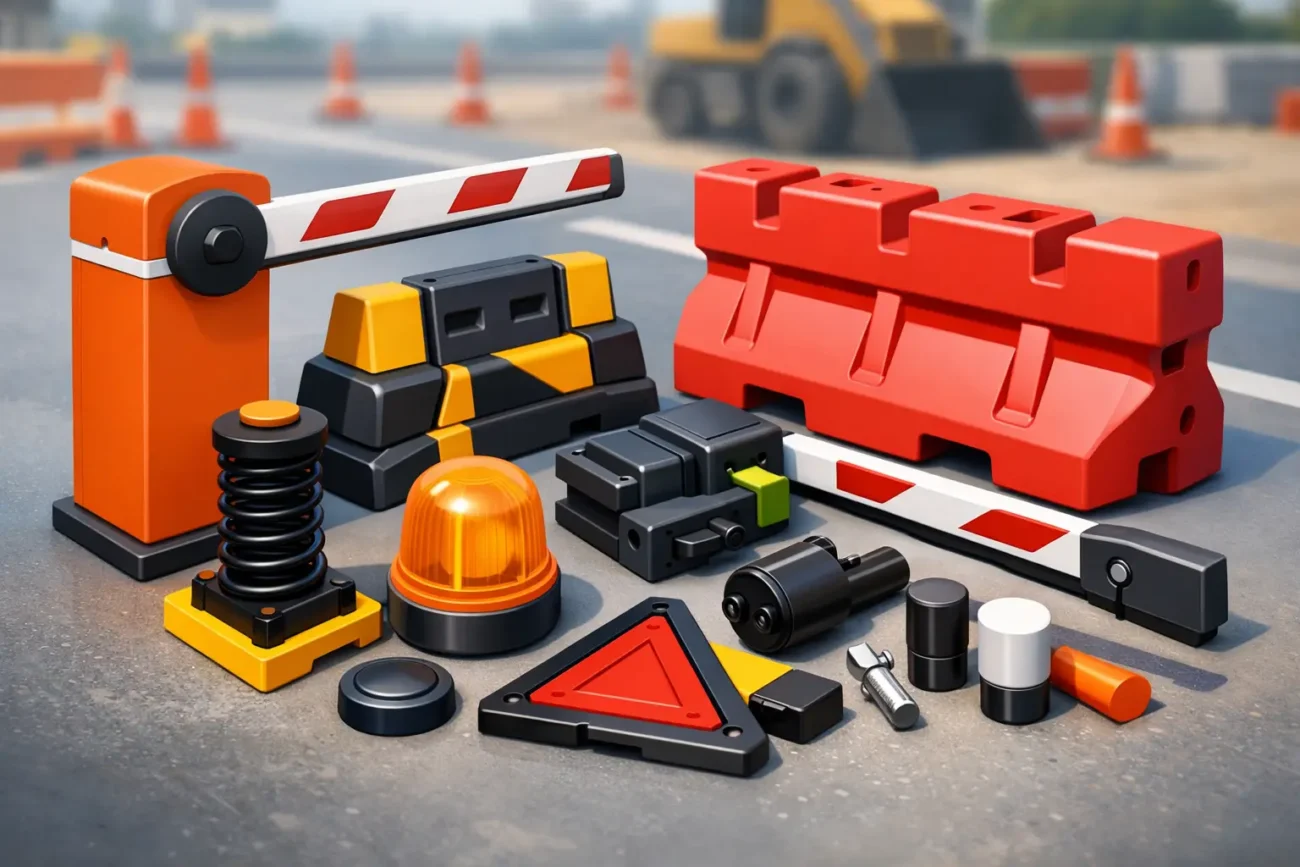
A barrier that sticks halfway up at 7:45 on a Monday morning causes more than a queue. It can block deliveries, frustrate staff, leave a site unsecured and create a real safety issue. That is why getting the right traffic barrier spare parts matters. In most cases, the fastest fix is not replacing the whole unit. It is identifying the failed component correctly and fitting a part that matches the barrier’s make, model and duty cycle.
For facilities teams, engineers and site managers, that sounds obvious. In practice, it is where delays start. A barrier arm may be bent, but the real fault could sit in the spring assembly, limit setup, motor capacitor, control board or safety loop. Ordering on guesswork often means a second visit, more downtime and a customer who is still waiting for the entrance to work properly.
Why traffic barrier spare parts need to be matched properly
Traffic barriers are not one-size-fits-all systems. Even barriers that look similar from the outside can have different motor sizes, balancing springs, arm lengths, control logic and safety devices. A boom pole for one version may not suit another. A photocell may physically fit but fail to communicate properly with the controller. A replacement board may need the correct firmware or dip switch configuration before the barrier will run as intended.
This is where experience saves time. The part number helps, of course, but many older barriers have worn labels, discontinued revisions or site modifications carried out years ago. Engineers often arrive with a photo, a rough description or a removed component in hand. That is usually enough to narrow things down, as long as someone is looking at it with product knowledge rather than treating every barrier as interchangeable.
There is also a cost question. Buying the cheapest available part can be false economy if it shortens service life or causes inconsistent operation. On a lightly used private access road, you may have more flexibility. On a busy commercial entrance with repeated cycles all day, you need a component that can cope with that workload.
The parts that fail most often
Some traffic barrier spare parts come up again and again because they work hardest or take the most abuse. Barrier arms are an obvious example. They are exposed to vehicle strikes, wind loading and accidental misuse. If the arm is damaged, though, check the mounting hardware and balancing setup as well. Fitting a new arm onto a stressed or misaligned mechanism often leads to another failure soon after.
Springs and balancing assemblies are another common issue. When the spring tension is wrong or the spring has fatigued, the operator has to work harder than it should. That can show up as slow movement, strain on the motor or difficulty reaching full open and closed positions. Replacing the spring alone may solve it, but only if it is correctly rated for the arm length and barrier model.
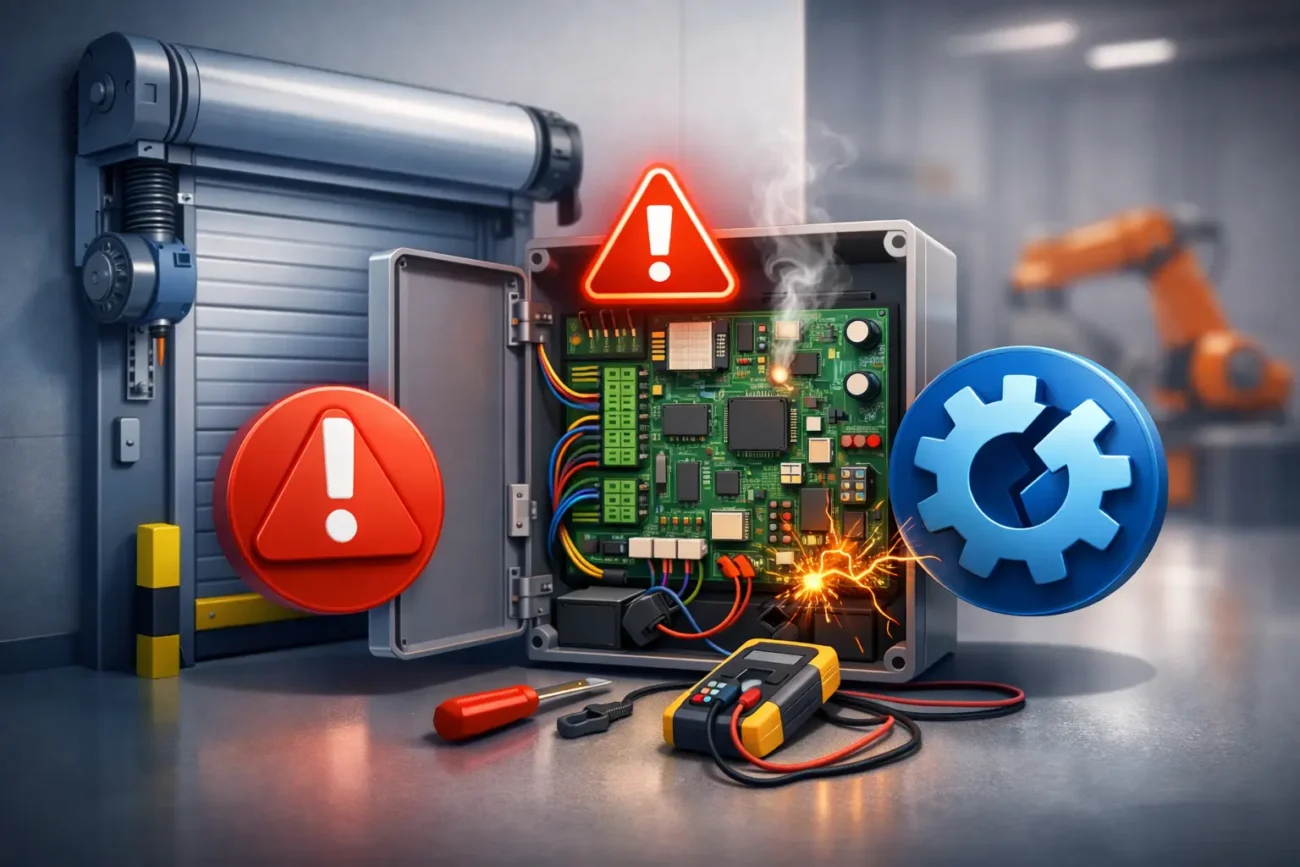
Control boards, capacitors and motors are frequent electrical faults. A failed capacitor can make a barrier hum without lifting properly. A control board fault may appear as intermittent operation, no response to commands or incorrect safety behaviour. Motors can deteriorate gradually or fail outright, particularly on barriers that have seen years of high use with limited servicing.
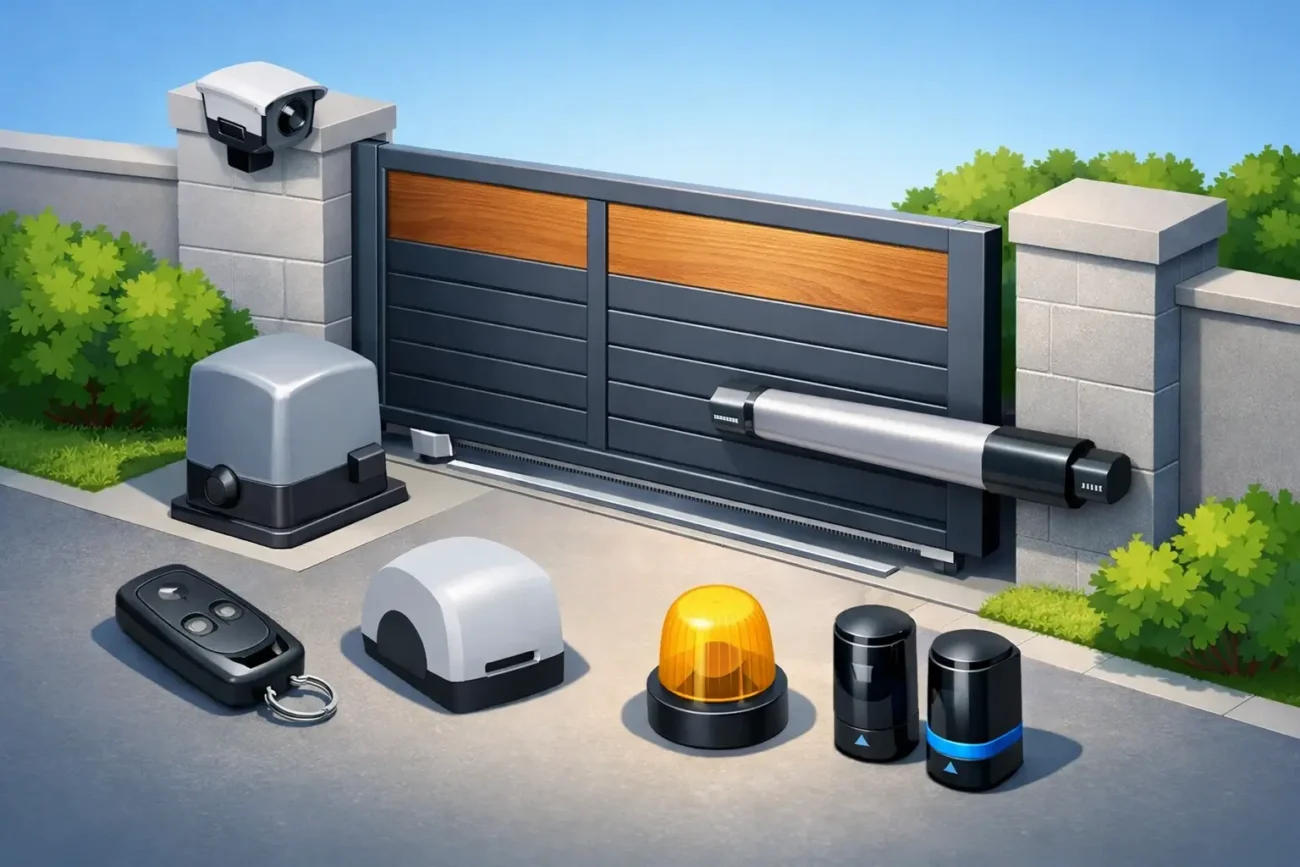
Safety devices deserve special attention. Photocells, induction loop detectors, safety edges and warning lights are not optional extras. If they fail, the barrier may stop working altogether, or worse, continue operating without adequate protection. For any site with vehicle and pedestrian interaction, safety component performance should be treated as critical, not secondary.
Signs you need replacement parts rather than a full new barrier
A full barrier replacement is sometimes the right call, especially if the unit is obsolete, heavily corroded or repeatedly unreliable. But many faults are repairable with the correct parts.
If the cabinet is sound, the barrier still suits the site layout and the fault is limited to a known component, spare parts are usually the practical route. The same applies if the barrier has been dependable for years and the issue is clearly linked to wear, impact damage or one failed electronic item. Replacing a board, spring, arm or sensor is far more cost-effective than changing the whole system when the rest of the equipment is serviceable.
The balance shifts when parts are no longer available, when several assemblies are failing at once, or when the barrier no longer meets the site’s operational demands. A residential barrier doing fifty cycles a day is one thing. A logistics yard running constant traffic is another. Sometimes the right answer is not just repair, but an upgrade to a unit designed for heavier duty use.
Getting the right part first time
The quickest way to source traffic barrier spare parts is to start with accurate identification. Manufacturer, model number and any visible part references are ideal. Good photos help a great deal, especially images of the cabinet interior, control board, damaged part and barrier arm fixing point. If the label is missing, details such as arm length, cabinet dimensions, voltage and symptoms can still point the search in the right direction.
It also helps to describe what the barrier is doing, not just what part you think you need. Saying the barrier opens but will not close, trips randomly, moves slowly or blows a fuse tells a technical supplier far more than simply asking for a motor. Often the failed part is not the one that first comes to mind.
For trade engineers, speed matters because return visits cost money. For facilities teams, it is about getting access control restored without disruption to staff, tenants or deliveries. Either way, technical support during the identification stage is often what prevents the wrong order being placed.
Common mistakes that cause repeat faults
One of the biggest mistakes is replacing visible damage only. A new arm might look like the solution after a vehicle strike, but impact can also twist brackets, upset limits, crack fixings or damage internal drive parts. If those are missed, the barrier may fail again almost immediately.
Another common problem is ignoring setup after fitting parts. Springs need correct tension. Limit positions need checking. Control boards may require programming. Safety devices need testing. A barrier is not just a collection of components bolted together. It is a system, and when one part changes, the rest may need adjustment.
There is also the issue of using generic substitutes where an exact-fit part is required. In some applications, a quality equivalent is perfectly workable. In others, particularly with control electronics and branded automation systems, compatibility is much less forgiving. It depends on the barrier, the age of the system and how the manufacturer designed the controls.
Support matters when the part is hard to find
Older traffic barriers can be awkward. Product lines change, brands merge, and original components disappear from standard catalogues. That does not always mean the barrier is beyond repair. In many cases, there is either remaining stock, a suitable replacement part, or a manufacturer-approved alternative that will keep the system in service.
This is where a specialist supplier earns their keep. Not by listing thousands of products and leaving you to guess, but by helping identify the exact item from a plate, photo or description. For customers who do not have the part number to hand, that practical support often makes the difference between a same-week fix and a drawn-out fault.
At Door Spares UK Ltd, that is exactly the sort of enquiry the team handles every day. If you know the part, fine. If you do not, Ask Dora and send over the details you have. It is a straightforward way to cut through the usual back-and-forth and get closer to the right answer quickly.
Keeping barriers reliable after the repair
Once the barrier is back in operation, it is worth looking at why the part failed. Some faults are simple wear items reaching the end of service life. Others point to a bigger issue such as poor balancing, water ingress, unstable power supply, repeated impact or lack of routine maintenance.
A barrier that is cleaned, checked and adjusted at sensible intervals will usually give fewer surprises. Springs stay correctly tensioned, fixings stay tight, enclosures stay sealed and safety devices stay aligned. That matters even more on busy sites where a small issue can turn into a full shutdown at the worst possible time.
If there is one rule that applies across almost every barrier repair, it is this: do not order blind if the site depends on the equipment. A few extra minutes spent identifying the correct part can save hours of downtime, an unnecessary callout and the cost of fitting the wrong component twice.
When a barrier fails, people notice quickly. The right spare part gets things moving again, but the right advice gets it sorted properly.



Leave a comment